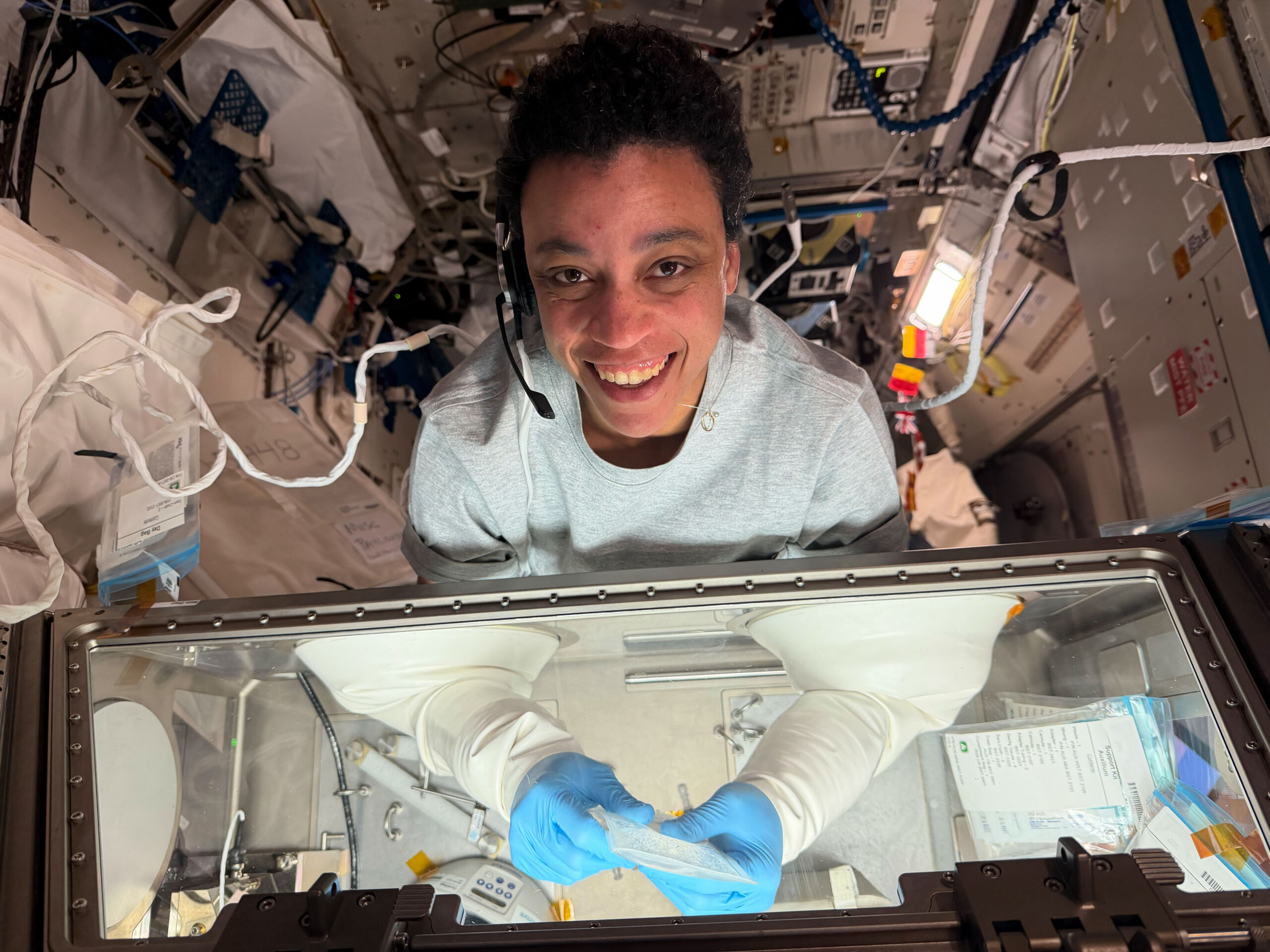
Astronaut Jessica Watkins aboard the International Space Station (ISS) has conducted crucial experiments in 3D bioprinting, a technology that holds significant potential for advancing patient treatment on Earth and supporting the health of future space explorers. Watkins successfully mixed live cell samples with bio-ink and loaded a specialized cartridge for the InSPA-Auxilium Bioprinter-Cell Printing experiment.
3D Bioprinting in Microgravity: Ushering in a New Era of Medicine
The InSPA-Auxilium Bioprinter-Cell Printing experiment is designed to investigate the capabilities of 3D bioprinting cartilage tissue under microgravity conditions. The outcomes of Watkins’ work could substantially advance the development of cartilage biomanufacturing methods, which are vital for treating joint injuries and diseases. Successfully cultivating high-quality tissues in space opens avenues for creating bioengineered organs and tissues that might be otherwise inaccessible or significantly more challenging to produce on Earth.
Space Medicine and Long-Duration Missions
The capabilities of 3D bioprinting on the ISS also play a critical role in preparing for long-duration space missions, including journeys to Mars. The conditions of extended space travel place considerable strain on the human body, making the ability to create necessary medical supplies and even spare parts on-demand extremely important. Experiments like InSPA-Auxilium Bioprinter-Cell Printing help develop the technologies that will ensure the safety and well-being of crews during future expeditions to distant worlds.
Source: NASA