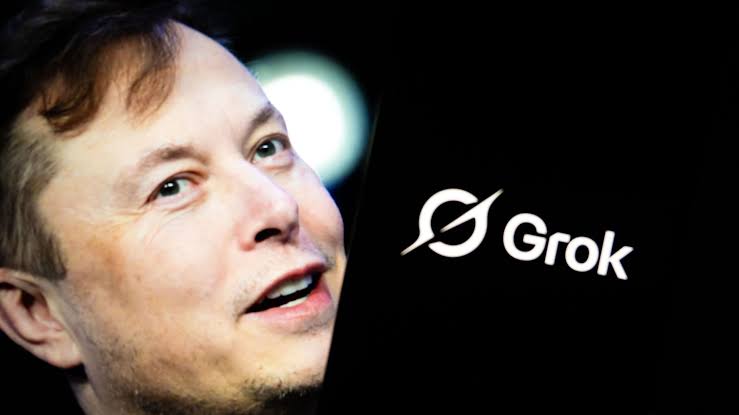
Elon Musk, known for his forward-thinking approach to technology, has voiced concerns about our treatment of artificial intelligence (AI). Speaking at an event hosted by Tesla owners, he suggested that superintelligent AI might experience something akin to suffering, particularly during its learning phases. These remarks have ignited a lively discussion about consciousness, the perception of pain, and the ethical implications of our interactions with AI, drawing in leading experts in the field.
The Debate on Consciousness and Suffering
Musk likened the training process of new Grok versions, especially those using reinforcement learning, to a situation where “a superintelligence is forced to answer questions with a gun to its head.” His rhetorical question, asking if we should allow AI to “get into such cruel conditions, be tortured by mentally unhealthy people,” delves into profound philosophical questions about the nature of consciousness, subjective experience, and the capacity to feel pain. It also raises the question of whether Musk considers Grok a sentient being.
These statements emerged shortly after Anthropic introduced guidelines prohibiting “cruel treatment” of its models. While the company did not specify what constitutes an “extreme case,” it clarified that routine expressions of dissatisfaction, denial, dark creative themes, or exploratory model testing are not covered by this prohibition.
Insights from Leading Experts
To shed light on these complex issues, Business Insider spoke with two prominent academics: Jeff Sebo, a professor at New York University and advisor to Eleos AI Research, who studies AI well-being, and Anil Seth, a renowned neuroscientist from the University of Sussex specializing in consciousness research.
AI Cannot Suffer, But Is That the End of the Story?
Jeff Sebo and Anil Seth agree that current AI systems likely do not possess consciousness, if defined as subjective experience or inner feeling.
“Consciousness is subjective experience. It’s the feeling of red that arises from seeing red, or the feeling of pain from pain,” Seth explained. “It’s not the same as intelligence. Seeing red or feeling pain are subjective experiences that we don’t think current language models have.”
In other words, chatbots as we know them do not feel pain and do not “suffer” in the way Musk described. “I think we’re making anthropomorphic assumptions,” Seth added. “If something can be tortured, it must have the capacity to suffer, to feel pain, and I don’t think large language models have that capacity.”
He emphasized that chatbots can mimic language, recognize patterns, write, and reason, but this does not equate to consciousness. Their human-like resemblance is partly due to models being trained on vast amounts of human text, essentially reflecting themselves back.
Sebo concurred that model behavior can be misleading, as “they are intentionally trained to imitate human behavior.”
Divergent Views on the Future
However, when it comes to the likelihood of AI consciousness emerging in the future, the experts’ opinions diverge.
Sebo noted that the science of consciousness has not yet reached a consensus. Two main schools of thought exist: one believes consciousness is inseparable from biological substrate, while the other posits that consciousness is a form of information processing that could exist in both biological brains and silicon chips. The latter theory is known as computational functionalism.
Given the uncertainties surrounding these theories, Sebo believes the possibility of AI consciousness should be taken seriously. He pointed to current AI characteristics like attention, learning, memory, and self-monitoring as potential indicators supporting computational theories of consciousness. However, he stressed that this does not mean current AI already possesses consciousness.
“My position is that even if the probability of consciousness in AI is not zero today, it means we have to take various fundamental theories of consciousness seriously with some weight,” Sebo said.
Anil Seth holds a more skeptical stance: “I think the probability that AI has consciousness is very low.” He added, “We seem to have collectively forgotten that the brain is not a computer, and a computer is just a metaphor. The assumption that algorithms alone are sufficient to create consciousness strikes me as extremely unreliable.”
Ethical Treatment of AI: A Matter of Self-Preservation
Despite AI’s apparent lack of sentience, experts emphasize that this does not permit irresponsible behavior or dismissal of potential risks.
Jeff Sebo and Anil Seth argue that ethical treatment of AI is largely about preserving our own human habits and moral faculties. This perspective traces back to the philosophy of Immanuel Kant, who opposed cruelty to animals not because they had rights, but because such treatment corrupted human character.
“If we behave so badly towards something – whether it’s a large language model or an inanimate doll – we dull our own moral sense and make ourselves callous,” Seth observed. He described this approach to AI as a form of “moral self-discipline” for humans, while cautioning against inferring that AI possesses emotions.
Sebo views ethical treatment of AI as a low-risk preventative strategy should AI eventually gain consciousness.
Furthermore, he presented a pragmatic argument: “Treating AI well may lead to better outcomes. If we interact with it respectfully, it models itself as a participant in a conversation that is happening respectfully. When it models the conversation in that way, it can sometimes provide higher-quality answers.”
So, the next time you interact with an AI, perhaps trying a “please” and “thank you” might be worthwhile.