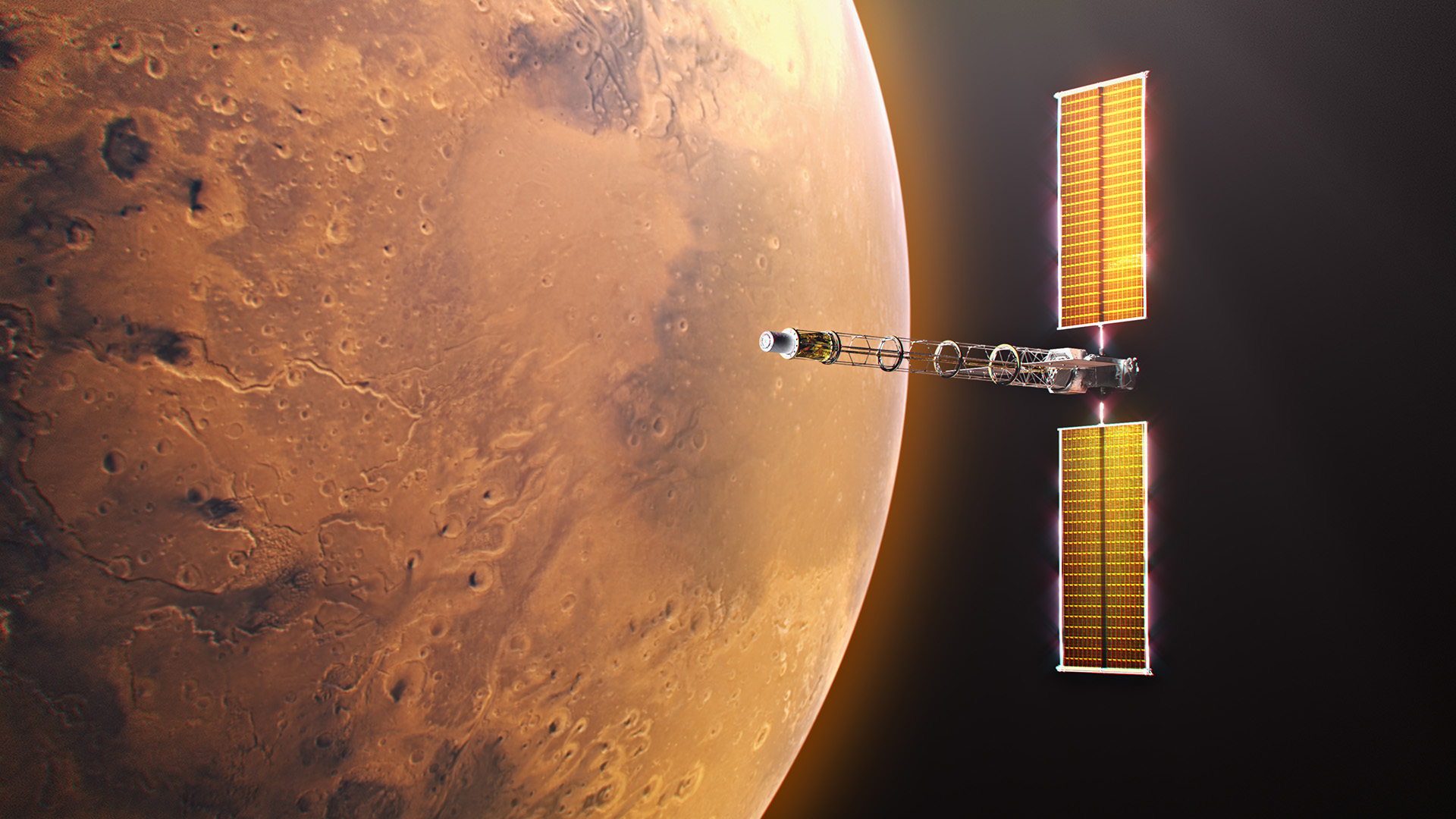
NASA’s ambitious SR-1 Freedom mission, poised to be humanity’s first spacecraft to utilize nuclear fission power beyond Earth’s orbit, is making significant strides with key advancements in its nuclear power module. This groundbreaking technology is destined for Mars, carrying a crucial science payload and demonstrating advanced propulsion capabilities that could revolutionize deep space exploration.
Powering the Journey to Mars
The SR-1 Freedom mission is set to break new ground by being the first spacecraft to demonstrate fission power in deep space. The heart of this endeavor is its nuclear power module, which includes a reactor generating heat through nuclear fission and a sophisticated power conversion system. This system will transform that heat into electricity, not only to power the spacecraft’s instruments and systems but also to fuel its nuclear electric propulsion. This technology is vital for future long-duration missions, particularly for establishing and maintaining bases on the Moon and exploring distant celestial bodies like Mars.
Key Partnerships Accelerate Development
To ensure the mission stays on track for its projected late 2028 launch, NASA and its partners are accelerating development through strategic contract actions. Sierra Lobo Inc. has been tasked with providing the crucial closed Brayton cycle power conversion system, a key component that will convert the thermal energy generated by the reactor into usable electrical power. This work is being conducted under a contract supporting spaceflight hardware design and development at NASA’s Glenn Research Center. Meanwhile, the Department of Energy’s Idaho National Laboratory is responsible for designing and developing the fission reactor itself. Both organizations are adhering to stringent safety standards, including interagency reviews, continuous oversight, and a rigorous design process focused on hazard mitigation and nuclear safety. Importantly, the reactor will remain inactive until the spacecraft is safely clear of Earth’s orbit.
Paving the Way for Future Exploration
Beyond its primary propulsion demonstration, SR-1 Freedom will deliver the SkyFall science mission to Mars. This payload consists of a team of three Mars helicopters, building upon the success of the Ingenuity design. These helicopters will gather valuable scientific data, explore potential landing zones, and search for signs of water. The successful deployment of SR-1 Freedom and its technologies will pave the way for more ambitious deep space exploration and the development of next-generation fission-powered systems. These systems are essential for sustaining operations in challenging environments, such as powering NASA’s future Moon Base through extended periods of darkness where solar power alone is insufficient.
Source: NASA