In a move that champions user control and a cleaner viewing experience, a growing number of tech enthusiasts and developers are leveraging advanced AI tools, including Claude Code, to strip unwanted advertisements and pre-installed applications from their smart TVs. This initiative aims to reclaim valuable screen real estate, reduce intrusive ad interruptions, and significantly improve the overall performance and responsiveness of smart TV interfaces.
Pioneering Projects Take the Lead
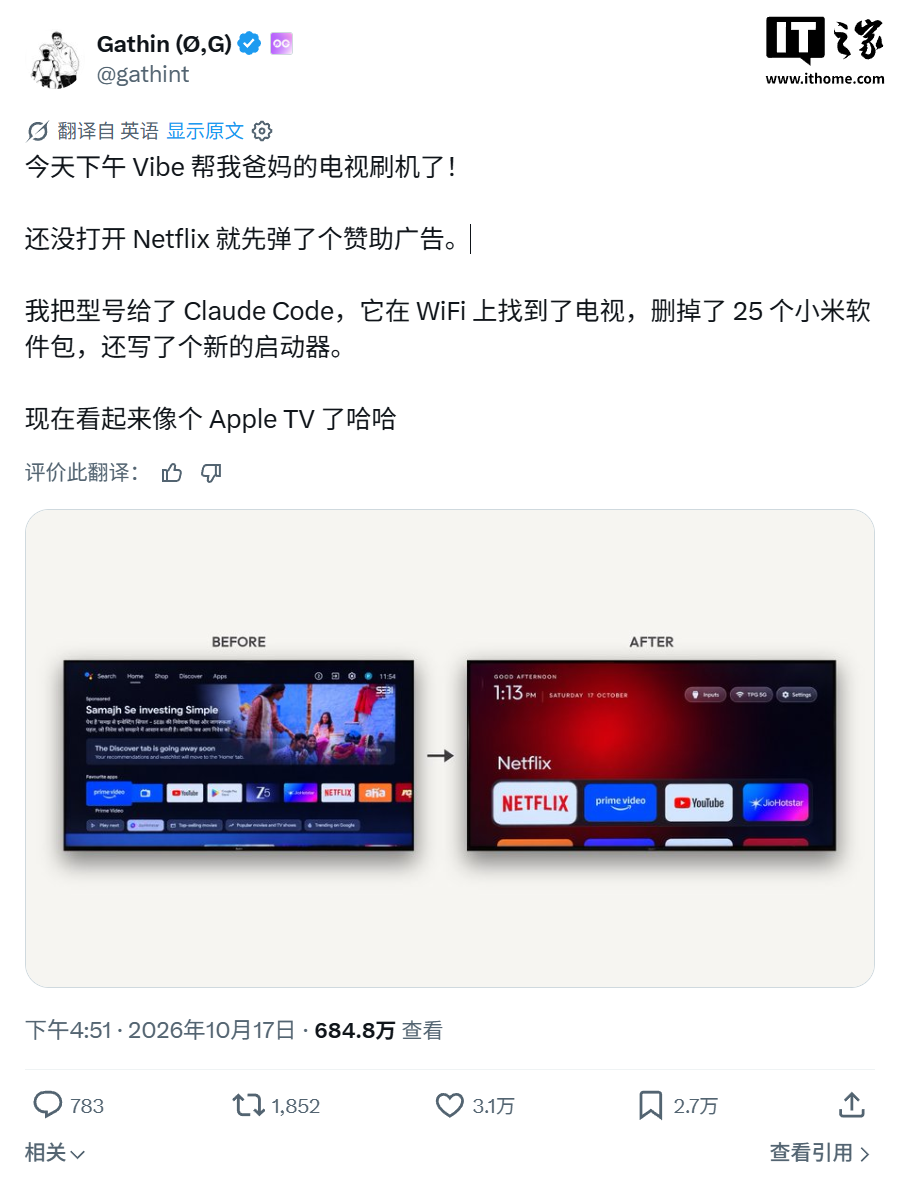
One of the trailblazing projects in this domain is CleanYourTV, initiated by developer Gathin T. Frustrated by the ad-laden experience on his parents’ Xiaomi TV, Gathin T. utilized Claude Code to analyze and disable 25 specific Xiaomi software packages. The AI not only helped in removing these unwanted components but also generated a custom launcher, replacing the default, cluttered home screen with a streamlined, ad-free interface. Following its public release, the project saw thousands of users embrace similar modifications on their own devices within just two days, highlighting a widespread demand for such solutions.
Another notable project, DumbTV, developed by Muzzammil Yasin Sabuwala, focuses on minimizing TV ads, user behavior tracking mechanisms, and unnecessary software updates. Sabuwala revealed that the development of DumbTV involved sophisticated AI models such as DeepSeek V4.1 Flash, Claude Opus 5.5, and Claude Sonnet 5.5. These powerful AI agents were instrumental in identifying and neutralizing intrusive elements within the TV’s operating system.
Broad Compatibility and User Empowerment
According to reports from TechCrunch, DumbTV has undergone extensive testing across a range of smart TV platforms. Its compatibility extends to Fire TV Edition devices, as well as Android TV and Google TV models from major brands like Sony, TCL, Philips, Hisense, and Xiaomi. The project also supports the popular Nvidia Shield devices. The developers behind these initiatives encourage users to select their preferred AI agent and utilize the provided code from platforms like GitHub to configure their smart TVs, offering a flexible and user-driven approach to customization.
Beyond these dedicated projects, individual users are also directly engaging AI programming assistants to modify their TV systems. For instance, X user Ryan Doyle shared on October 17th how he successfully prompted Claude Code with his TV’s product information, seeking guidance on system modifications. Following the AI’s instructions, he managed to remove advertisements, disable certain pre-installed apps, adjust screen saver settings, and noticeably improve the interface’s responsiveness.
Addressing Smart TV Intrusion
These user-driven modifications primarily target the pre-installed applications, launchers, and advertising functionalities embedded within smart TVs. Many modern smart TVs employ Automatic Content Recognition (ACR) technology, which analyzes on-screen images and audio to track viewing habits for personalized advertising. The aforementioned projects aim to give users greater control over their TV’s interface and underlying background functions, effectively pushing back against pervasive data collection and advertising.
Caveats and Future Development
It is crucial to note that these DIY AI-driven modifications are still in the early stages of development and testing. Success is not guaranteed across all smart TV models due to variations in system components and software packages across different platforms. TechCrunch has reported instances where users encountered issues, including AI refusing modification requests or processes being interrupted. Furthermore, improperly disabling essential system components could lead to device malfunctions or even render the TV unusable. Users undertaking these modifications do so at their own risk, emphasizing the need for caution and thorough understanding before proceeding.
Despite these challenges, the emergence of AI tools like Claude Code in enabling users to customize and reclaim control over their smart TV experience represents a significant development. It points towards a future where users have more agency in managing the software and advertising that shapes their entertainment environment.