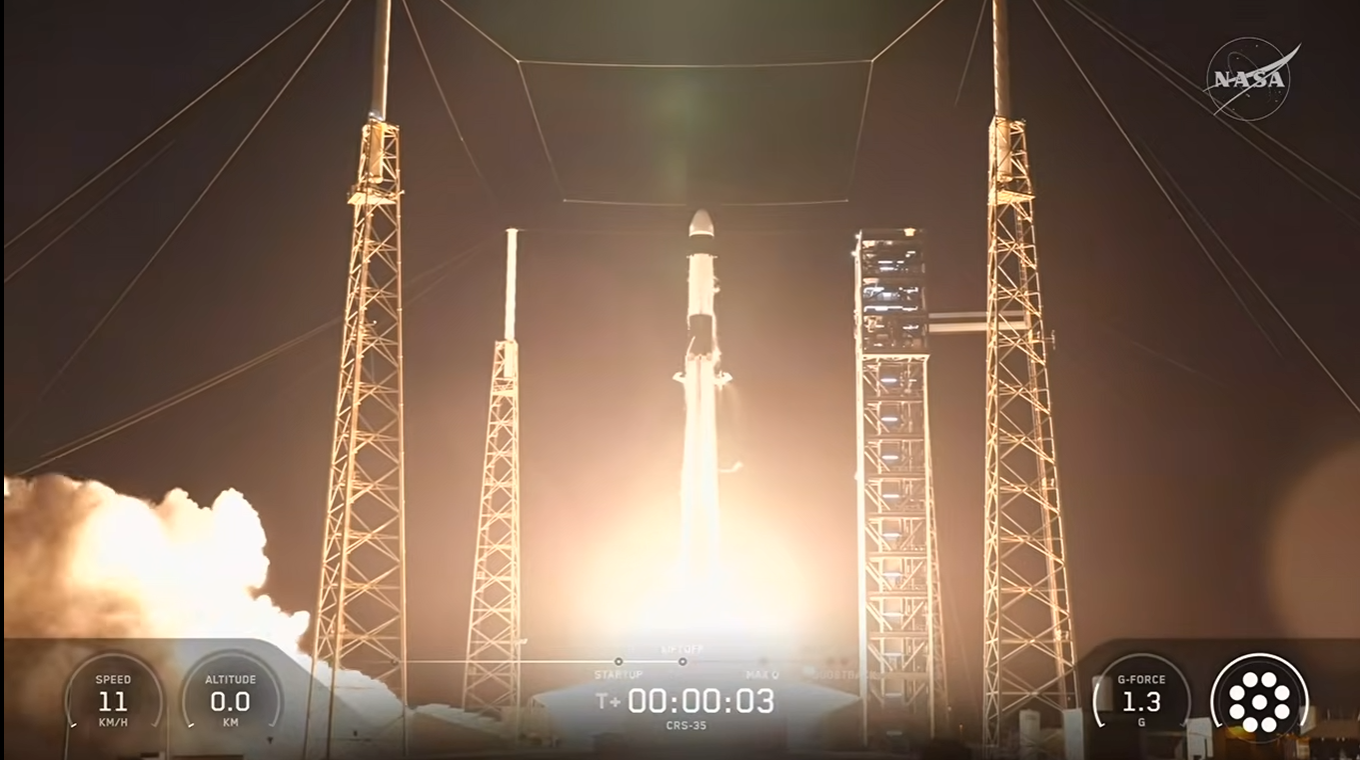
SpaceX has successfully launched its 35th cargo mission to the International Space Station (ISS), delivering a significant payload of scientific experiments and essential components for upgrading the station’s power system. The Falcon 9 rocket carrying the Dragon spacecraft lifted off from Cape Canaveral, Florida, on October 13, 2026. The mission is transporting over 6,300 pounds (approximately 2,860 kg) of valuable supplies to orbit.
Power System Enhancements and Future Research Capabilities
Among the most critical items aboard the Dragon are the latest pair of Roll-Out Solar Arrays (ROSA). Once installed during upcoming spacewalks, these advanced solar arrays will substantially boost the ISS’s energy capabilities, providing more electricity for ongoing scientific research, station operations, and supporting the eventual safe deorbiting of the station. The Dragon spacecraft is scheduled to autonomously dock with the Harmony module on the orbital outpost on October 15 at 11:00 AM Eastern Daylight Time (EDT). NASA will broadcast the rendezvous and docking procedures on its platforms, with coverage beginning at 9:15 AM EDT.
Advancing Medicine and Science in Orbit
Beyond infrastructure upgrades, the SpaceX CRS-35 mission carries a variety of groundbreaking scientific experiments. Of particular interest is equipment designed to produce artificial retinas in microgravity, a development that could pave the way for new treatments for vision impairments on Earth. The mission also includes 3D-printed human heart models that will be used to test new medications for future long-duration space missions. Other research initiatives will explore the formation of a novel type of glass in the vacuum of space and analyze brain organoids, which could contribute to the development of therapies for neurodegenerative diseases such as Alzheimer’s, Parkinson’s, and multiple sclerosis. These studies are part of a broad spectrum of scientific work conducted aboard the ISS, benefiting humanity and laying the groundwork for future deep-space exploration, including NASA’s Artemis program.
The Dragon spacecraft is expected to remain attached to the ISS until mid-November. It will then return to Earth, carrying valuable research results that require prompt analysis, and will splash down off the coast of California.