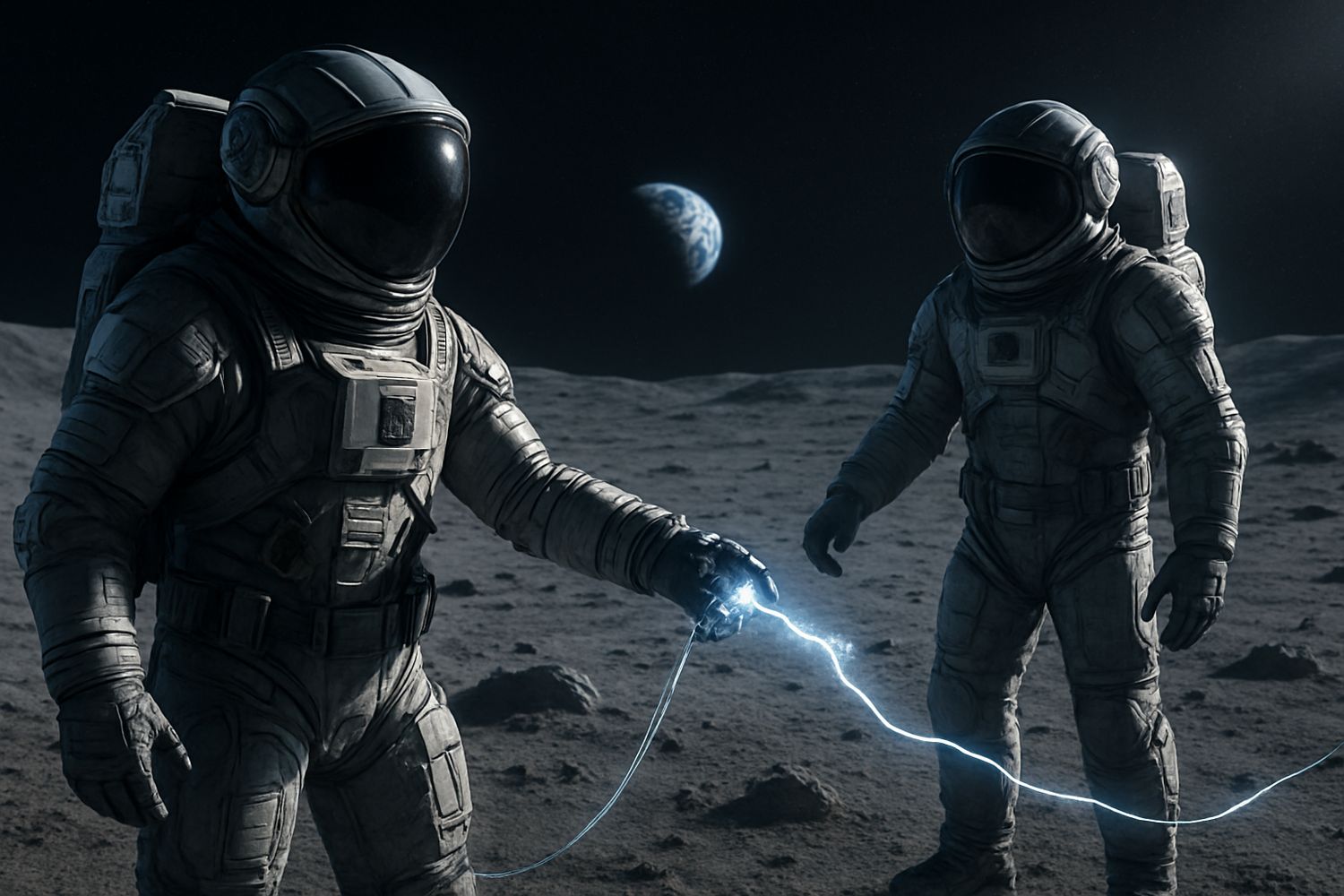
NASA is actively seeking innovative solutions to prevent the buildup of static electricity on astronauts’ spacesuits during lunar missions. The challenge arises because, when operating on the Moon, particularly in shadowed regions, spacesuits can accumulate significant electrical charges, potentially transforming astronauts into ‘walking high-voltage capacitors.’ This could lead to dangerous electrical discharges upon contact with lunar modules or other equipment.
The Static Electricity Challenge
During lunar excursions, especially when working in areas devoid of sunlight, astronaut spacesuits can gather electrical charges. This phenomenon is attributed to processes like tribocharging (charge transfer between surfaces) and charging from the surrounding plasma environment. The situation becomes particularly perilous when an astronaut, potentially carrying a negative charge, approaches the lunar module, which typically has a slight positive charge. This proximity can trigger a hazardous electrical arc.
Compounding this issue is lunar dust, which can dramatically extend the distance over which sparks can travel. The risks include potential damage to the spacesuit, ignition of the spacecraft’s oxygen atmosphere, or even electric shock to the astronaut. NASA considers this a significant hurdle for the upcoming Artemis missions, scheduled for lunar return around 2028.
A Call for Innovative Ideas
In response, the agency has launched the “Lunar Grounding Challenge,” offering a prize of $150,000 USD for effective and compact solutions. The goal is to find ways to safely discharge astronauts before they re-enter their spacecraft. The proposed technologies must be lightweight, minimally sized, and low in power consumption. They also need to be capable of operating in the harsh lunar environment and support up to four surface excursions within a 10-day period.
Looking further ahead, NASA is also considering the development of a long-term lunar base, potentially ready by the 2030s. Addressing the static electricity problem is identified as a critical step in ensuring the safety of future lunar explorers.