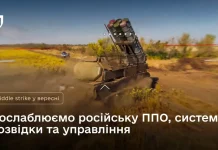
Ukraine continues to systematically increase the destructive pressure on the enemy’s military and fuel‑energy infrastructure that sustains its aggression against the state.
A meeting attended by the country’s military leadership under the presidency of Volodymyr Zelenskyy represents a logical continuation of the asymmetric Deep Strike doctrine aimed at forcing Russia into peace.
Acting Minister of Defence Yevhen Khmara highlighted the high effectiveness of night‑time combined strikes on the occupiers’ naval base and port infrastructure in Novorossiysk, calling the scaling of Deep Strike‑class operations one of the defence ministry’s top priorities.
According to an official statement from the Ministry of Defence dated 12 August 2026, the Novorossiysk operation demonstrated a new quality in the coordinated use of sovereign high‑tech means of destruction, against which the aggressor’s air defence and electronic warfare proved completely helpless.

Anatomy of the Novorossiysk Strike: Multi‑Domain Asymmetry
The key factor behind the success of the Novorossiysk operation was the synchronisation of strike means across several domains. Instead of isolated attacks, Ukrainian Defence Forces delivered a multi‑domain blow that fully overwhelmed the enemy’s local detection and air‑defence assets.
The unique combined attack architecture included:
- Domestic missile arsenal: high‑precision sovereign‑produced missiles for hitting stationary objects and air‑defence/radar assets;
- Reactive strike UAVs: high‑speed kamikaze‑type drones to pierce airspace and strike deep‑rear targets;
- Marine robotic complexes: next‑generation unmanned boats (USVs) for destroying enemy ship‑boat inventories and terminal facilities.
What the Stavka Prepares: Vectors of New Deep Strike Blows
The conference attended by the President, Acting Defence Minister Yevhen Khmara, Commander‑in‑Chief General‑Major Mykhailo Drapaty, the SSU leadership and the Unmanned Systems Forces defined the following critical directions for strikes:
- Logistics and the fuel‑energy complex (FEC): oil refineries, large fuel depots, export terminals and railway hubs supplying the Russian front‑grouping with fuel.
- Russian defence industry enterprises: facilities producing missiles, UAVs (“Shahed”/”Gerbera”), microelectronics and aviation weapons.
- Military aviation and airfields: bases for KAB‑carrying aircraft (Su‑34, Su‑35) and strategic bombers.
- Black Sea Fleet and shipping: final neutralisation of remaining Russian naval assets and the “shadow fleet” infrastructure.

Synergy of Steel and Algorithms: Technological Base
The preparation of new phases of Deep Strike relies on scaling domestic production and digital tools:
- Production conveyor: thanks to the involvement of more than ₴10 billion in preferential loans at 5 % and the work of the Brave1 ecosystem, domestic companies are increasing serial output of reactive UAVs and long‑range missiles.
- Speed of delivery: via the Brave1 Market marketplace and the eBali system (where the military has already ordered weapons worth US$1 billion), specialised units receive the newest strike means within seven days.
- Coordination in DELTA: all missions are planned using the DELTA situational system (Mission Control), which enables the detection of weak points in Russian air defence and its overload through combined swarms.

Comparative Matrix of the Evolution of Deep Strike Strike Means
The table below illustrates the qualitative leap in strike technologies against the aggressor’s rear‑area infrastructure.
| Parameter / Stage | Initial Phase (2024‑2025) | Current Stage (August 2026) |
| Nature of attacks | Isolated sorties of rotary‑wing UAV‑kamikazes | Synchronised multi‑domain strike (missiles + reactive UAVs + USVs) |
| Speed and protection | Low cruise speed, vulnerability to MANPADS | Reactive engines, AI algorithms, jam‑resistant communications |
| Effectiveness in penetrating air defence | Single‑piercing of REB/AD bubbles | Complete overload and destruction of radar and S‑400/Pantsir systems |
| Coordination among forces | Separate missions of different agencies | Full synergy of MoD, General Staff (Drapaty), SBS, SBU and Brave1 ecosystems |
Xpert Take
Yevhen Khmera’s statement confirms Ukraine’s transition to a phase of total technological pressure on Russia’s economic and military matrix. The success of the Novorossiysk operation proves that the sovereign Mil‑Tech sector, bolstered by preferential financing exceeding ₴10 billion, is turning asymmetric developments into weapons of strategic level.
The combination of missile potential, new‑generation reactive UAVs and robotic marine platforms leaves no safe rear for occupiers in the Black and Azov Sea basins. Transparent procurement procedures and digitalisation enable rapid scaling of long‑range hardware, delivering on the doctrine of forcing the aggressor to peace.
Stay tuned for the latest technology news and defence‑industry developments in the Hi‑Tech section on HiTech Expert.