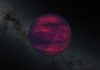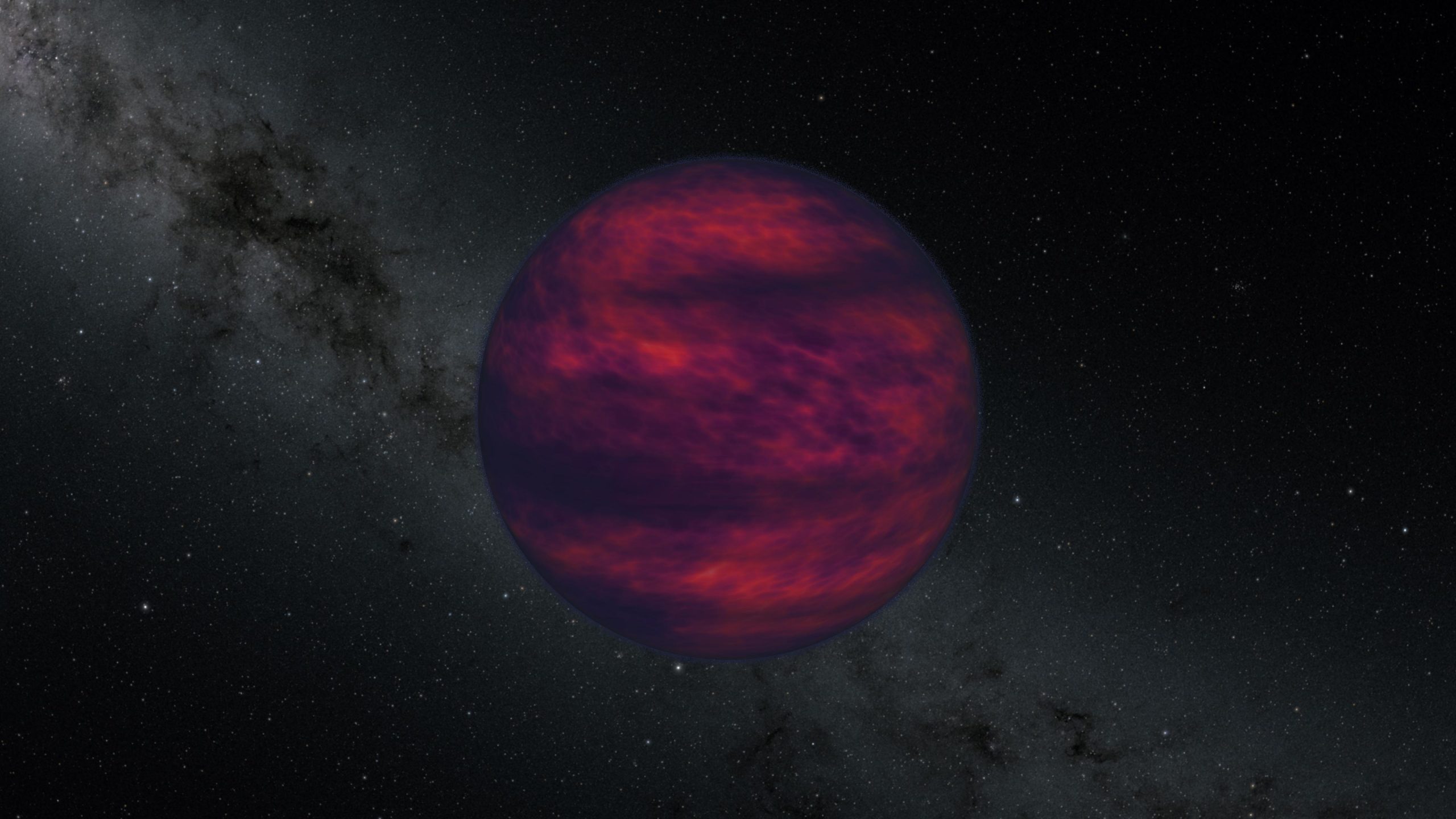
NASA’s cutting-edge SPHEREx telescope, designed to map the entire sky in unprecedented detail, has achieved a remarkable feat: discovering thousands of previously unseen brown dwarfs. These enigmatic celestial bodies, often described as “failed stars” or “super-Jupiters,” are shedding new light on the complex chemistry and atmospheric dynamics of objects that bridge the gap between planets and stars.
Unveiling the ‘Goth’ Worlds of the Cosmos
Brown dwarfs, first identified in the 1990s, form like stars from collapsing gas clouds but lack the mass to ignite sustained hydrogen fusion in their cores. This results in objects that are dimmer and cooler than stars, glowing faintly from internal heat. Unlike planets, they drift independently through space, unbound to any star. “They’re kind of goth,” jokes Zafar Rustamkulov, lead author of a new study detailing these findings and a scientist at Caltech’s IPAC. “Unlike exoplanets, free-floating brown dwarfs are completely independent celestial objects that will fade into eternity alone. We’re still learning how complex they are.” Traditionally, only a few dozen brown dwarfs have been studied in depth, but SPHEREx is set to dramatically expand this number, offering scientists a much larger sample size to understand these elusive objects.
SPHEREx’s Spectral Secrets Reveal Rich Atmospheres
The SPHEREx (Spectro-Photometer for the History of the Universe, Epoch of Reionization, and Ices Explorer) space telescope, launched in March 2025, excels at observing light in 102 different colors, from deep red to invisible infrared. This capability allows it to analyze the “spectra” of celestial objects, essentially a fingerprint of the light they emit. For 37 nearby brown dwarfs observed by SPHEREx, these spectra revealed atmospheres rich in water, carbon dioxide, carbon monoxide, and methane. “We’re seeing the signatures of these molecules and how they change from object to object across the entire temperature regime,” explains J. Davy Kirkpatrick, a study coauthor. “Our paper concentrated on just three dozen, but we have thousands more that we are in the process of analyzing. I really want to see what bounds the universe places on the variety of brown dwarfs.” The telescope’s ability to observe wavelengths absorbed by Earth’s atmosphere makes it uniquely suited for this research.
Source: NASA