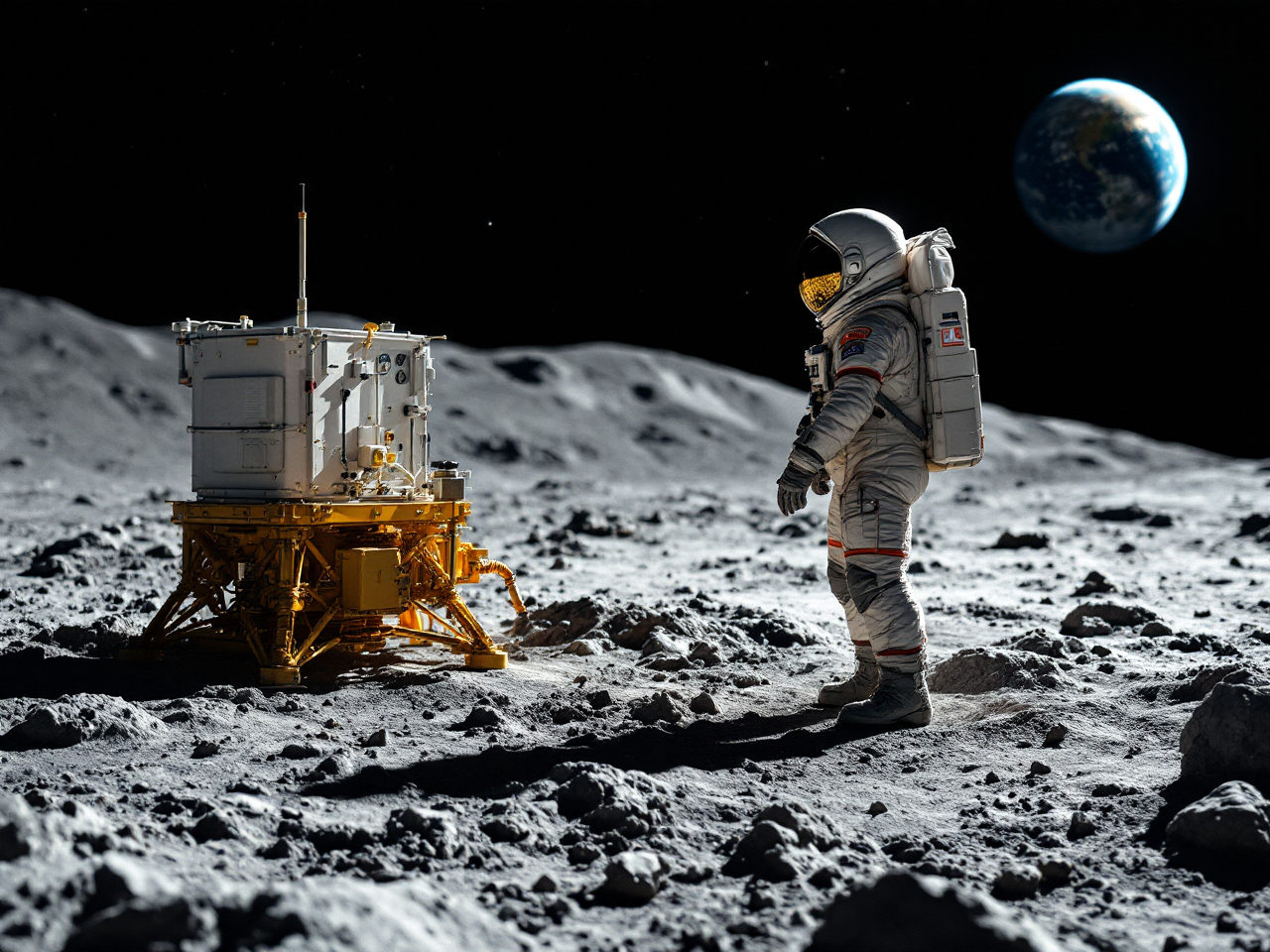
Researchers are calling for a moratorium on industrial activities on the Moon, expressing concerns that rapid development could lead to irreversible environmental damage and the destruction of valuable scientific materials. Both China and the United States are actively pursuing plans to establish permanent human settlements on the Moon by the end of the next decade.
Commercial companies are eager to build businesses that will support future explorers, focusing on extracting resources such as water, building materials, industrial metals, and rare earth minerals. However, some scientists argue that a temporary halt to lunar industrialization is necessary to allow regulatory frameworks to catch up and to limit potential exploitation, thereby preventing a “lunar gold rush” that could irrevocably harm the pristine lunar environment.
Risks of a ‘Lunar Gold Rush’
Two such researchers, Florian Rabitz, a professor of climate and technology management at Vilnius University in Lithuania, and Xiao-Shan Yap, an assistant professor of sustainable Earth and space at Utrecht University in the Netherlands, have published an article in the journal Global Environmental Politics urging for “robust international rules” and “broad and inclusive discussions.”
This approach, they believe, would allow the global community to thoroughly consider the impact of economic activities on the Moon. Beyond the threat to the scientifically invaluable lunar landscape, the researchers also caution against the colonization of the Moon by a select few powerful actors, specifically naming China, the U.S., and their closest allies.
Calls for Regulation
“When it comes to the Moon, it’s very clear that whoever does the big infrastructure work will claim their position, including by defining their own exclusive territories,” Rabitz stated. “It shouldn’t be a Wild West situation.”
Rabitz pointed out that while the United Nations’ 1967 Outer Space Treaty prohibits individual nations from claiming ownership of the Moon, the Earth’s natural satellite and its valuable resources are unlikely to remain truly neutral territory if their exploitation is dominated by a handful of powerful states.