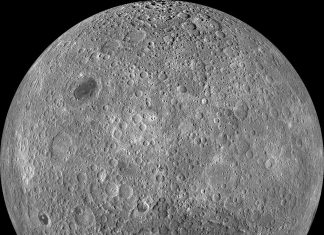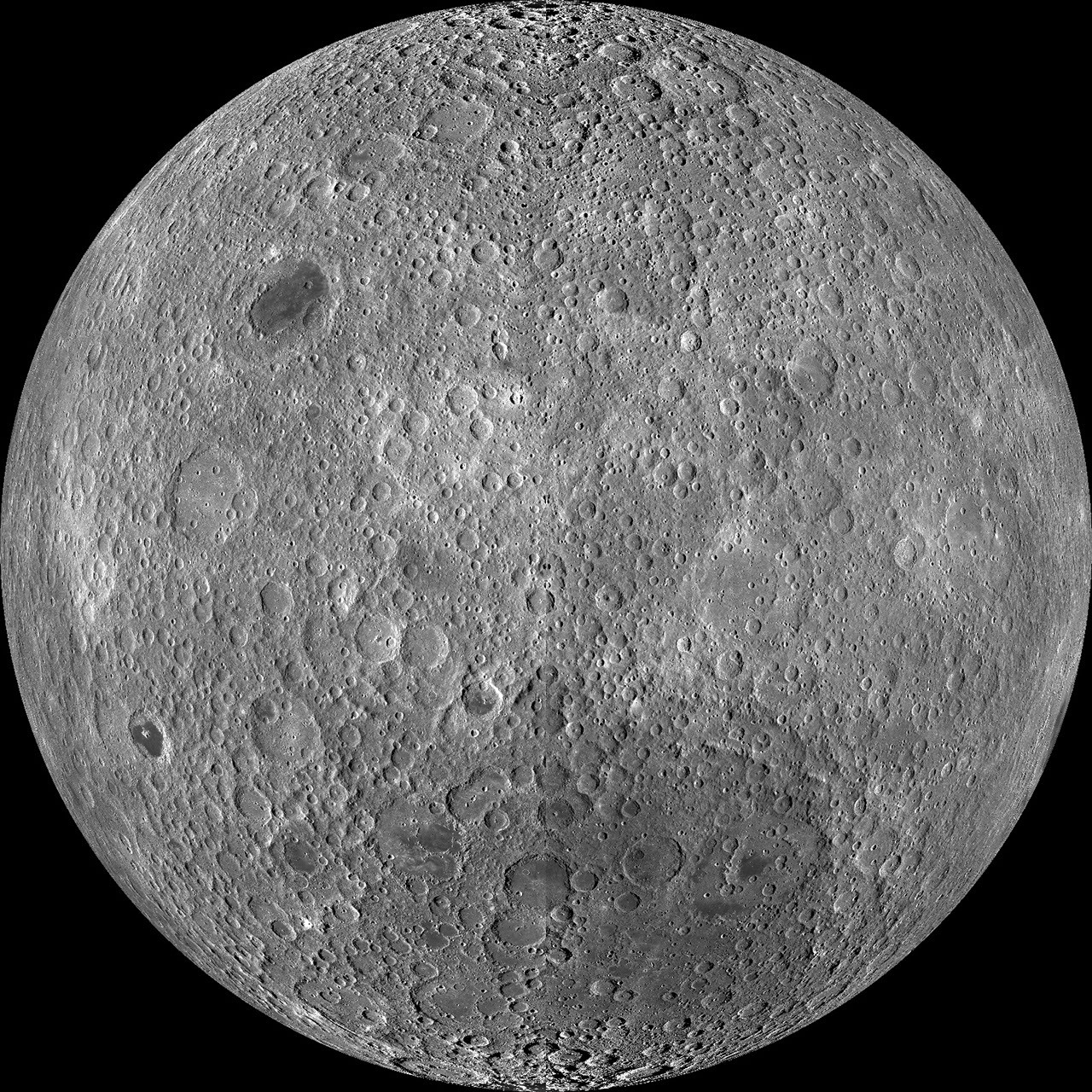
For millennia, humanity has gazed at the Moon, always seeing the same familiar face. Now, a stunning new mosaic from NASA’s Lunar Reconnaissance Orbiter (LRO) offers an unprecedented, high-resolution view of the Moon’s enigmatic farside. This detailed image, compiled from thousands of individual shots, provides invaluable insights into the geological history and distinct characteristics of the side of the Moon perpetually hidden from Earth.
A World Apart: Why the Farside Looks So Different
The most striking difference between the lunar nearside and farside is their appearance. While the nearside is characterized by vast, dark plains known as maria, the farside is a rugged, heavily cratered landscape with far fewer of these smooth basaltic formations. Scientists believe this stark contrast is primarily due to a thicker crust on the farside. This thicker shell likely acted as a barrier, preventing molten material from the Moon’s interior from reaching the surface and erupting to form the maria that dominate the Earth-facing side.
An Unprecedented Map of the Lunar Farside
This remarkable image is not just a single photograph, but a meticulously crafted mosaic comprising over 15,000 individual images captured by the LRO’s wide-angle camera. Acquired between November 2009 and February 2011, the highest resolution version of this mosaic reveals surface features with an astonishing detail of up to 100 meters per pixel. This comprehensive mapping effort allows astronomers and geologists to study the complex topography, impact cratering history, and subsurface composition of the lunar farside in unparalleled clarity, furthering our understanding of the Moon’s evolution and its place in the solar system.
Source: NASA