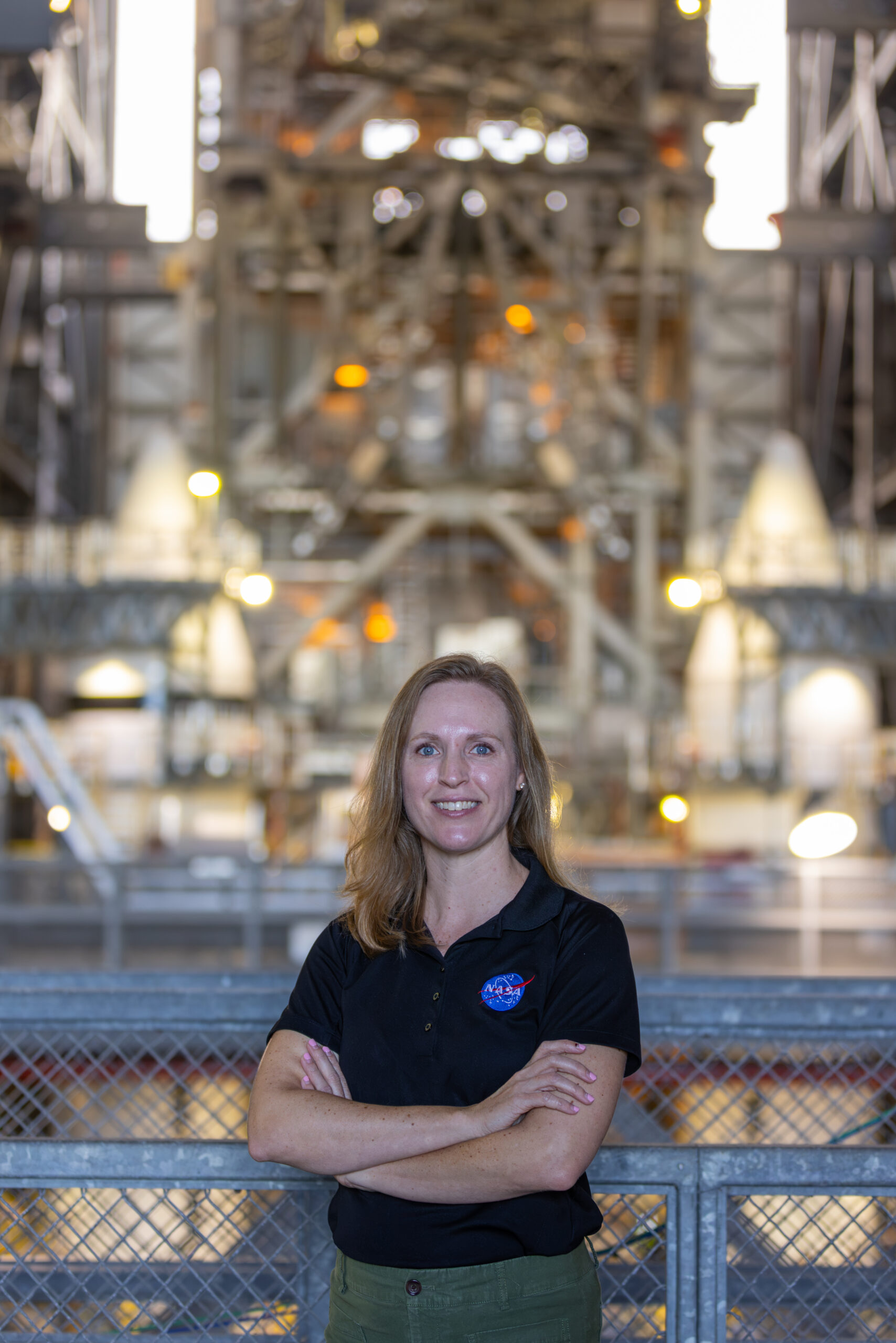
The fiery blast and thunderous roar of the Space Launch System (SLS) rocket are the moments when intense work culminates in triumph. For Allison Mjoen, Operations Manager for NASA’s Exploration Ground Systems program, this moment served as a personal testament to how her team is bringing humanity closer to a new lunar era. With 20 years of experience forged during the Space Shuttle and International Space Station (ISS) programs, her focus is now on NASA’s most ambitious project yet: the Artemis program.
From Shuttles to Artemis: An Engineer’s Journey
Even before the SLS launch, as supercooled propellant filled its tanks, Allison Mjoen and her family watched the preparations with awe. As operations manager, she played a pivotal role in shaping the ground systems and operations that will enable future crewed missions to the Moon. Her work involves coordinating complex processes that unfold long before liftoff, including overseeing the teams responsible for handling the Orion spacecraft and the SLS rocket engines.
Mjoen began her NASA career as a crew systems engineer, supporting the Space Shuttle program. Her team was tasked with the specific configurations of the orbiter’s cabin—from food and spacesuits to cargo and the payloads astronauts would carry onboard. Following the Space Shuttle program’s conclusion, she transitioned to the International Space Station, where she served as a payload integration engineer, connecting researchers with the developers of their hardware. Later, working in project management, she became a lead specialist for payload integration and evolution for the Artemis I mission.
“Every Setback is a Learning Opportunity”
“Early in my career, I thought every decision had to be perfect. But really, everything is a learning opportunity, especially tasks that seem unrelated. The key is to stay curious, work hard, build relationships, and trust that every step is preparing you for the next,” Mjoen shares. This philosophy took on new meaning when she received her first certification and participated in integrated launch room operations during the Artemis I mission. Working at the integration console underscored the importance of preparation, collaboration, and trust—lessons she applies daily while coordinating various teams.
“I’m fortunate to work every day with incredibly talented and dedicated people who are working toward a common goal. It’s especially rewarding to know that our collective efforts directly contribute to the mission’s success,” she adds.
For Mjoen, the shared experience is what makes the Artemis program so significant. She eagerly anticipates the moment when families can once again watch astronauts return to the lunar surface together. “The first Moon landing captured the imagination of people all over the world and showed what we’re capable of when we unite for a bold goal. Artemis is creating a similar moment for a whole new generation, and this time, it’s to stay,” Mjoen states, emphasizing NASA’s commitment to establishing a sustainable lunar presence.
Source: NASA