China’s advanced Dongfeng-61 (DF-61) intercontinental ballistic missile (ICBM) has officially been integrated into the Rocket Force’s arsenal. This development marks a significant step in bolstering China’s strategic deterrence capabilities.
From ‘Dongfeng-1’ to Dongfeng-61: A Legacy of Innovation
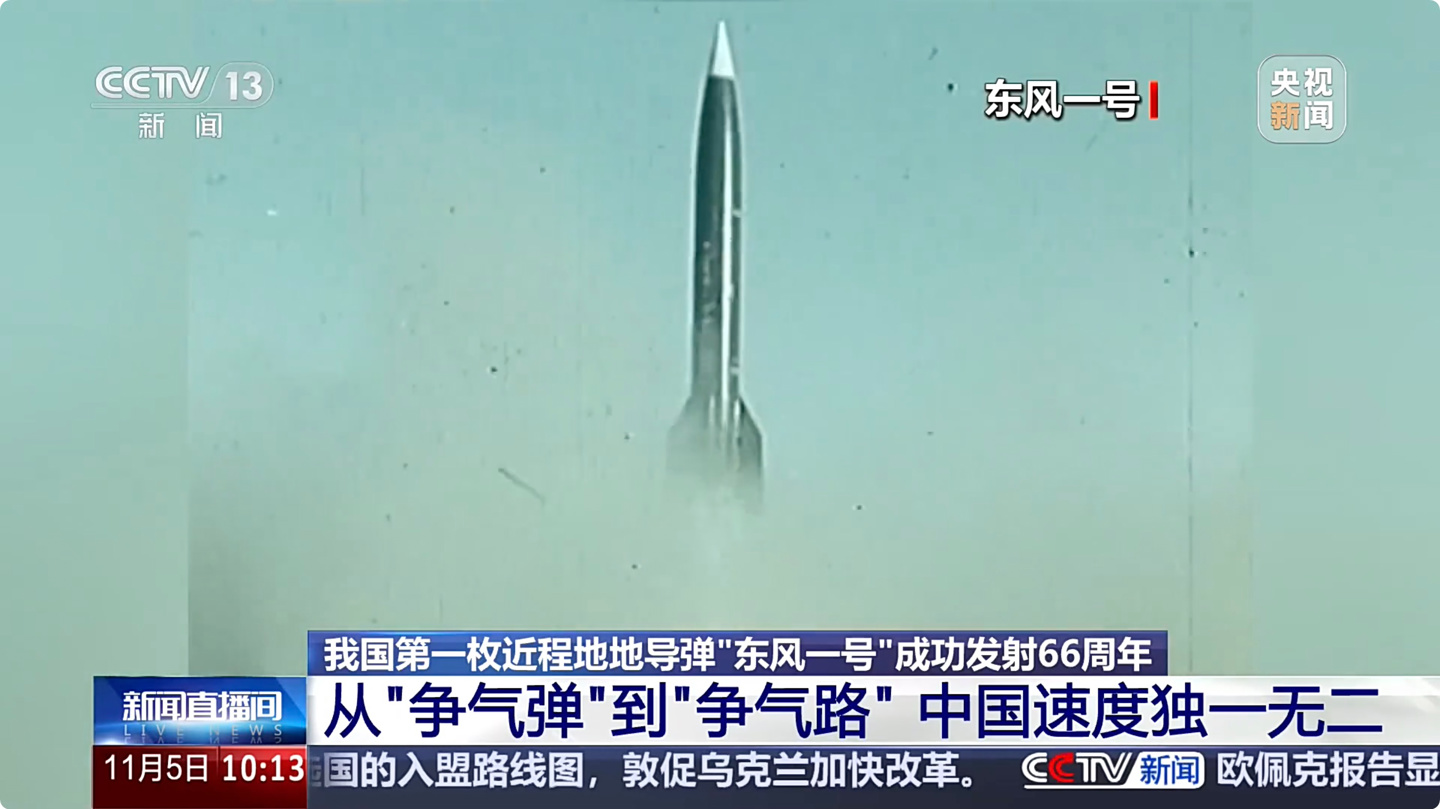
The official commissioning of the Dongfeng-61 comes just days after the 66th anniversary of China’s first short-range surface-to-surface missile, the Dongfeng-1, which was successfully launched on November 5, 1960. The ‘Dongfeng’ series has seen continuous upgrades and advancements over the decades, evolving from early indigenous designs to sophisticated, modern weaponry.
The Dongfeng-61 was first publicly unveiled on September 3, 2025, during a military parade commemorating the 80th anniversary of the victory in the Chinese People’s War of Resistance Against Japanese Aggression and the World Anti-Fascist War. It was showcased as part of the strategic strike group’s nuclear missile formation.
Rapid Integration and Enhanced Combat Readiness
According to CCTV News, the Dongfeng-61’s transition from public debut to regular training exercises has been remarkably swift, significantly outpacing the traditional lifecycle for developing and deploying new ICBMs. Military commentator Shao Yongling highlighted several key factors contributing to this rapid integration:
- High Technical Maturity: The missile’s early public appearance indicated that its research, development, finalization, initial deployment, and reliability testing were already completed, demonstrating a high level of technical readiness.
- Mature Support and Training Systems: The Rocket Force possesses well-established equipment, command, communication, and logistical support systems. The Dongfeng-61 is compatible with existing infrastructure, allowing units to quickly master the new weapon, thus compressing the combat capability generation cycle.
This rapid integration reflects the significant achievements in the Rocket Force’s development post-reform, emphasizing its ‘nuclear and conventional capabilities, and all-domain deterrence and combat readiness.’
Implications for Strategic Deterrence
The Dongfeng-61’s regular participation in training exercises signifies its involvement in realistic combat scenarios, including field maneuvers, position changes, and launch procedures. This strengthens China’s land-based nuclear counter-attack forces, enhancing their survivability, mobility, and strike capabilities.
The article further notes the impressive journey of China’s missile industry. From the launch of the ‘Dongfeng-1’ in 1960 to the current confident declaration of ‘Dongfeng Express, Mission Guaranteed,’ China has, in over sixty years, transitioned from imitation to independent innovation. Its missile capabilities have expanded from short-range to intercontinental, from liquid to solid fuel, and from a singular nuclear deterrent to possessing both nuclear and conventional capabilities. This has resulted in a comprehensive, full-range missile system covering short, medium, long, and intercontinental ranges, forming an ‘impenetrable steel great wall’ for national security.
Key Features of the Dongfeng-61
The Dongfeng-61 is an advanced land-based ICBM developed by China, designed to safeguard national sovereignty and uphold national dignity. Key characteristics include:
- Solid-Fuel Propulsion: Utilizes solid fuel for launch, enabling quicker response times and improved reliability.
- Mobile Launch Capability: Can be launched from vehicles, offering high mobility. This ‘quick, agile, and small’ design allows it to evade satellite reconnaissance and ground surveillance.
- Enhanced Survivability: Its mobility, especially in mountainous terrain, increases its survivability and capacity for a second strike.
The integration of the Dongfeng-61 represents a significant enhancement of China’s strategic nuclear forces, underscoring the nation’s commitment to maintaining peace and security through robust deterrence.