NASA has unveiled an accelerated plan for its Artemis program, pushing forward key milestones with a crewed test flight of Artemis 3 now slated for 2027. The agency has set an ambitious target to land astronauts on the lunar surface in 2028 as part of the Artemis 4 mission, signaling a significant ramp-up in its lunar exploration efforts.
New Timelines and Objectives
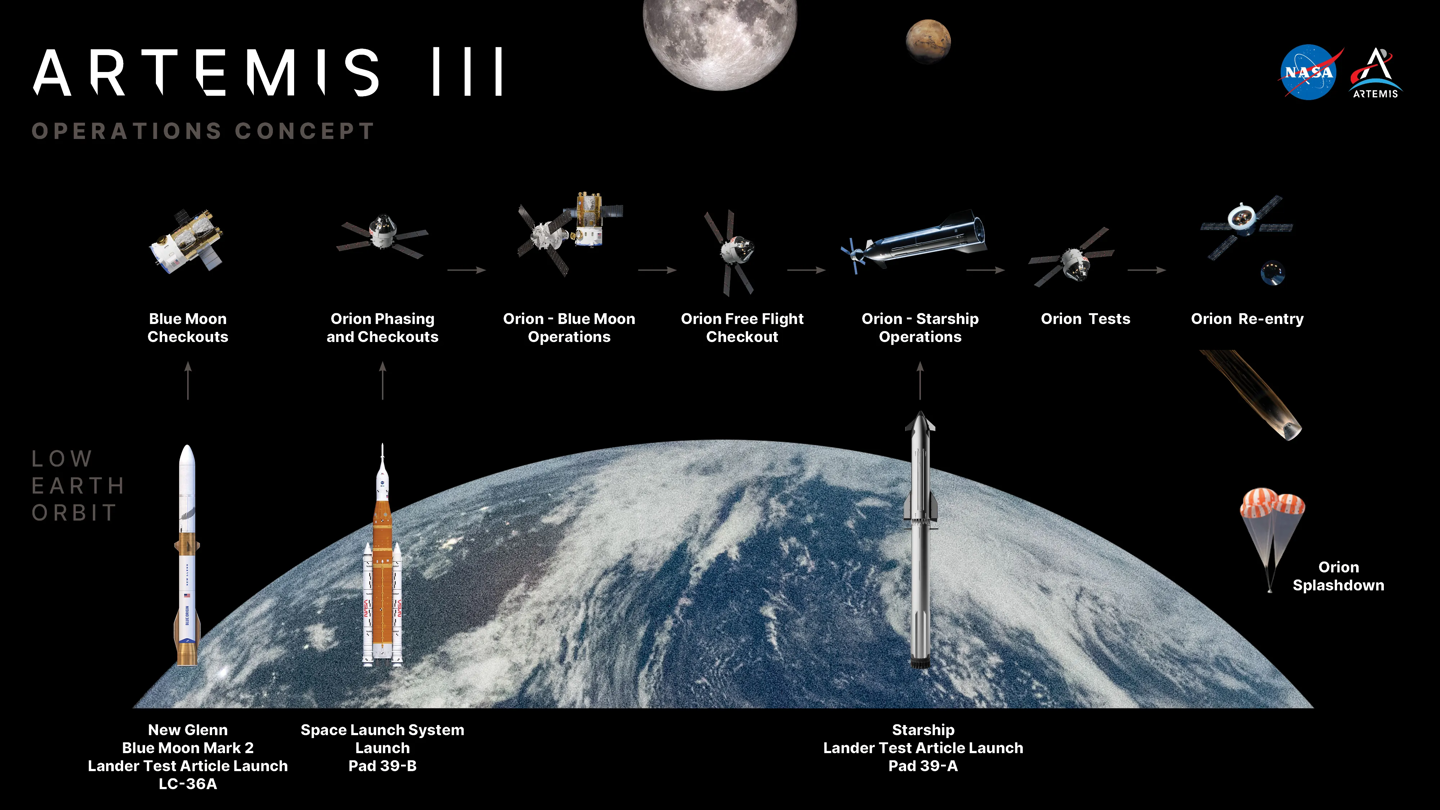
Under the updated schedule, the Artemis 3 mission aims to send four astronauts into Earth orbit for a 14-day flight. During this mission, the crew will utilize the Orion spacecraft and conduct crucial tests. Specifically, the plan includes docking and maneuvering practice with test versions of lunar landers: Blue Origin’s Blue Moon and SpaceX’s Starship (Type 3). These trials are vital for validating the capabilities required for future lunar expeditions.
NASA reported that development of the equipment for Artemis 3 is progressing well, with manufacturing cycles reportedly cut in half. The agency also independently redesigned, manufactured, and tested a key component of the propulsion system in just five months, at a cost of approximately one-tenth of the previous estimate when using external contractors.
Artemis 4: Return to the Lunar Surface
For the Artemis 4 mission, scheduled for 2028, NASA will employ the Orion spacecraft in conjunction with the Space Launch System (SLS) super heavy-lift rocket. Collaboration with SpaceX and Blue Origin will continue for the development of lunar landers.
SpaceX plans to refuel its Starship vehicle in Earth orbit before it rendezvous with Orion for the journey to the Moon. Blue Origin, meanwhile, intends to use an orbital propellant depot to deliver its Blue Moon 2 lunar lander to a low lunar orbit, where it will dock with the Orion spacecraft for descent to the surface.
New Spacesuits and Research Support
To support early lunar exploration, NASA is also partnering with Axiom Space to develop lighter-weight “lunar spacesuits.” These new suits will weigh roughly half as much as standard ones and are intended for initial surface excursions. More robust, heavy-duty spacesuits will be reserved for future long-duration and complex lunar missions.
These accelerated timelines and revised plans underscore NASA’s serious commitment to returning American astronauts to the Moon, ushering in a new era of lunar research and paving the way for future missions to Mars.