Munro Live has released an in-depth review of the Tesla Cybercab, featuring a teardown of the vehicle and a tour of the production line at Giga Texas. During the tour, lead Tesla engineers shared key innovations that distinguish this electric vehicle.
Modular Battery Pack Design for Commercial Use
A significant innovation is the redesigned battery pack. While Tesla continues to use its 4680 cells, the Cybercab’s battery pack is divided into multiple independent modules, a departure from the monolithic structure found in the Model Y. This modular approach allows for the replacement of only a faulty module instead of the entire battery unit, a crucial cost-saving measure for commercial transport operating around the clock.
Tesla’s battery department head reportedly rated the Model Y’s battery pack design as a “D,” and the Cybercab’s as a “B-.” However, the Cybercab’s specific battery architecture for its intended role was ultimately assessed as an “A-.” While the structural battery pack design can house 10% more cells, its complexity and high repair costs make it less than optimal for Robotaxis that require continuous uptime.

Key Battery Pack Improvements:
- Steel Casing: In a first for Tesla, the battery pack utilizes a steel casing. Despite the added weight, steel’s significantly lower cost compared to alternative materials offers a distinct advantage in overall expenditure.
- Additional Space: The design incorporates extra space around the modules, potentially accommodating cheaper Lithium Iron Phosphate (LFP) cells in future iterations.
- Wireless Communication: Battery management boards communicate wirelessly, eliminating the need for complex wiring harnesses.
- Elimination of Fuses: A new type of contactor allows for rapid power disconnection under load, removing the necessity for fusible links. These fuses in previous designs would often trigger even after minor impacts, leading to complete pack replacement.
- Bottom Access for Repairs: Electronic components are situated on the underside of the battery pack, deemed more robust than the cells themselves.

New Inverter for Model Y and Beyond
The Cybercab features a new drive unit with an 11:1 gear ratio, differing from the approximately 9:1 ratio in most other Tesla models. This new inverter boasts fewer components, with each critical part sourced from two suppliers to mitigate supply chain risks. Nick Verzani, Tesla’s Head of Drivetrain, indicated that inverter boards and power components will begin production at the Fremont factory this year and that the entire unit could be integrated into the Model Y.
When asked about the potential integration of this inverter into the Model Y, Lars Moravy offered a playful, constitutional-law-inspired non-answer. It was also confirmed that this drive unit will be utilized in the electric Semi truck. Tesla aims to reduce friction losses by 7% through new lubrication and will employ a more economical mechanical oil pump.

Eliminating the Paint Shop and Enhancing Durability
The Cybercab completely bypasses traditional automotive painting processes, saving millions of dollars and hundreds of thousands of labor hours. Tesla omits electrocoating for the front and rear of the body, as the aluminum alloys used maintain their strength over time. Only the side modules, constructed from boron-reinforced steel for impact protection, require coating. Body panels are manufactured using Reaction Injection Molding (RIM), which infuses color during production, making scratches easily repairable.
These manufacturing and material choices are geared towards extending the vehicle’s lifespan, which Moravy stated will be at least doubled, reaching 500,000 miles (approximately 800,000 km).
UNBOXED Production Line: Boosting Efficiency
The novel Unboxed production process simplifies automation by breaking the vehicle down into four primary modules: front, rear, side, and center. Each module is produced, tested, and assembled independently, significantly boosting efficiency. This has resulted in a reduction of automated workstations in final assembly to just 25 (a 5-to-10-fold decrease compared to the Model Y), an automation level of 78% (with a goal of 100%), and a roughly 50% reduction in the factory floor space required.
The front module, housing half of the vehicle’s components, is assembled on a pallet, with the body lowering onto it from above. The Cybercab also marks Tesla’s first model to feature a Brake-by-Wire system, enabling independent testing of front and rear axle braking systems. Wheels are fitted during the second-to-last stage, and the vehicle only touches the ground for the first time upon exiting the assembly line.

Gullwing Doors and Thermal System Innovations
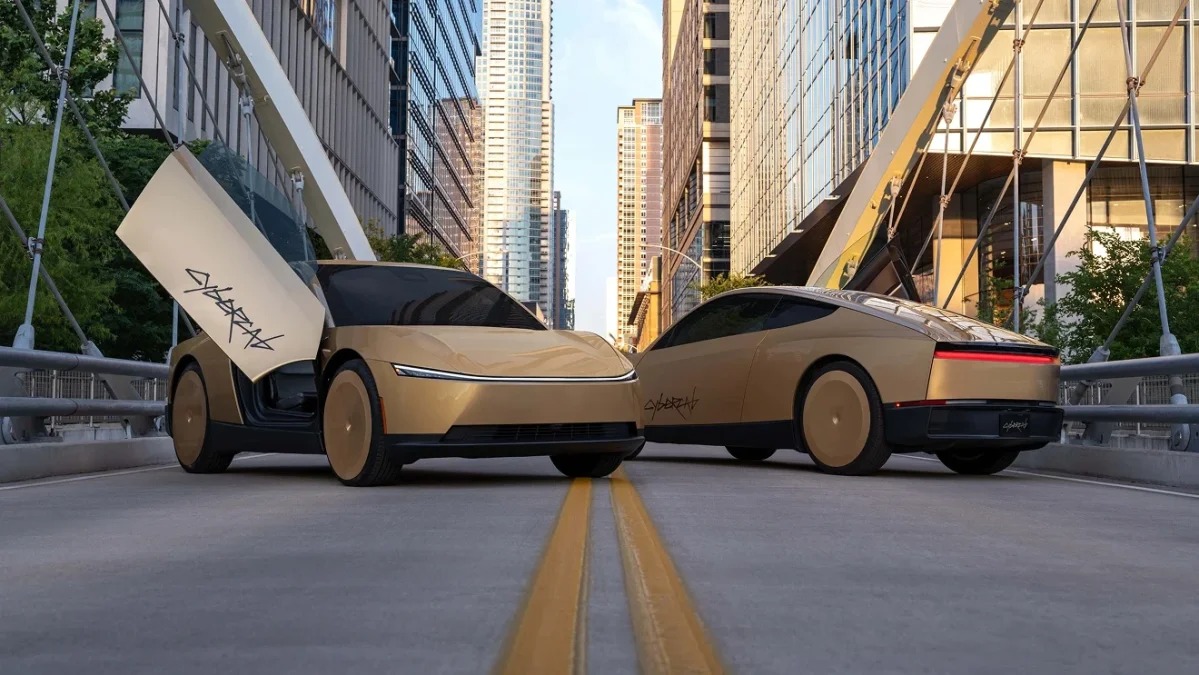
The Cybercab’s gullwing doors serve both aesthetic and practical purposes, offering passengers convenient ingress and egress while providing protection from the elements. The thermal management system has also been re-engineered, with complex components relocated to the coolant loop and the air conditioning compressor directly mounted onto the heat exchanger.
Future Rollout and Technology Integration
Tesla has already deployed over 300 Cybercabs in Austin and plans to commence Robotaxi services in Dallas this month, with initial customer deliveries expected by the end of the year. With production capacity and new inverters now coming online, the engineering solutions and technologies pioneered with the Cybertruck are likely to influence future Tesla models.