On October 15, 1997, NASA launched one of its most ambitious space missions, sending the Cassini and Huygens spacecraft on a journey to Saturn. Originally slated for a seven-year mission, this endeavor spanned over two decades, leaving an immeasurable impact on our understanding of the gas giant, its iconic rings, and its diverse moons.
The Road to Saturn: Duration and Achievements
The Cassini-Huygens mission began its voyage from Cape Canaveral aboard a Titan 4B rocket. The trip to the sixth planet from the Sun took nearly seven years, with Cassini finally entering Saturn’s orbit in 2004. Accompanying Cassini was the Huygens probe, which successfully landed on Saturn’s largest moon, Titan, in 2005. This marked the first-ever controlled descent of a spacecraft onto a moon of another planet.
Discoveries That Revolutionized Saturnian Science
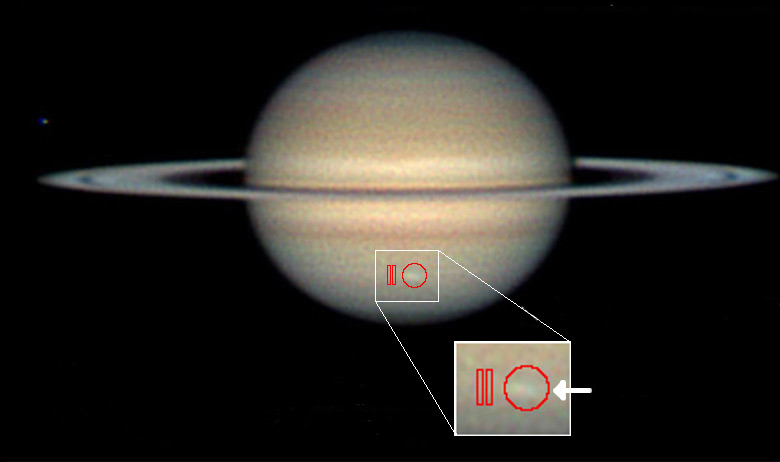
Cassini did more than just orbit Saturn; it was the first probe to do so. For 13 years, Cassini meticulously studied the Saturnian system, unveiling the secrets of its rings, which proved to be extraordinarily dynamic and complex structures. The interplanetary craft also conducted numerous flybys of Titan, capturing evidence of liquid hydrocarbon rivers, lakes, and seas on its surface. Among its most astonishing discoveries were the hexagonal jet stream encircling Saturn’s north pole and colossal hurricane-like vortices at both planetary poles. In 2010, Cassini observed the formation of a planet-spanning giant storm.
Equally significant were the findings on the icy moon Enceladus. Cassini detected powerful plumes of water ice erupting from its south pole, indicating the presence of a subsurface ocean with conditions potentially similar to Earth’s hydrothermal vents. This discovery significantly expanded the scope for potential life-bearing environments in the universe.
For planetary protection reasons, to avoid any potential contamination of Enceladus and Titan, NASA made the decision to safely conclude the Cassini mission by directing the spacecraft into Saturn’s atmosphere on September 15, 2017. In total, the mission lasted approximately 20 years, providing scientists with an unprecedented volume of data and broadening the horizons of space exploration.