In a significant move that highlights the evolving demands of large-scale AI development, American AI company Anthropic has announced it is abandoning the widely-used Git version control system in favor of its own custom-built solution, Scion. This strategic shift aims to streamline code management and reduce the data load for its complex AI agents and automated tasks.
The Need for Speed and Scale
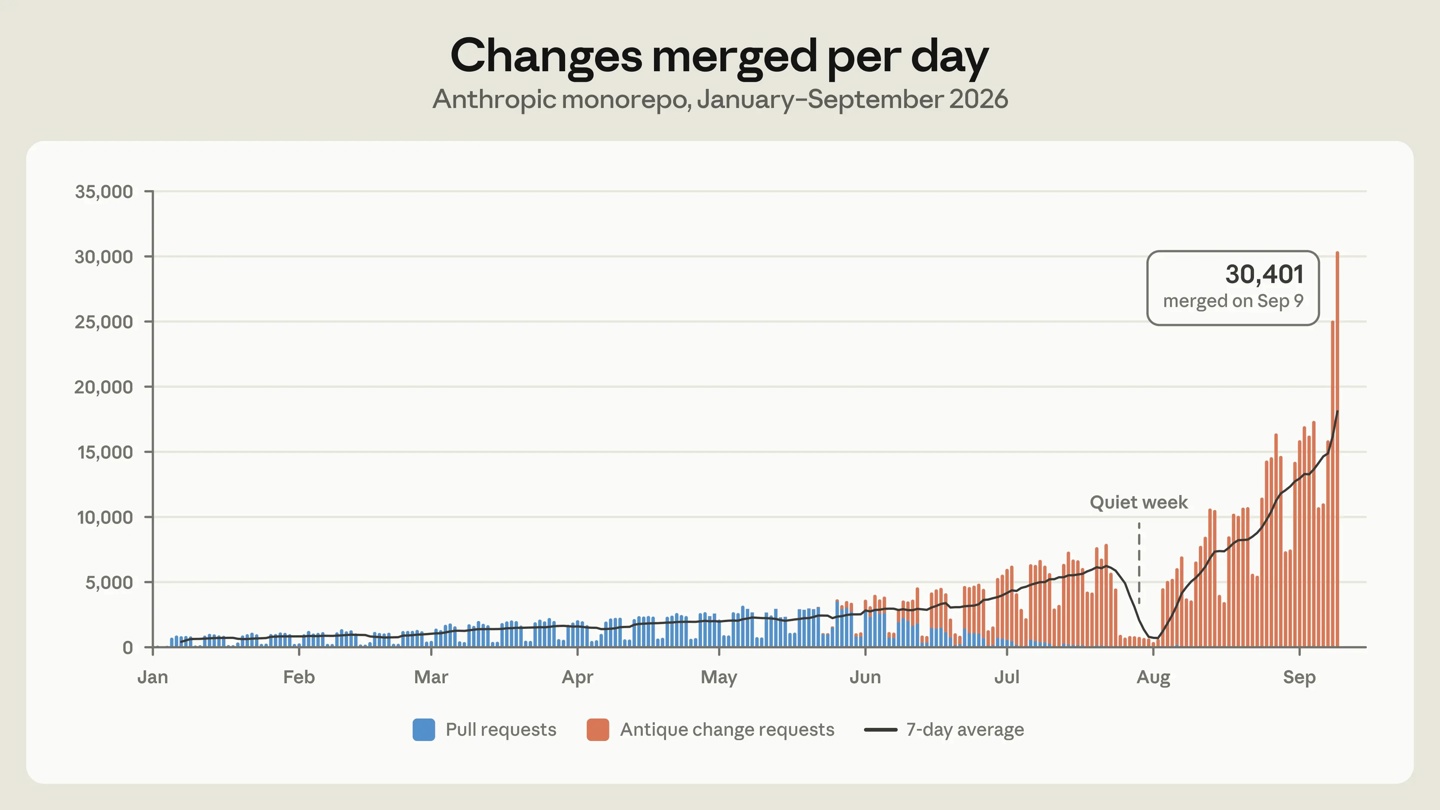
The decision to move away from Git stems from a dramatic increase in code change frequency within Anthropic. The company reported that in May, its teams were merging an average of 2,500 code changes per day. By September, this figure had exploded to over 30,000 daily merges. This exponential growth overwhelmed Git’s capabilities, necessitating a new approach.
Anthropic claims that Scion offers a dramatic improvement in efficiency, boasting CPU and memory consumption that is reportedly one-fiftieth of Git’s. This translates into tangible speed gains: code checkout operations for Continuous Integration (CI) and research tasks, which previously took minutes, can now be completed in mere seconds.
How Scion Works
Scion’s architecture fundamentally differs from Git’s distributed model. Instead of requiring clients to download and manage entire repositories locally, Scion centralizes many core operations on the server. Operations such as commits, merges, rebasing, and file history queries are performed server-side. The client’s role is simplified to tracking local modifications, managing files, and maintaining a limited cache. This design means clients don’t need to store extensive repository data to perform these key functions independently.
“Most of our clients are always-on agents, so Git’s offline support doesn’t offer much benefit,” an Anthropic spokesperson explained. “Centralizing operations on the server reduces local storage requirements and synchronization overhead.”
This server-centric approach is particularly well-suited for Anthropic’s environment, where a significant portion of code management is handled by persistent AI agents. The reduced need for local storage and synchronization overhead is a major benefit in such a setup.
Challenges for Adoption
While Anthropic has found a powerful solution for its specific needs, the company acknowledges that Scion might be difficult for other organizations to adopt. The system requires a suite of complementary, custom-built tools for code review, searching, and CI processes. This tight integration means that moving to Scion isn’t just a VCS swap; it requires a rethinking of the entire development toolchain.
The move by Anthropic underscores a growing trend where companies with unique, large-scale operational needs are developing bespoke solutions rather than relying solely on off-the-shelf tools. As AI and complex software systems continue to grow in size and intricacy, the limitations of traditional development tools are becoming increasingly apparent, driving innovation in areas like version control.