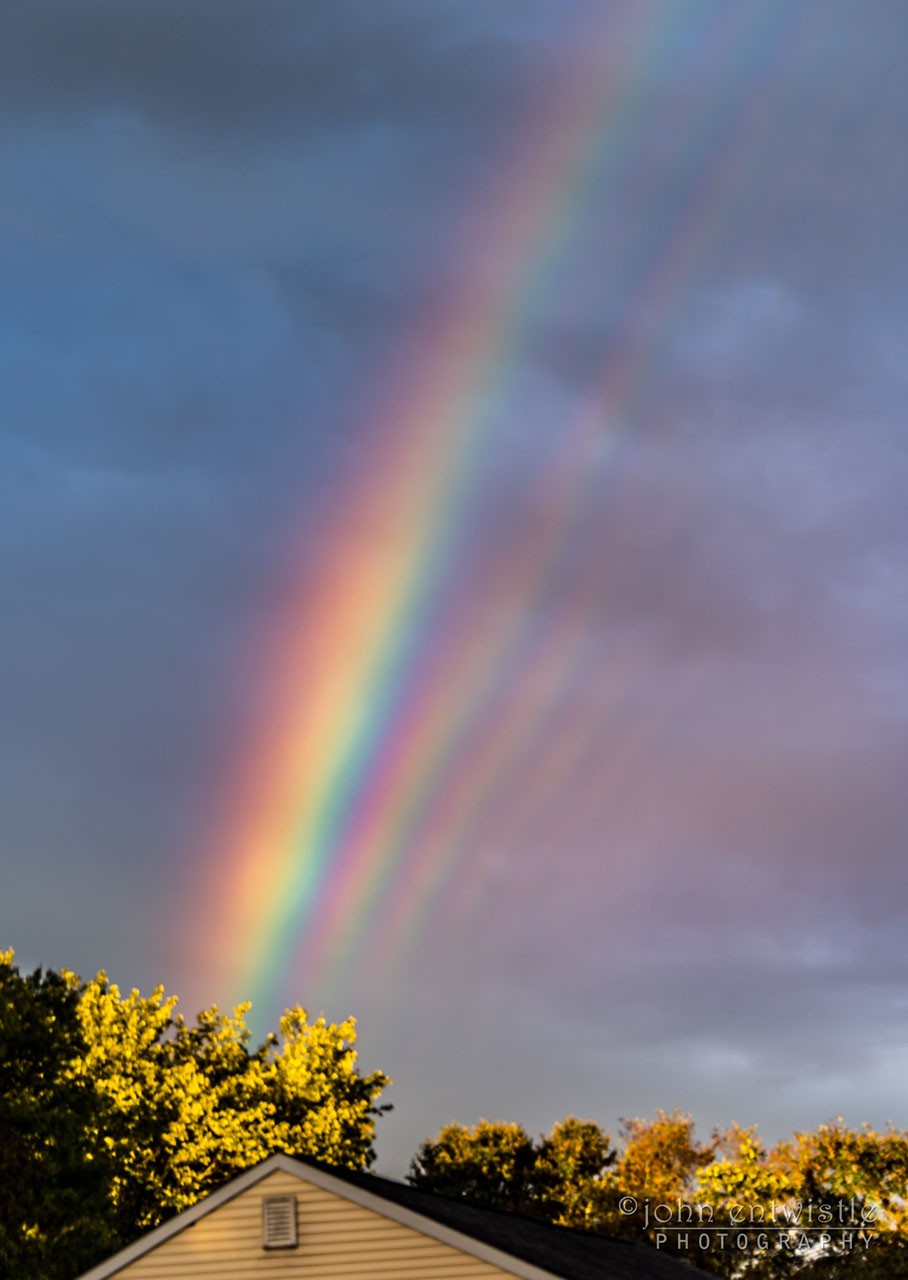
A breathtaking celestial display, supernumerary rainbows, was captured over New Jersey, as featured in NASA’s Astronomy Picture of the Day (APOD) for October 4, 2026. This phenomenon, often overlooked, showcases the intricate physics of light interacting with water droplets.
While a primary rainbow is formed by sunlight reflecting once inside raindrops, supernumerary rainbows are fainter arcs that appear on the inner side of the primary bow. They arise from the interference of light waves, similar to how waves in water interact. When light waves entering a raindrop refract, reflect, and then refract again as they exit, the different paths light can take can lead to constructive and destructive interference patterns. These patterns result in the alternating bright and dim bands seen in supernumerary rainbows.
The precise conditions for observing these secondary bows require specific viewing angles and droplet sizes. The image highlights NASA’s ongoing efforts to document and explain diverse atmospheric and astronomical phenomena, making complex scientific concepts accessible to the public through its APOD feature.
This APOD entry, sourced from NASA Science, serves as a reminder of the beauty and complexity found in everyday atmospheric optics, often viewed against the backdrop of significant space missions and scientific endeavors supported by the agency.