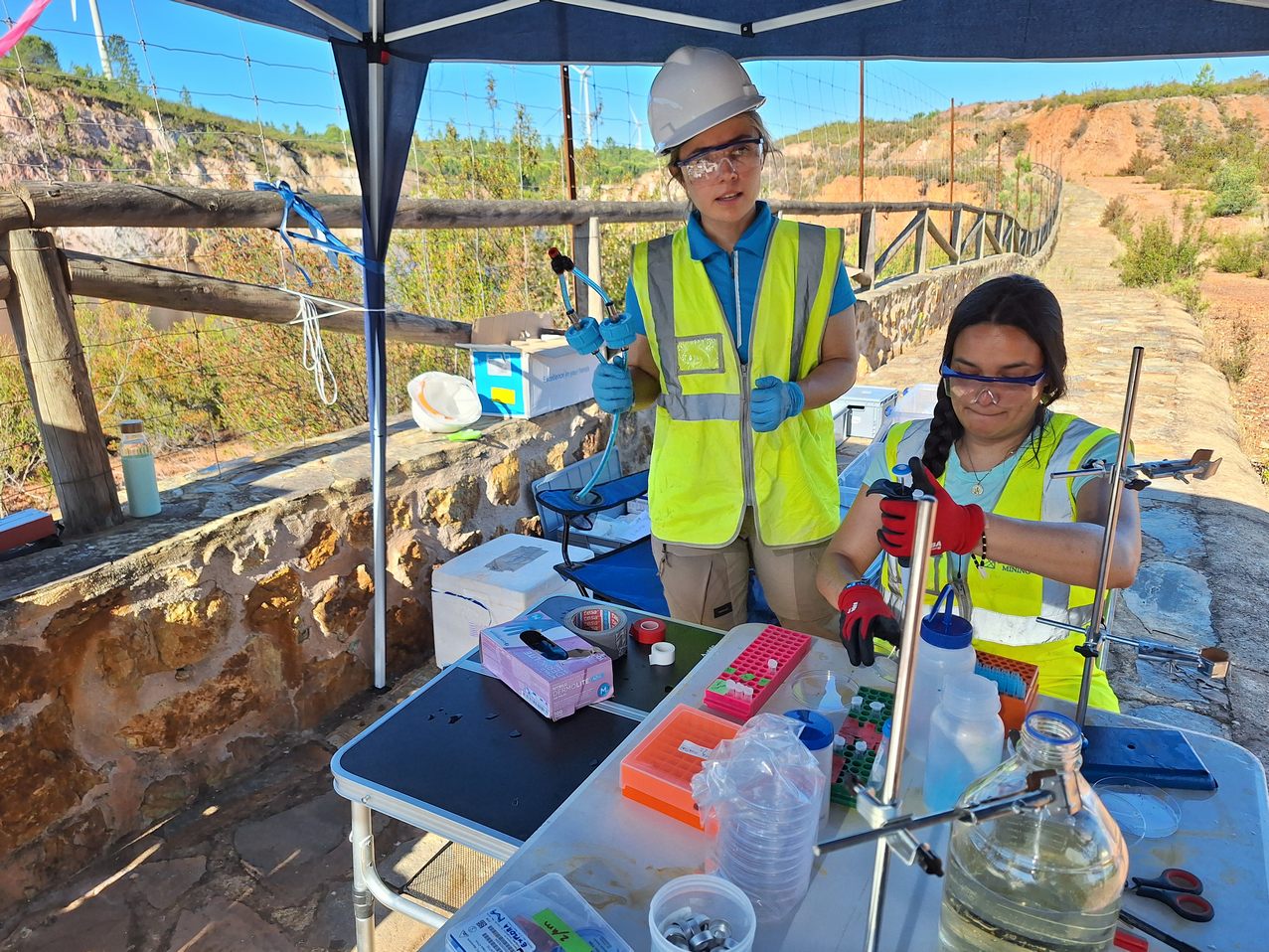
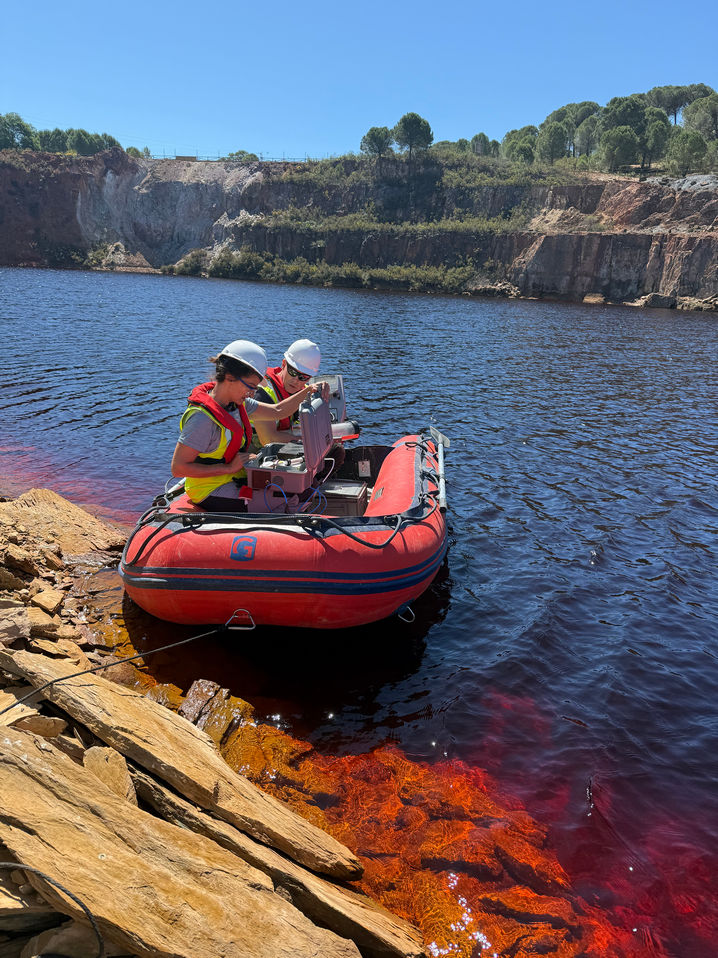
An international team of scientists from Ukraine, Spain, and Portugal has successfully collected microbiological samples from the ultra-extreme Philon-Centro acidic lakes in southwestern Spain. Part of the EXPLORA project funded by the EU’s Horizon Europe program, the mission focuses on discovering bacteria that thrive in highly hostile environments.
Ukrainian biologist Mariia Pavlovska from the National Antarctic Scientific Center (NASC) played a pivotal role in the field research.
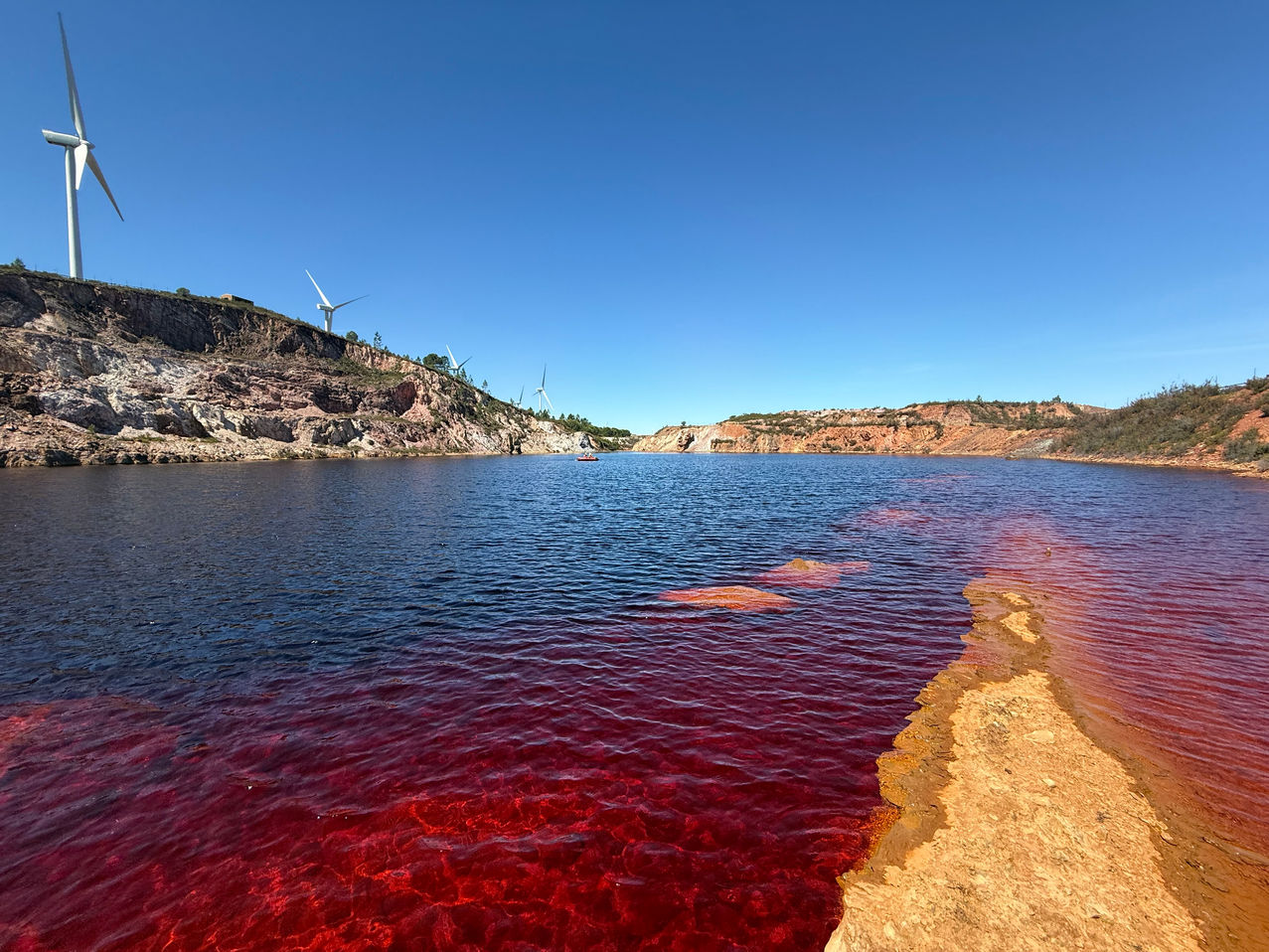
The Mars Analogy: Why the Rio Tinto Basin Matters
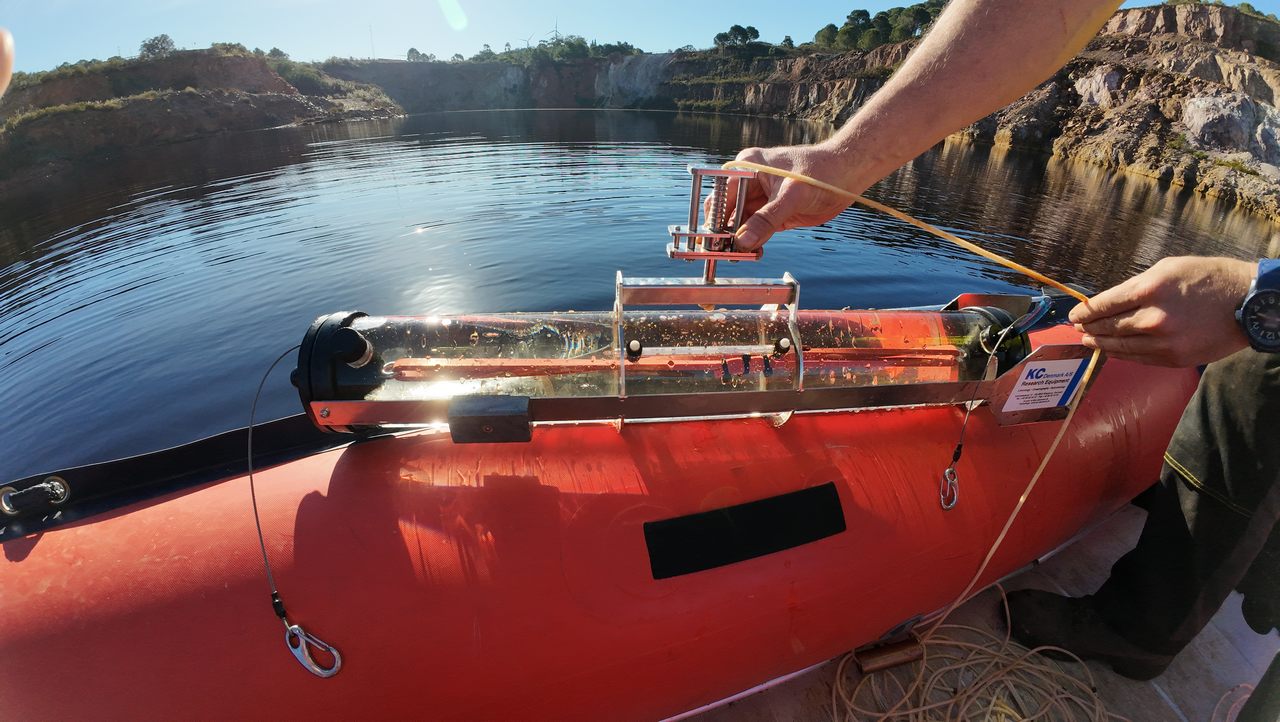
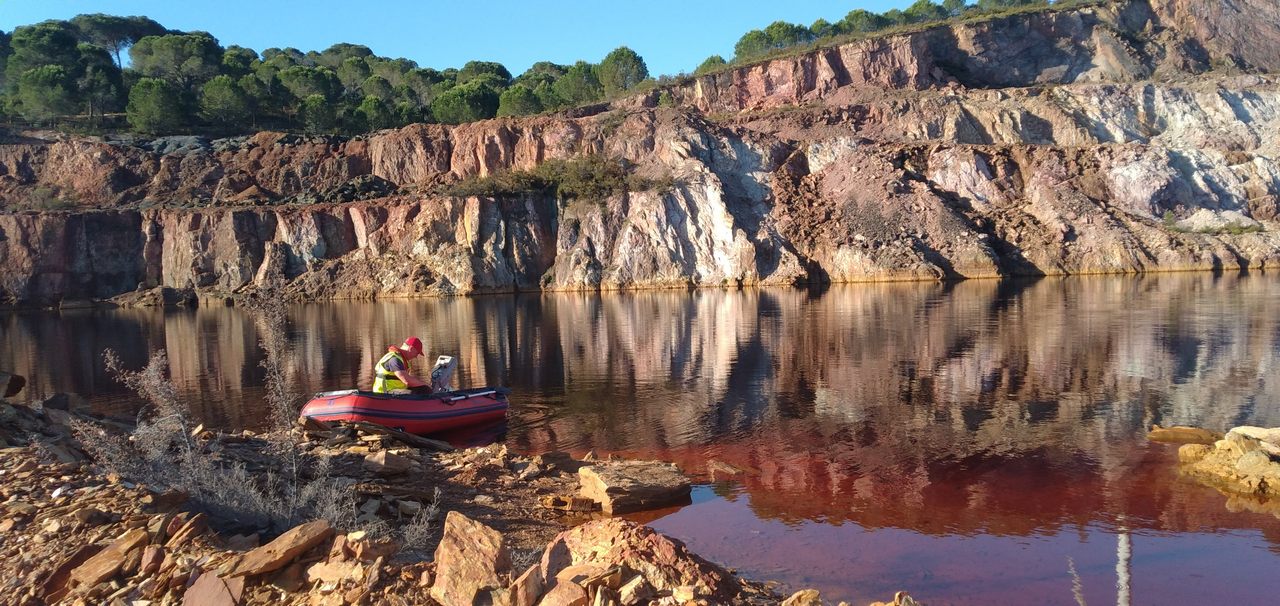
Located within an abandoned mining complex in the famous Rio Tinto River basin, these crimson-colored reservoirs are considered one of the most extreme environments on Earth.
-
The Geochemical Blueprint: These ecosystems are natural analogs to early Martian environments. Both feature heavy iron concentrations, vast methane deposits, and high acidity.
-
A Window to the Past: If liquid water persisted on Mars for extended periods in the ancient Noachian era, its iron-rich surface environments likely mirrored the acidic conditions of the Rio Tinto basin. This makes the region indispensable for astrobiological research.
The Extreme Environmental Conditions
The parameters of the Philon-Centro lakes are thoroughly hostile to standard terrestrial life:
| Parameter / Factor | Environmental Condition |
| Acidity Level | pH ≈ 2.5 (equivalent to vinegar or pure lemon juice). |
| Oxygen Availability | Completely anoxic (oxygen-free) in the deeper water layers. |
| Chemical Toxicity | Massive concentrations of sulfates, iron, aluminum, manganese, and copper. |
| The Biological Reality | Despite these filters, a rich microbial ecosystem exists. |
Dual Goals: Genomics and Industrial Biotechnology
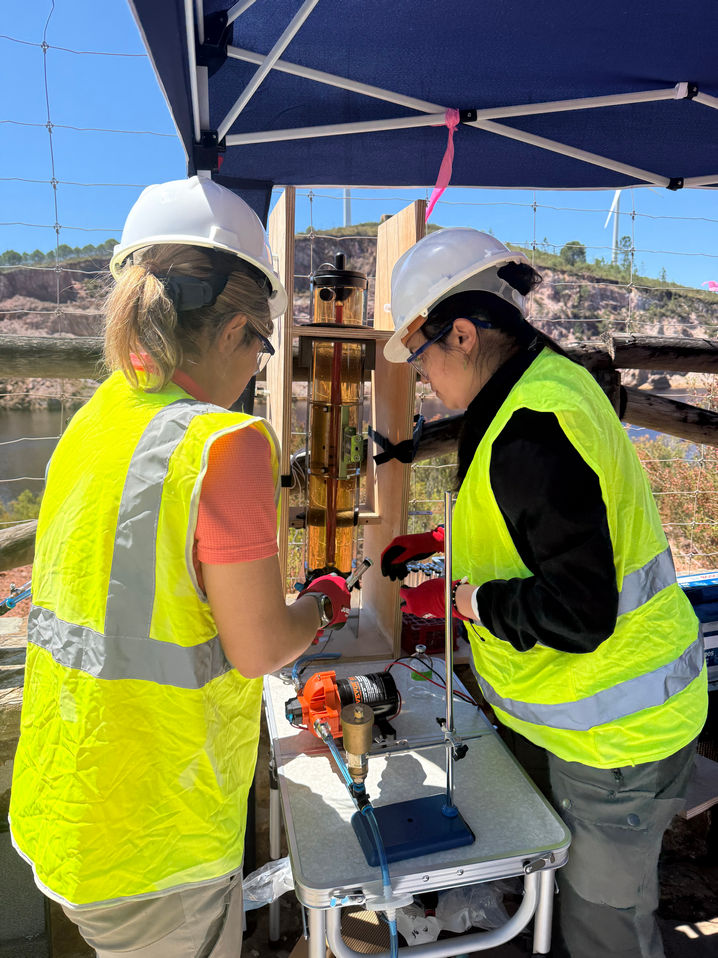
The collected samples will undergo genomic sequencing and cultivation to achieve two major scientific objectives:
-
Survival Mechanisms: Unlocking the exact metabolic and genetic pathways that allow extremophile bacteria to function in toxic, anoxic, and highly acidic water.
-
Industrial Biomolecules: Identifying unique microorganisms capable of synthesizing resilient active biomolecules for use in pharmacology, waste management, and sustainable space-tech industries.
Field-Testing Robotic Samplers: Next Stop, Antarctica
The expedition also served as a testing ground for advanced hardware. The scientific team successfully deployed a prototype robotic sampler designed to extract biological specimens from highly hazardous zones. Following its triumph in Spain’s acidic lakes, the robot’s next deployment will be in the sub-zero environments of Antarctica.
During the upcoming research season, international partners plan to deploy these robotic tools near the Ukrainian Antarctic station, “Vernadsky Research Base”, to harvest cold-resistant “extremophiles”.
Institutional Collaboration: The mission brought together experts from the Institute of Entrepreneurship (IEU, Spain), the National Antarctic Scientific Center (NASC, Ukraine), and the Institute of Science and Innovation in Mechanical and Industrial Engineering (INEGI, Portugal).
Xpert Take
At HiTech Expert, we emphasize the profound technological synergy of the EXPLORA project. This isn’t just a biology field trip—it is an infrastructure testbed for space exploration. The development of automated, chemical-resistant robotic samplers is exactly the type of technology needed for future sub-surface drilling missions on Mars or Europa. Furthermore, by placing Ukrainian scientists at the center of Horizon Europe’s flagship astrobiology initiatives, Ukraine is securing its position as a high-value contributor to the global space-tech and deep-tech research ecosystems.