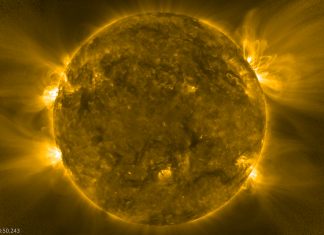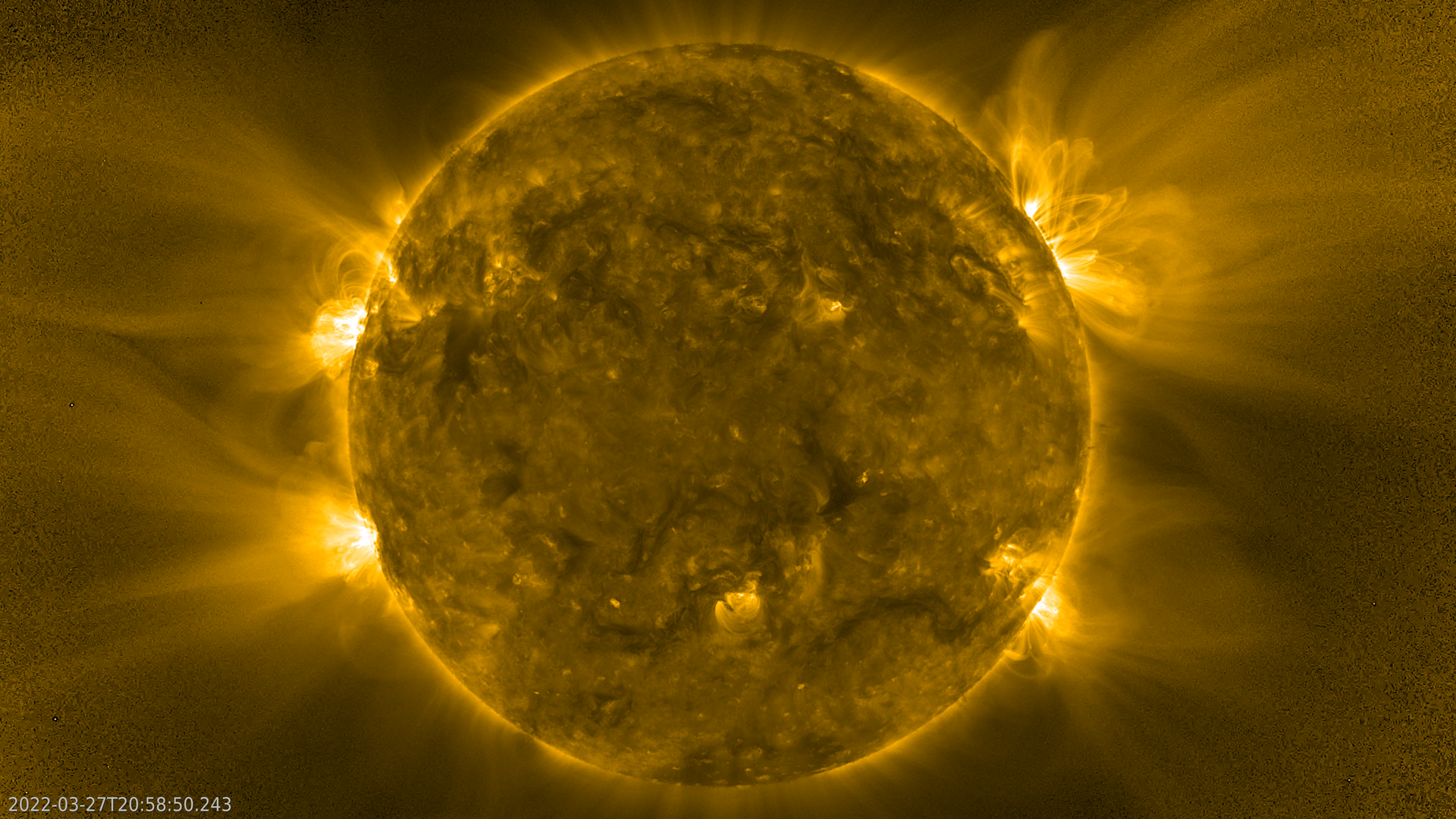
The European Space Agency’s Solar Orbiter spacecraft has provided crucial evidence, tracing the origin of enigmatic S-shaped kinks in the solar wind, known as ‘switchbacks,’ directly back to the Sun’s turbulent surface. This groundbreaking discovery helps unravel the complex behavior of solar magnetism, the driving force behind potentially hazardous solar storms.
Unraveling the Switchback Puzzle
The Sun’s powerful magnetic field is a dynamic force, continuously influencing not only the star itself but also the solar wind – a stream of charged particles that flows outward into space. These magnetic field lines can become twisted, fractured, or folded back, creating phenomena like switchbacks. While these S-shaped structures have been observed near the Sun for years, their exact formation mechanism has remained a subject of debate. Solar Orbiter’s recent fly-through of a significant switchback has offered a vital clue.
By analyzing the unique composition of particles within the switchback using its Solar Wind Analyser instrument, scientists have confirmed a specific particle mix that could only have originated from the Sun’s surface. This finding strongly supports the ‘interchange reconnection’ theory, a process where regions with differing magnetic properties on the Sun interact.
Two Processes, One Phenomenon
The research suggests that switchbacks are not formed by a single mechanism but rather a combination of processes occurring at different stages of their journey. While interchange reconnection at the Sun’s surface is responsible for their initial formation, waves and turbulence observed further out in space play a significant role in their subsequent evolution and movement.
This reconciliation of competing theories offers a more complete picture of how these magnetic structures form and propagate. The ability of Solar Orbiter to simultaneously observe the Sun’s surface and sample the solar wind allows scientists to connect these phenomena with unprecedented detail, offering insights into how the Sun heats its atmosphere and accelerates the solar wind.
“This discovery just wouldn’t have been possible without Solar Orbiter – no other spacecraft has both the proximity to the Sun and the right instruments needed to make this connection,” stated Daniel Müller, ESA Project Scientist for Solar Orbiter. Understanding these processes is critical for predicting and mitigating the impact of space weather events on Earth and our vital space-based infrastructure.