Scientists have transformed a frozen landscape at the bottom of the world into a sophisticated observatory, using nearly 100 melted holes near the South Pole to detect elusive cosmic neutrinos. This innovative approach, spearheaded by the IceCube Neutrino Observatory, is shedding light on some of the universe’s most energetic and mysterious phenomena.
Melting the Ice for Cosmic Secrets
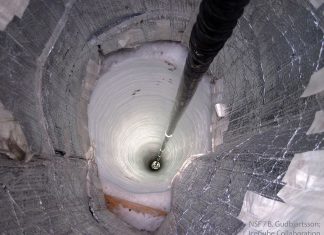
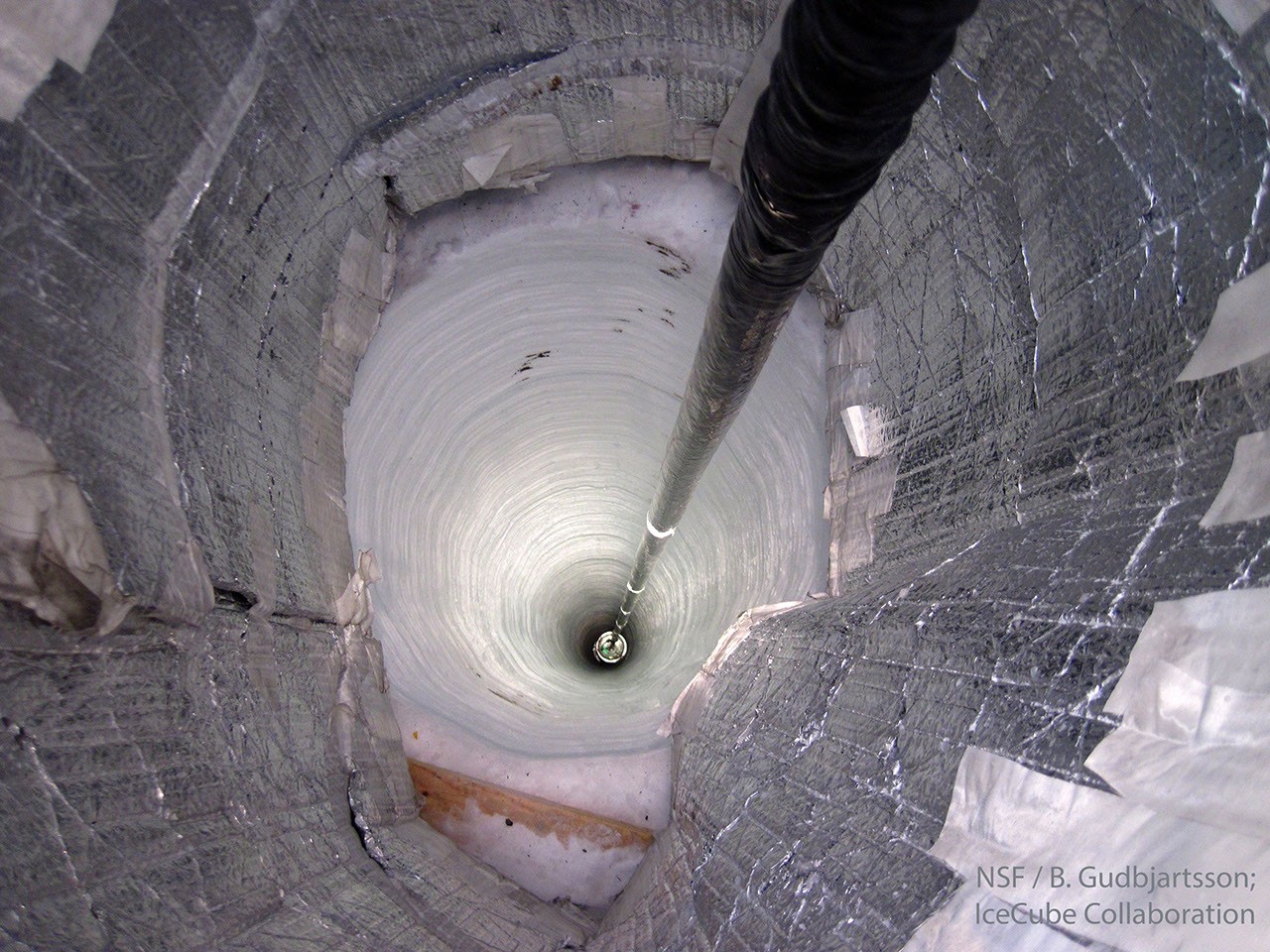
The IceCube Neutrino Observatory employs a unique method for observing the cosmos. Researchers melted over 100 holes deep into the Antarctic ice. Into these frigid shafts, they lowered long strings embedded with basketball-sized light detectors. Once the water in the holes refroze, the detectors became suspended in the clear ice, ready to capture faint signals. These detectors are specifically designed to register the blue light emitted when high-energy neutrinos, originating from powerful cosmic events, collide with ice molecules. These collisions create fast-moving secondary particles that leave a detectable light trail.
A Giant Under the Ice and a Nobel Laureate
IceCube has successfully detected a significant number of these illuminating neutrinos, providing unprecedented insights into their origins. The observatory, pictured in 2010 during the lowering of one of its final detector strings, stands as the largest neutrino detector ever constructed. This groundbreaking work has led to significant recognition, with a founding leader of the IceCube Collaboration recently announced as a recipient of the Nobel Prize in Physics, underscoring the profound impact of this icy celestial detective agency.
Source: NASA