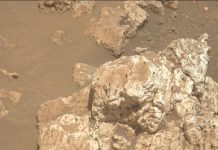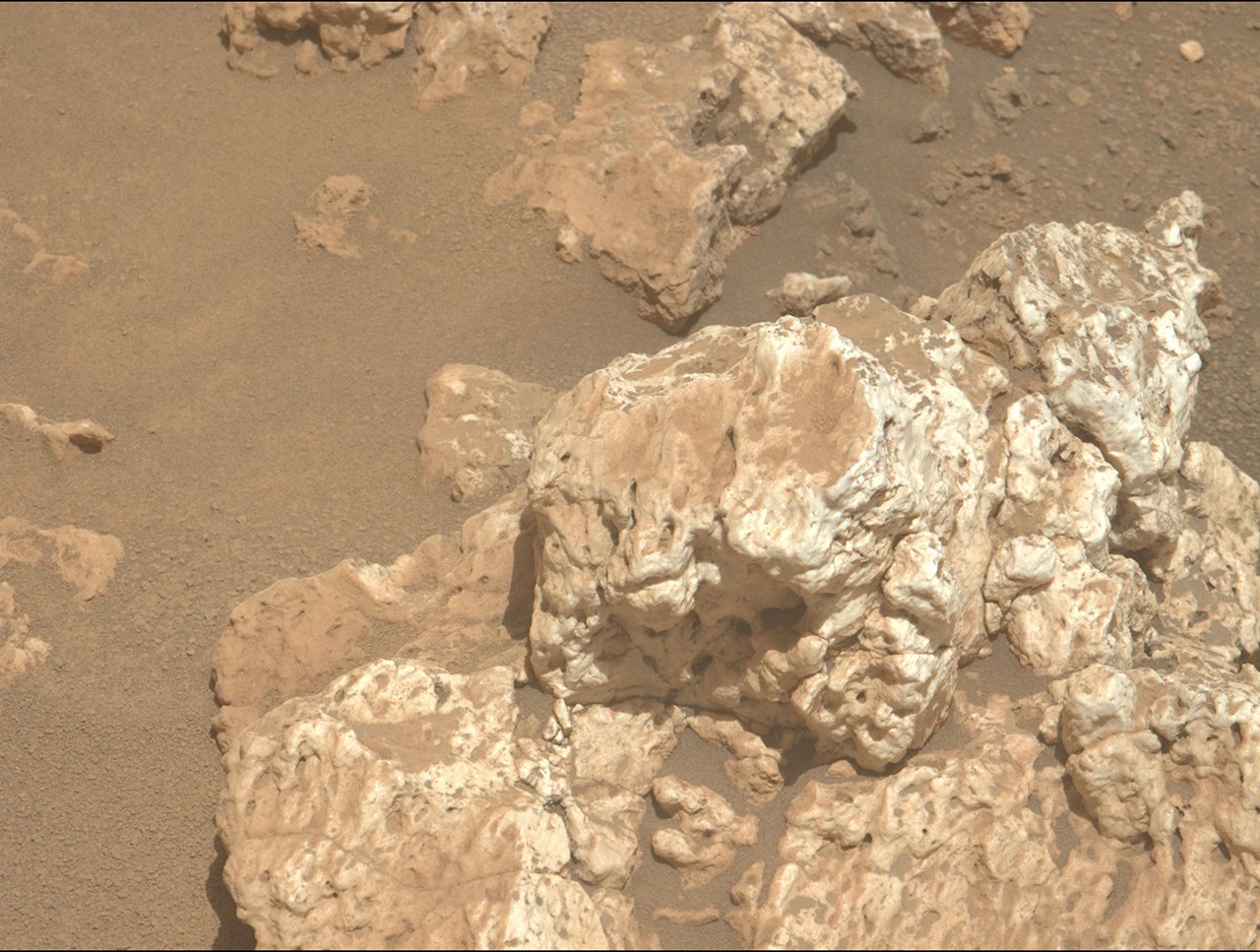
NASA’s Perseverance rover has identified exceptionally light-colored rocks in a Martian region dubbed “Idubi.” These striking “ghostly” stones stand in stark contrast to the darker, often dust-covered Martian surface, serving as vivid remnants of ancient water systems that once flowed on the Red Planet. Their composition, rich in hydrated silica, positions them as prime candidates in the search for signs of past life.
Traces of Ancient Water Systems
The designation “Idubi” refers to an outcrop of ancient Martian crust exposed on the surface near the “Lac de Charmes” region, within the Jezero Crater. While exploring this area, the Perseverance rover team was surprised by a cluster of remarkably bright, light-toned rocks. These fragments stand out against the surrounding landscape and are noticeably brighter than previously studied volcanic and impactite rocks in the vicinity.
Suspecting these rocks were different from the typical volcanic formations of the region, the rover team directed Perseverance for a closer examination. New data obtained from the SuperCam instrument confirmed the findings: these light-colored rocks are not of volcanic origin but are sedimentary and rich in hydrated silica. Hydrated silica can form in various aqueous environments on Earth, including hydrothermal systems, groundwater, and subsurface water systems.
Astrobiological Potential
Such formations are exceptionally valuable for studying Mars’ hydrological history, as many of these environments could have potentially supported life. Furthermore, hydrated silica possesses significant astrobiological potential due to its unique ability to preserve microfossils. Could these pale remnants of Mars’ ancient watery past hold clues to past life?
Perseverance has previously encountered silica-rich rocks on the inner edge of Jezero Crater. However, those deposits were too small for close-range scientific instrument analysis and the collection of the detailed chemical and mineralogical data needed to determine their origin and biosignature preservation potential. Fortunately, the rocks in “Idubi” are on a significantly larger scale, and a detailed scientific campaign to study them has already commenced.