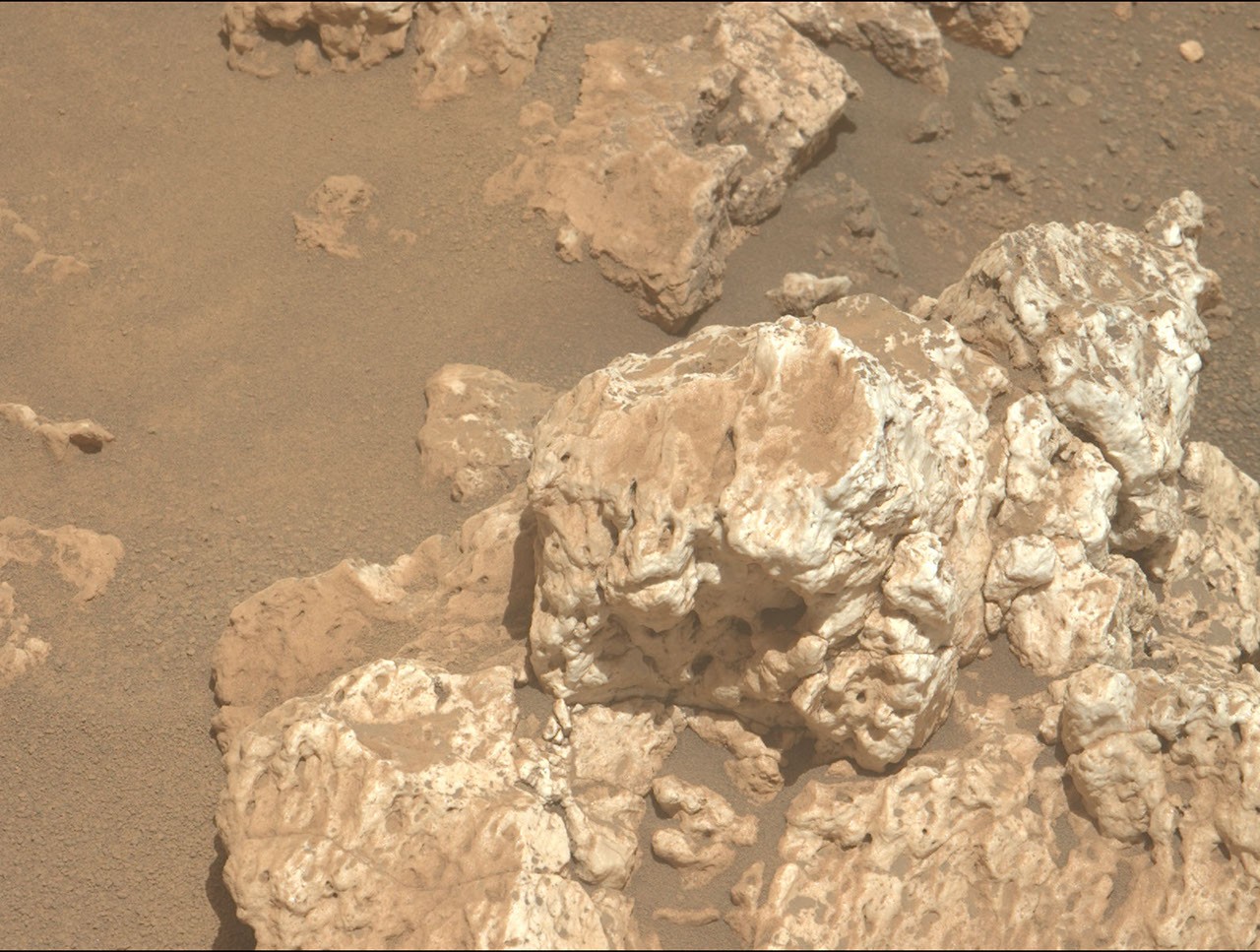
NASA’s Perseverance rover has discovered a striking collection of bright, silica-rich rocks in an area dubbed ‘Idubi’ on Mars, offering tantalizing clues about the planet’s watery past. These unusual formations, significantly brighter than the surrounding Martian terrain, are not volcanic in origin but are instead composed of hydrated silica, a mineral that can form in various water-based environments. Their discovery is a significant step in the search for signs of ancient life on the Red Planet.
A Glimpse into Mars’ Hydrological History
The ‘Idubi’ area, located within the ‘Lac de Charmes’ region just outside the Jezero crater, has revealed a cluster of pale, light-toned rocks that immediately caught the attention of the Perseverance science team. Unlike the darker, often dust-covered igneous and impactite rocks previously analyzed, these bright fragments suggested a different geological story. Advanced data from the rover’s SuperCam instrument has now confirmed these suspicions, identifying the rocks as being rich in hydrated silica.
On Earth, hydrated silica is a telltale sign of past aqueous activity, forming in environments such as hydrothermal systems, groundwater interactions, and even soil formation processes. This makes the ‘Idubi’ rocks exceptionally valuable for understanding Mars’ hydrological evolution. Scientists are particularly interested because several of these terrestrial water-associated environments have the potential to support microbial life, raising the exciting possibility that these Martian remnants could hold clues to ancient Martian habitability.
Astrobiological Potential and Future Exploration
Beyond their implications for Mars’ water history, hydrated silica minerals are renowned for their ability to preserve organic molecules and potential microfossils. This remarkable characteristic gives the ‘Idubi’ rocks immense astrobiological significance. While Perseverance has previously encountered silica-rich rocks, those instances involved smaller deposits that limited detailed analysis. The larger scale of the rocks at ‘Idubi’ presents a much more promising opportunity for in-depth scientific investigation.
A comprehensive proximity science campaign is now underway, utilizing the rover’s sophisticated instruments to gather high-resolution chemical and mineralogical data. This detailed study aims to constrain the origin of these silica deposits and, crucially, to assess their potential for preserving biosignatures – the signs of past life. The discovery of these ‘ghostly’ rocks marks a pivotal moment in Perseverance’s mission, bringing scientists closer to potentially answering whether Mars ever harbored life.
Source: NASA