At a recent Microsoft event in San Francisco, NVIDIA Co-founder and CEO Jensen Huang, alongside Microsoft CEO Satya Nadella, unveiled a collaborative effort in hardware and software development aimed at enabling AI agents to run natively on Windows personal computers. This partnership signals a significant step forward in bringing advanced AI capabilities directly to the desktop.
A Historic Bond and the Future of AI
Jensen Huang emphasized the foundational role Windows played in NVIDIA’s inception. “If you look at the entire journey of our company, Windows has been at the core of it,” he stated, acknowledging Microsoft’s long-standing support. “Without Windows, there would be no GeForce.”
During a conversation with Satya Nadella, moderated by Sriram Krishnan, Huang drew parallels between NVIDIA’s past and the unfolding era of AI agents. “The personal computer is the most advanced tool, it’s my most advanced tool, and for a generation of people, it’s our most advanced tool,” Huang remarked. “What happens in the era of agents, when the agent is on your computer? It becomes your personal assistant.”
Satya Nadella echoed Huang’s vision, stating, “What I, frankly, give Jensen full credit for is the consistency of his vision for what this could be – not today, not tomorrow, but as a long-term trend.”
Windows Security and Capabilities
Microsoft announced the general availability of Microsoft Execution Containers (MXC), an operating system-level infrastructure designed to allow agents to run securely and continuously in the background, managed by the OS. “We are building these foundational elements directly into Windows so that agents can be secured, monitored, and managed,” explained Pavan Davuluri, EVP of Windows and Devices at Microsoft. “With MXC, Microsoft Security, and Agent 365, we are unlocking the full potential of agents on Windows.”
Nadella added, “We had to make the desktop the safest place to get agents to work.” Huang concurred, “What Satya just said will be the foundation of the next generation of IT as we know it. Just as Windows and DirectX revolutionized application creation, MXC will revolutionize agent creation and deployment.”
RTX Spark: A New Era for Mobile AI
A key highlight of the announcement was RTX Spark, which integrates NVIDIA’s full AI stack into Windows laptops and compact desktops. Pre-orders for RTX Spark-powered laptops are open now, with sales beginning October 16th. Compact desktops are slated for release in November.
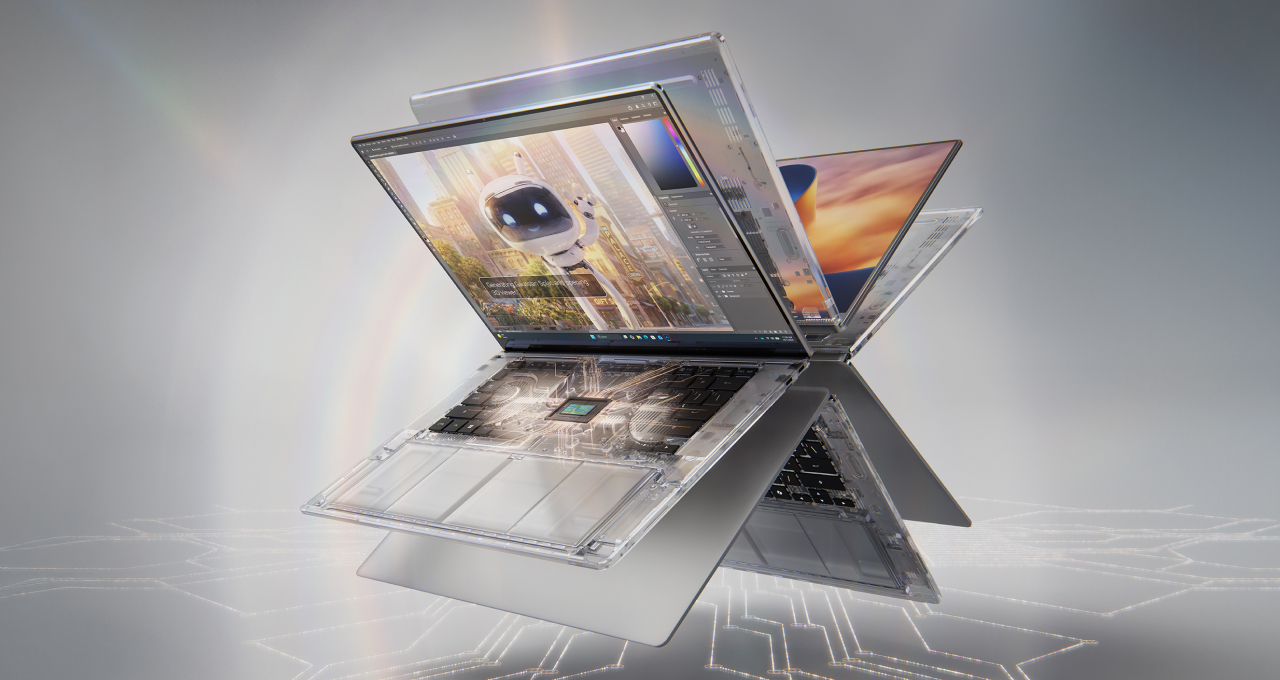
This new hardware offers developers the power to run increasingly sophisticated models directly on their PCs. Pavan Davuluri noted, “We built the Surface Laptop Ultra around NVIDIA RTX Spark. With up to 128 GB of unified memory and up to a petaflop of AI compute, you can run models on this laptop that simply don’t fit on a traditional computer.”
Systems featuring RTX Spark will be available from manufacturers including Acer, ASUS, Dell, HP, Lenovo, Microsoft, MSI, and Gigabyte. RTX Spark combines NVIDIA Blackwell RTX GPUs with up to 6144 cores and NVIDIA Grace CPUs with up to 20 cores, operating at 600 GB/s. Its performance of 1 petaflop for AI FP4 and up to 128 GB of unified memory makes RTX Spark potent for local AI, enabling the execution of models like Qwen 3.8 Flash Next (125B) without relying on the cloud.
RTX Spark supports the full NVIDIA CUDA platform, allowing developers to port models, tools, and workflows seamlessly between RTX Spark and DGX Station without code rewrites. Creators will benefit from 5th generation Tensor Cores with NVFP4 support, while gamers can experience AAA titles enhanced by DLSS 5, Reflex, and G-SYNC.
NVIDIA DGX Station for Windows
Additionally, NVIDIA announced the NVIDIA DGX Station for Windows, the first desktop AI supercomputer to bring GB300 Grace Blackwell-class AI infrastructure directly to the Windows ecosystem. “This unlocks the power for local execution of state-of-the-art models,” said Davuluri. “Capabilities that previously required renting a cluster are now available in a desktop supercomputer.”
Previously, DGX Station operated on Linux, requiring enterprise developers to maintain two separate environments. The NVIDIA DGX Station for Windows utilizes the GB300 Grace Blackwell Ultra Desktop Superchip, offering 748 GB of coherent memory and up to 20 petaflops of AI FP4 compute power, enabling local inference of models with up to a trillion parameters.