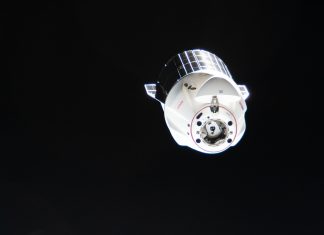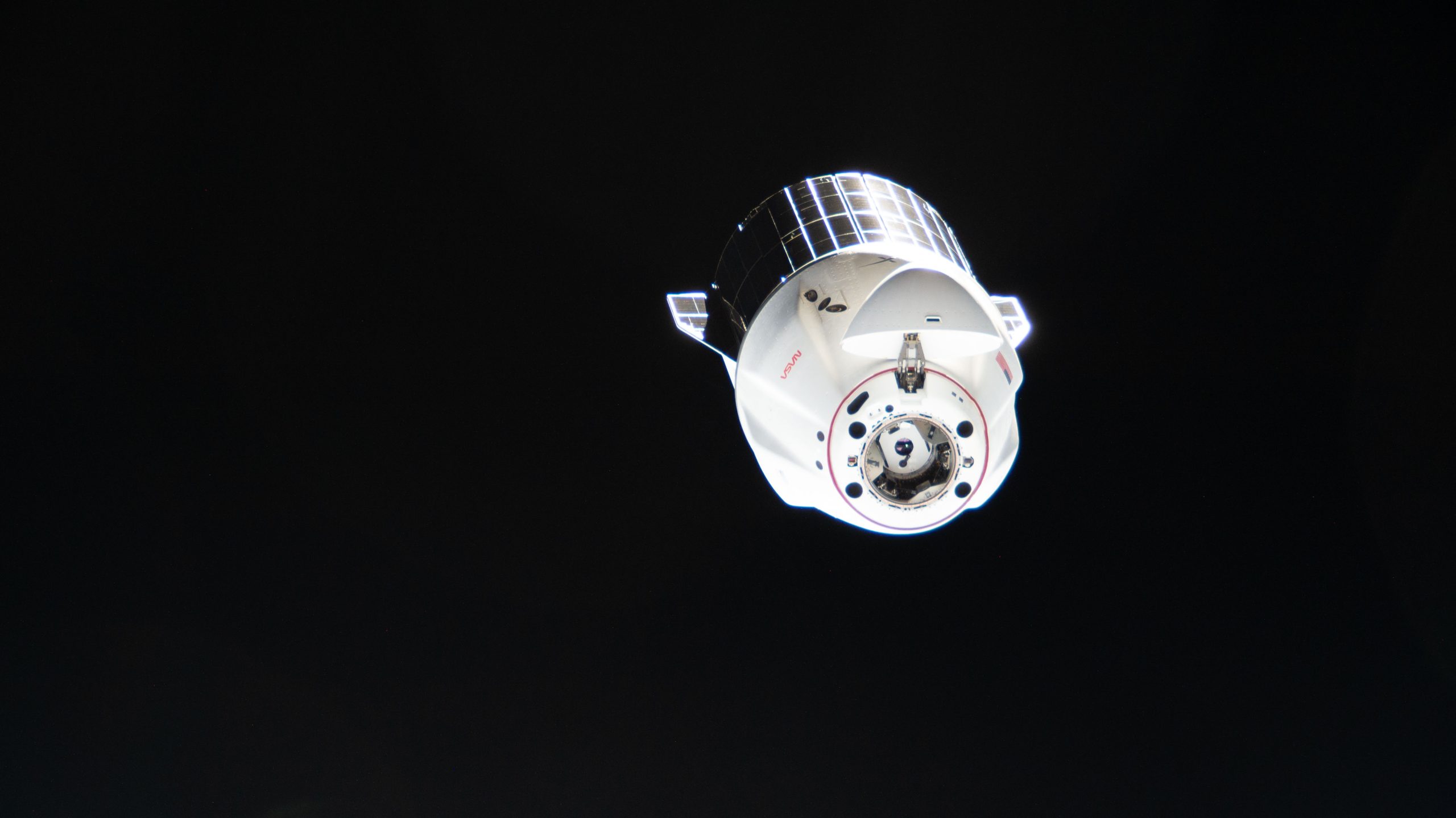
Get ready for another exciting delivery to the International Space Station (ISS)! NASA and SpaceX are gearing up for the 35th resupply mission, launching a SpaceX Dragon spacecraft packed with vital scientific experiments, crucial supplies, and essential equipment. This upcoming mission is particularly important as it will deliver the final set of advanced Roll-Out Solar Arrays, significantly boosting the space station’s power capabilities.
A Mission Packed with Groundbreaking Science
The SpaceX Dragon, carried aboard a Falcon 9 rocket, is scheduled to blast off from Florida on Tuesday, October 13th, at 6:33 a.m. EDT. Once in orbit, it will autonomously dock with the ISS on Thursday, October 15th, around 11 a.m. EDT. Beyond the power-generating solar arrays, this cargo mission carries a host of fascinating research. Scientists are sending hardware for manufacturing artificial retinas in microgravity, a breakthrough that could one day help restore vision on Earth. Additionally, the Dragon will deliver 3D heart tissue models designed to revolutionize large-scale drug testing for future space missions. The spacecraft will also transport materials to study the formation of a novel type of glass in the unique microgravity environment and brain organoids, which hold promise for uncovering new treatment targets for debilitating neurodegenerative diseases like Alzheimer’s, Parkinson’s, and multiple sclerosis.
NASA’s Comprehensive Coverage and Public Engagement
NASA is providing extensive coverage for this mission, allowing enthusiasts worldwide to follow every step of the journey. A media teleconference is scheduled for Thursday, October 8th, to preview the resupply flight and provide an update on the agency’s SpaceX Crew-12 mission’s return to Earth. The launch coverage will begin on Tuesday, October 13th, at 6:15 a.m. EDT, with the launch itself set for 6:33 a.m. EDT. Docking coverage will commence on Thursday, October 15th, at 9:15 a.m. EDT, with the spacecraft expected to berth at the ISS around 11 a.m. EDT. Live streams, blog updates, and on-demand video will be available on NASA’s website and NASA+. The public is also invited to participate virtually in the launch, with resources and notifications available through NASA’s virtual guest program. For those eager to engage on social media, follow @NASA, @NASAKennedy, @NASASpaceOps, @Space_Station, and @ISS National Lab on X, Facebook, and Instagram to stay updated.
Source: NASA