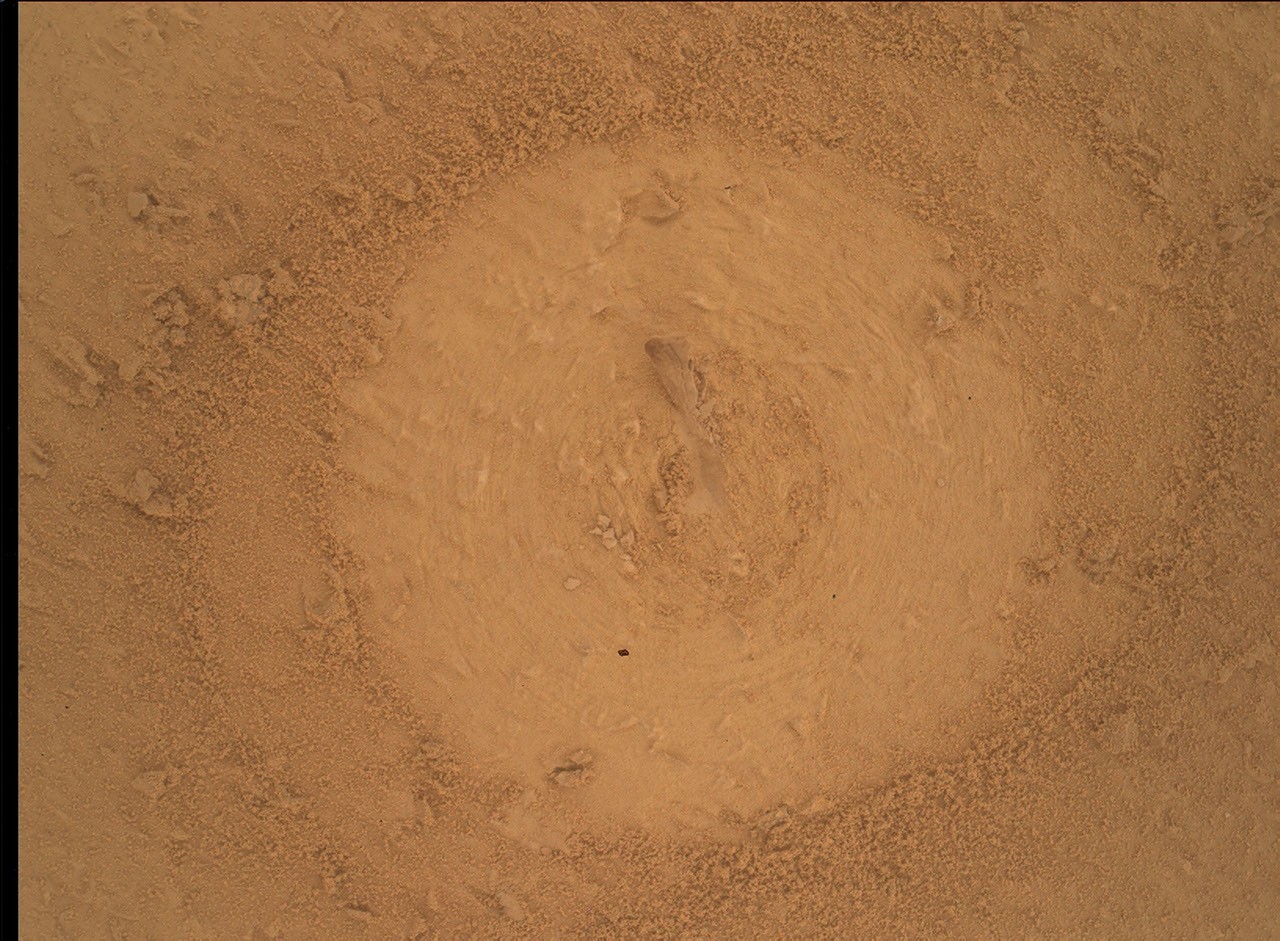
NASA’s Curiosity rover has successfully drilled into a new rock target, nicknamed “Basque Lakes,” within the “Cache Creek” quadrangle of Gale Crater. This operation marks a significant step in the rover’s ongoing mission to unravel the geological history of Mars, potentially mirroring geological processes found in a similarly named region on Earth.
Exploring Martian Analogues
The “Cache Creek” quadrangle on Mars is named after a geologically diverse area in British Columbia, Canada. This Canadian namesake boasts a rich geological tapestry, including oceanic crust, marine sediments, volcanic rocks, and glacial deposits. Crucially, it hosts lakes with unique chemistry that scientists believe could be analogous to ancient Martian lakes. The “Basque Lakes” drill site, therefore, represents a prime opportunity to investigate Martian geology through the lens of Earthly analogues, searching for clues about the planet’s past watery environments and the potential for life.
Unearthing Mineral Secrets
The “Basque Lakes” drill sample is eagerly awaited by scientists for analysis by the rover’s CheMin instrument. This X-ray diffraction analysis will reveal the mineralogical composition of the rock, offering insights into its depositional and alteration history. The team is particularly interested in discovering whether the minerals present are similar to those found in the lakes of Earth’s Cache Creek region, which could provide further evidence of ancient Martian lakes. While the rover might not find literal gold, the scientific discoveries are considered equally valuable. In addition to drilling, Curiosity’s robotic arm-mounted MAHLI camera provided detailed close-up images of the rock’s texture, and the APXS instrument measured its chemical composition. ChemCam also contributed by firing its laser at the target for further compositional characterization.
Continuing the Martian Expedition
Despite power constraints and the challenges of operating an aging rover, Curiosity also conducted additional scientific observations. Mastcam captured panoramic images of the surrounding terrain, providing vital context for the newly acquired drill sample. ChemCam analyzed the chemistry of a nearby bedrock target called “Peace River” and examined the new drill hole and surrounding material. The rover also used its Navcam and Mastcam to monitor environmental and atmospheric conditions within Gale Crater. The analysis of the “Basque Lakes” sample is expected to continue next week, with material being delivered to the SAM instrument. After completing its investigations at this location, Curiosity will likely move on to further explore Mount Sharp and the broader Gale Crater, continuing its quest to understand the Red Planet’s history.
Source: NASA