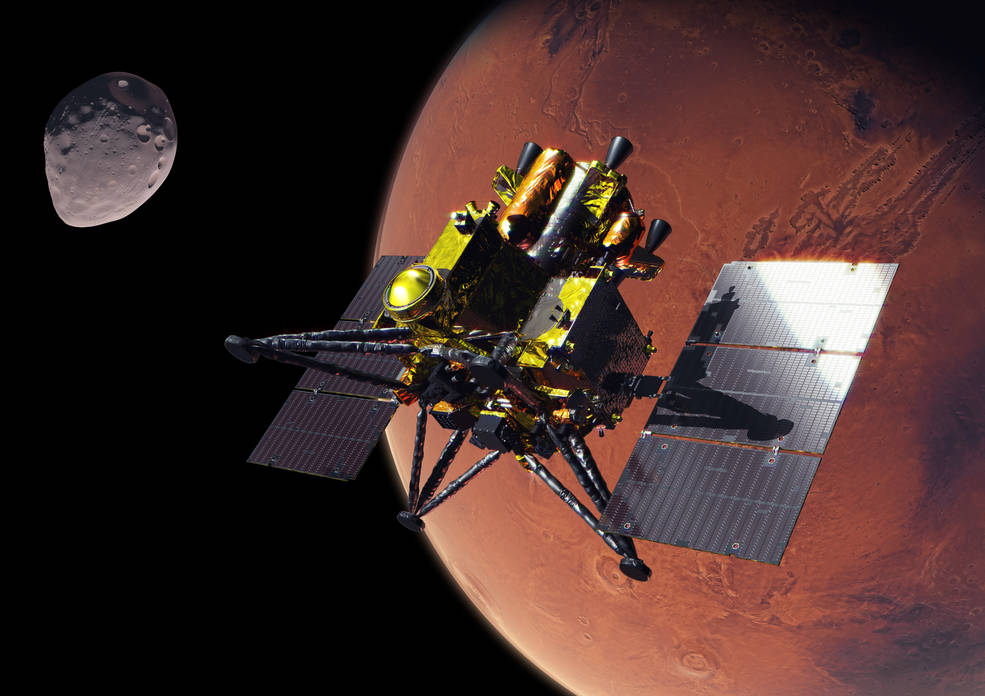
NASA is set to brief the public on its significant contributions to Japan’s groundbreaking Martian Moons eXploration (MMX) mission, a joint endeavor aimed at unraveling the secrets of Mars’ two small moons, Phobos and Deimos. The MMX spacecraft is scheduled for launch on October 19th, marking a crucial step in humanity’s ongoing exploration of the Red Planet and its celestial companions.
Unlocking Martian Moon Mysteries
The MMX mission, led by the Japan Aerospace Exploration Agency (JAXA), will journey to Mars to conduct a detailed survey of Phobos and Deimos, with a primary goal of collecting a surface sample from Phobos. This sample return mission, expected to bring its precious cargo back to Earth in 2031, promises to revolutionize our understanding of these enigmatic Martian satellites. NASA’s involvement is critical, providing key scientific instruments and technological expertise. The mission will arrive at Mars in August 2027, beginning its intensive study of the moons, with sample collection from Phobos slated for no earlier than December 2028.
NASA’s Crucial Technological and Scientific Support
NASA’s contributions to the MMX mission are multifaceted and vital to its success. These include:
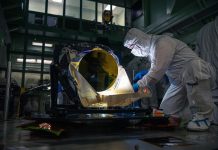
- The development of the MEGANE (Mars-moon Exploration with Gamma-rays and Neutrons) spectrometer, designed to analyze the elemental composition of the Martian moons’ surfaces.
- The design and provision of the spacecraft’s surface sampler mechanism, essential for collecting regolith from Phobos.
- Invaluable communications and navigation support through NASA’s Deep Space Network, ensuring reliable contact with the spacecraft across vast interplanetary distances.
- Funding for American scientists actively participating in the MMX science team, fostering international collaboration in planetary science.
The MEGANE instrument was a product of the Johns Hopkins Applied Physics Laboratory, while the innovative pneumatic sampler mechanism was developed by Honeybee Robotics, a Blue Origin company. NASA’s support for these crucial components was facilitated through the agency’s Discovery Program, which champions high-impact, focused planetary science investigations.
Source: NASA