After two years of high-speed travel since its launch in October 2026, the European Space Agency’s (ESA) Hera spacecraft is undertaking its most critical maneuver yet: a series of sustained braking burns. This intricate process is essential for Hera to precisely slow down and match the velocity of its target asteroid system, Didymos and Dimorphos, paving the way for its groundbreaking planetary defense investigation.
Slowing Down for Science
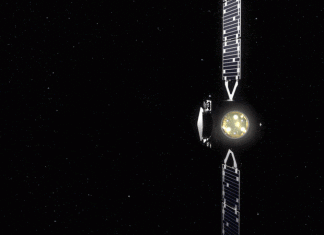
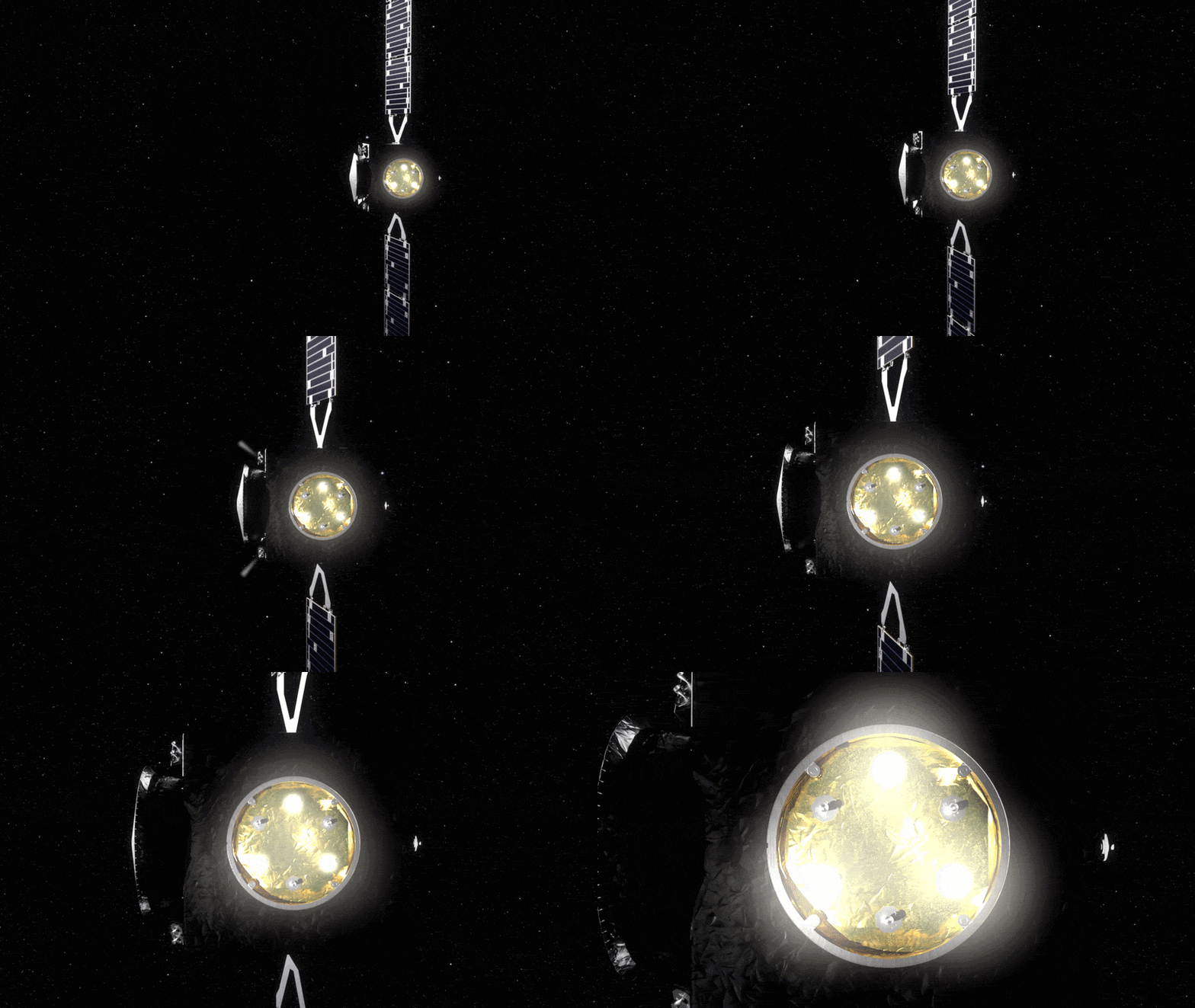
Hera, a mission dedicated to planetary defense, has been on an incredible journey, accelerated by gravity assists and a flyby of Mars in spring 2025. Currently clocking speeds exceeding 12 kilometers per second relative to Earth, the small-car-sized probe is now embarking on a meticulously planned braking sequence. The first major maneuver, dubbed BRM-1, is scheduled for October 15th. This will involve igniting three of Hera’s hydrazine-based Orbit Control Thrusters continuously for 93 minutes. The goal is to reduce its velocity by several hundred meters per second, a delicate operation requiring precise control to maintain the spacecraft’s attitude using its Reaction Control Thrusters.
Precision Maneuvers and Future Plans
Following initial checks and calculations based on telemetry data from ESA’s deep space antennas, a second, shorter braking maneuver (BRM-2) is planned for October 22nd. This approximately 31-minute burn aims to achieve the majority of the velocity matching needed to rendezvous with the Didymos system, while also correcting for any deviations from the first maneuver. These two core braking burns will be complemented by three smaller ‘transition’ maneuvers by the end of October, designed to bring Hera’s relative velocity with respect to the asteroids to nearly zero. This careful deceleration is vital for Hera’s mission, which includes a close-up investigation of Dimorphos, an asteroid famously altered by NASA’s DART mission impact in 2022. Hera’s observations will provide invaluable data on how the asteroid responded to the impact, offering crucial insights for future asteroid deflection strategies.