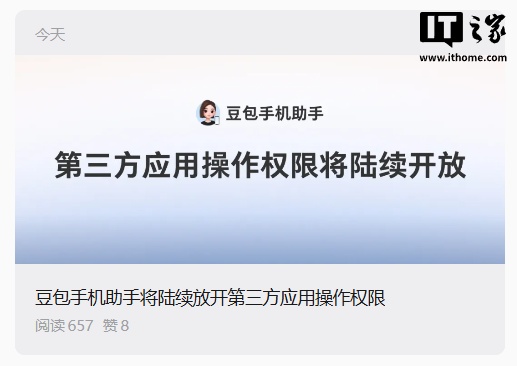
Doubao Mobile Assistant has announced that it will gradually open up screen automation operation permissions to third-party applications. This follows the conclusion of the 30-day public comment period for its Screen Automation Execution Protocol (SAEP).
Gradual Rollout of Automation Permissions
Following the expiration of the SAEP public comment period, Doubao Mobile Assistant is set to implement a phased release of screen automation capabilities for developers. This move signifies a significant step towards allowing third-party applications to interact more deeply with the mobile device’s interface.
Developer Control Remains Key
The assistant has emphasized that developers retain the ability to opt-out of these automation features at any time. Doubao Mobile Assistant has stated that it will promptly disable relevant operations if a developer declares their refusal. Applications that have explicitly declared their refusal will not have their screen automation actions performed by the intelligent agent.
Major Apps Decline Automation Access
In a notable development, several prominent applications, particularly those from the Alibaba and Tencent ecosystems, have explicitly stated their refusal to grant Doubao Mobile Assistant screen automation permissions. This indicates a cautious approach from major tech players regarding the delegation of control over their app interfaces to external assistants.
The SAEP Protocol
The Screen Automation Execution Protocol (SAEP) was introduced to provide a framework for how assistants like Doubao can interact with app screens. The protocol aims to standardize and manage the permissions required for such operations, ensuring a level of transparency and control for both developers and users. The 30-day公示期 (public comment period) allowed developers to review the terms and decide whether to allow or deny these permissions for their applications.
Implications for the Mobile Ecosystem
The decision by Doubao Mobile Assistant to open up these permissions has the potential to unlock new functionalities and improve user experiences through enhanced automation. For example, complex tasks could be streamlined, and accessibility features could be bolstered.
However, the refusal of major applications like those from Alibaba and Tencent raises important questions about data privacy, security, and the control developers wish to maintain over their intellectual property and user interactions. These companies are likely prioritizing the protection of their user data and the integrity of their application experiences.
This development highlights a growing tension in the mobile ecosystem between the desire for more integrated and automated user experiences and the need for robust security and developer autonomy. As more sophisticated AI assistants emerge, these discussions around permissions and data handling will become increasingly critical.
Doubao Mobile Assistant’s phased approach, coupled with the explicit opt-out mechanism for developers, suggests an attempt to balance innovation with developer concerns. The coming months will likely reveal how widely these automation features are adopted and what impact they have on the broader mobile application landscape.