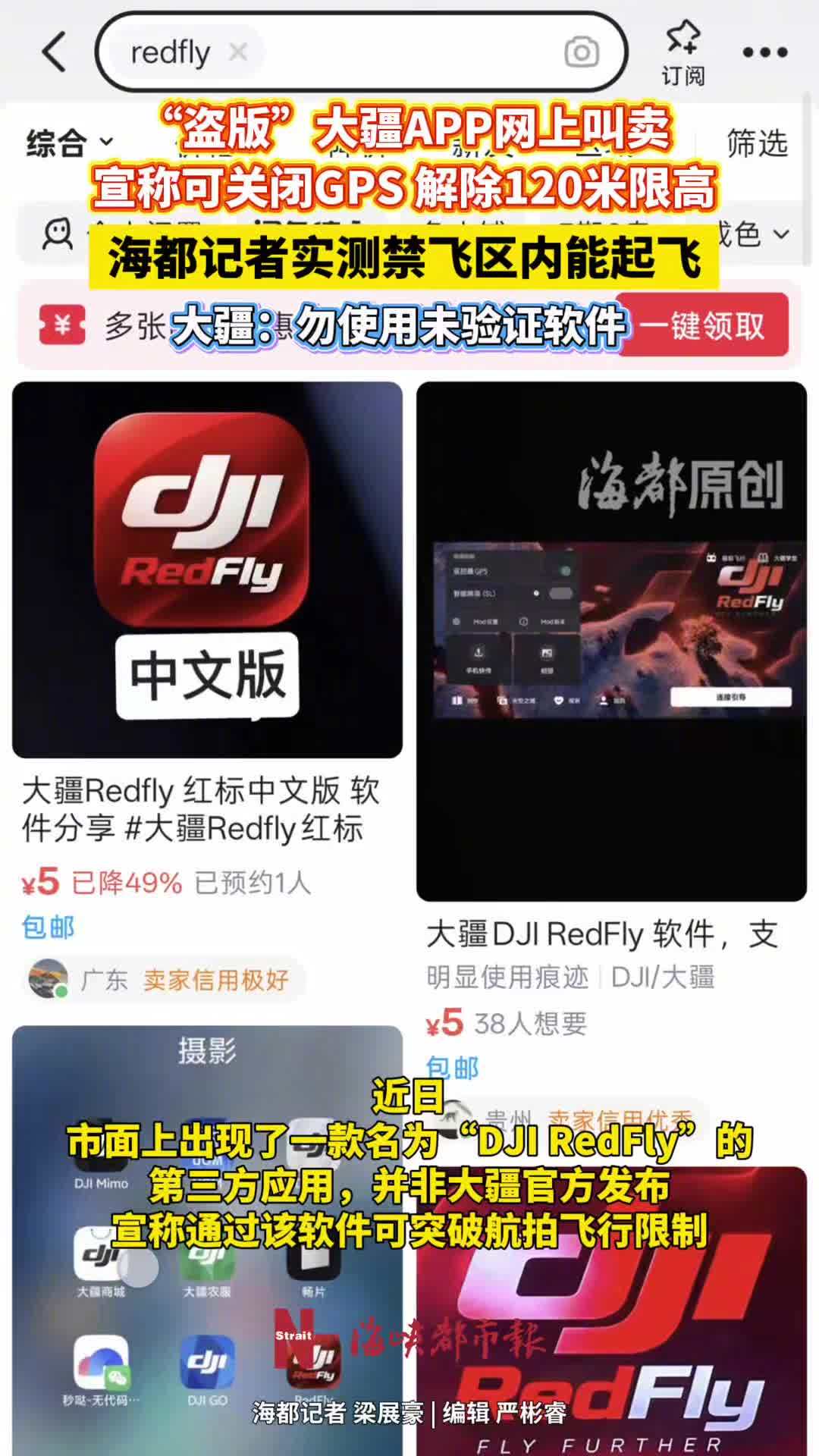
A modified third-party application known as DJI RedFly is circulating online, prompting warnings from drone manufacturer DJI. This app, not officially released by DJI, claims to bypass various flight restrictions on DJI drones.
Unsanctioned Modifications
The DJI RedFly app reportedly offers features such as disabling the “no-fly zone” warnings, turning off the remote controller’s GPS signal, and deactivating remote identification broadcasts. Crucially, it also purports to increase the maximum flight altitude limit from the standard 120 meters to 500 meters in certain restricted areas.
This unauthorized software is not available on legitimate app stores. Instead, it is being distributed and sold on various online platforms for prices ranging from 3 to 10 Chinese Yuan, with a free download option also available on its dedicated website. The app is based on an older version of the official DJI Fly app and has been adapted to work with several of DJI’s current remote controllers.
Real-World Testing and Implications
A report from Straits Metropolis Daily detailed a test where a standard, unmodified drone was unable to take off within a no-fly zone in Fuzhou. However, when the same drone was equipped with the modified DJI RedFly app and its GPS disabling function was activated, the drone successfully took off and operated normally, with full control and recording capabilities. The app also includes additional modification options, such as forcing the drone to operate under the FCC (Federal Communications Commission) regulatory standard, which can sometimes allow for increased transmission power.
DJI’s Official Warning
In response to these developments, DJI has issued a statement urging users to refrain from downloading and using any third-party control software that has not been officially verified. The company emphasized that such modified tools circumvent air traffic control systems, posing significant safety risks that could lead to crashes or collisions. Furthermore, using these applications may violate drone management regulations, potentially exposing users to legal consequences.
DJI stressed that ‘using these hacked tools bypasses airspace regulation, not only bringing security risks such as crashes and collisions, but users also are suspected of violating drone management-related regulations and need to bear corresponding legal responsibilities. We call on everyone to fly according to regulations and use drones legally.’
Legal Ramifications for Unauthorized Flight
IT Home also highlighted the legal implications of operating drones with unauthorized modifications in controlled airspace. According to the ‘Interim Regulations on the Administration of Unmanned Aircraft Flight,’ individuals found operating illegally could face penalties. If ordered to cease flying by public security authorities, violators may be fined up to 500 Yuan. In more severe cases, the offending drone could be confiscated, with fines ranging from 1,000 to 10,000 Yuan. Violations constituting breaches of public security management could result in administrative detention. Criminal charges may be pursued if the actions constitute a crime, and users will be held civilly liable for any personal injury or property damage caused.
This situation underscores the ongoing challenges in regulating drone technology and the importance of adhering to official guidelines for safe and legal operation.