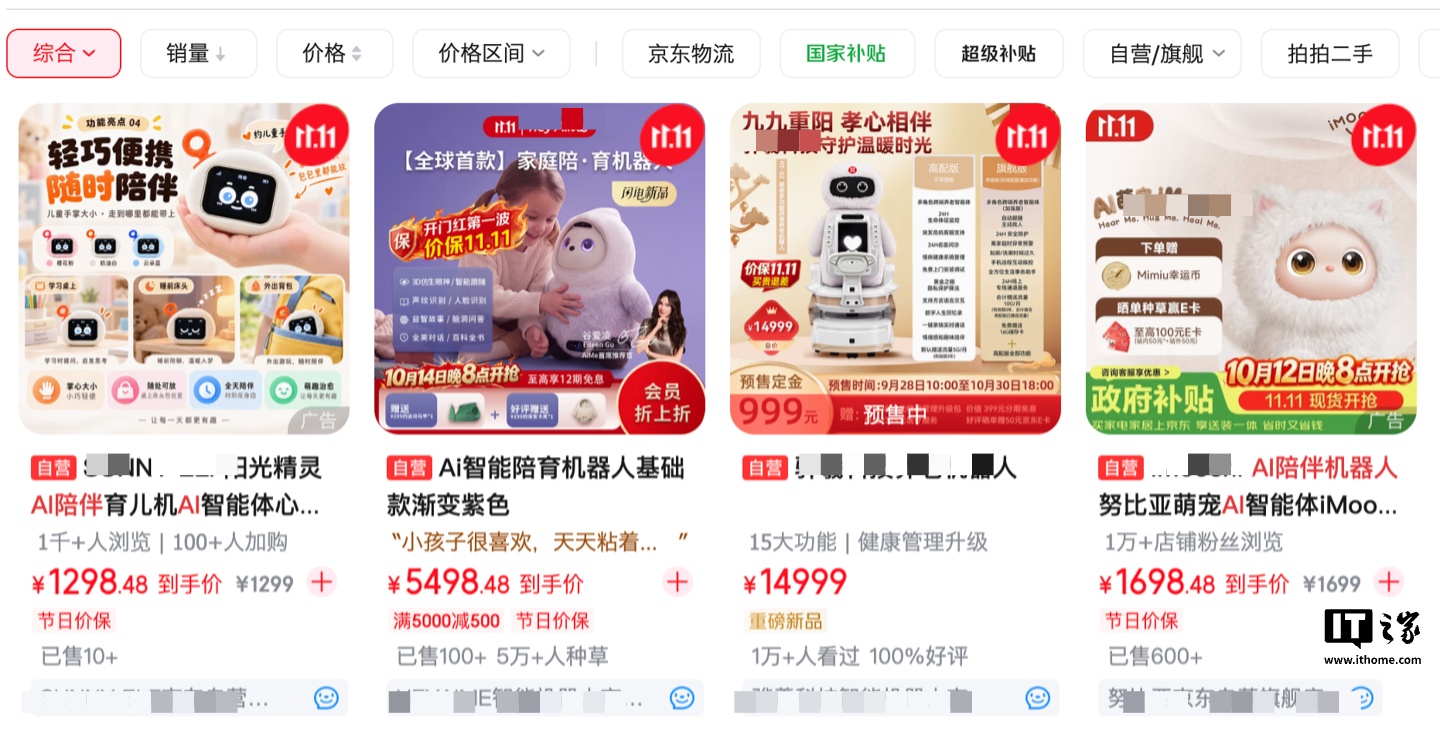
The burgeoning market for AI-powered toys is experiencing a rapid surge, with impressive sales growth reported across major e-commerce platforms. However, this boom is overshadowed by a significant cooling in investment, coupled with prevalent issues of product homogenization and high return rates.
Market Growth Outpaces Investment
Data from China’s Ministry of Industry and Information Technology indicates a robust expansion in the AI toy market. Projections suggest the market size will reach 29 billion yuan in 2025 and climb to 34.2 billion yuan by 2026. Reflecting this trend, Taobao’s 2025 annual data revealed a staggering year-on-year increase of over 1600% in transaction value for AI toy products.
This remarkable growth has spurred a gold rush, particularly in manufacturing hubs like Dongguan and Yiwu, where some vendors have achieved substantial profits. Following the recent National Day holiday, several manufacturers reported that their sales in the first half of the year had already surpassed their total sales for the previous year.
Divergent Consumer Logic and the Rise of Gifting
Consumer purchasing decisions for AI toys vary significantly by market. In first-tier cities, parents often view AI toys as educational investments or opportunities to explore cutting-edge technology. This leads to higher average spending, with some customers willing to pay thousands or even tens of thousands of yuan, carefully evaluating the toy’s large language model capabilities, conversational quality, and educational content.
Conversely, in lower-tier markets, the decision-making process is simpler, driven primarily by affordability and the ability of the toy to engage children in conversation, offering an upgrade from traditional toys. Currently, gift-giving stands out as a primary purchasing scenario for AI toys.
Challenges: Homogenization and High Return Rates
Despite the market’s rapid expansion, the AI toy sector faces considerable challenges. A surge of brands aiming for quick profits has led to intense product homogenization. The rapid growth in sales has not been matched by improvements in repurchase rates or user experience, leaving many AI toys quickly relegated to ‘dust-gathering’ status after the initial novelty wears off.
Industry reports highlight that AI toy return rates consistently remain above 50%. To mitigate these losses, some companies on platforms like Taobao, JD.com, and Pinduoduo have implemented conditional return policies. These often stipulate that products cannot be returned once activated online, a measure that, while reducing returns, can also negatively impact sales volume.
The Path Forward: Exploring Business Models
Industry insiders suggest that the core competitive advantages for AI toys lie in their large language model interaction capabilities, the control of network connectivity and computing costs, and the development of a robust subscription service ecosystem. The current prevalence of ‘low-price wars’ signals an industry in flux, searching for its ultimate form.
The ultimate shape of the AI toy market is still being defined, and the industry awaits a critical turning point to establish sustainable business models and improve long-term customer value.