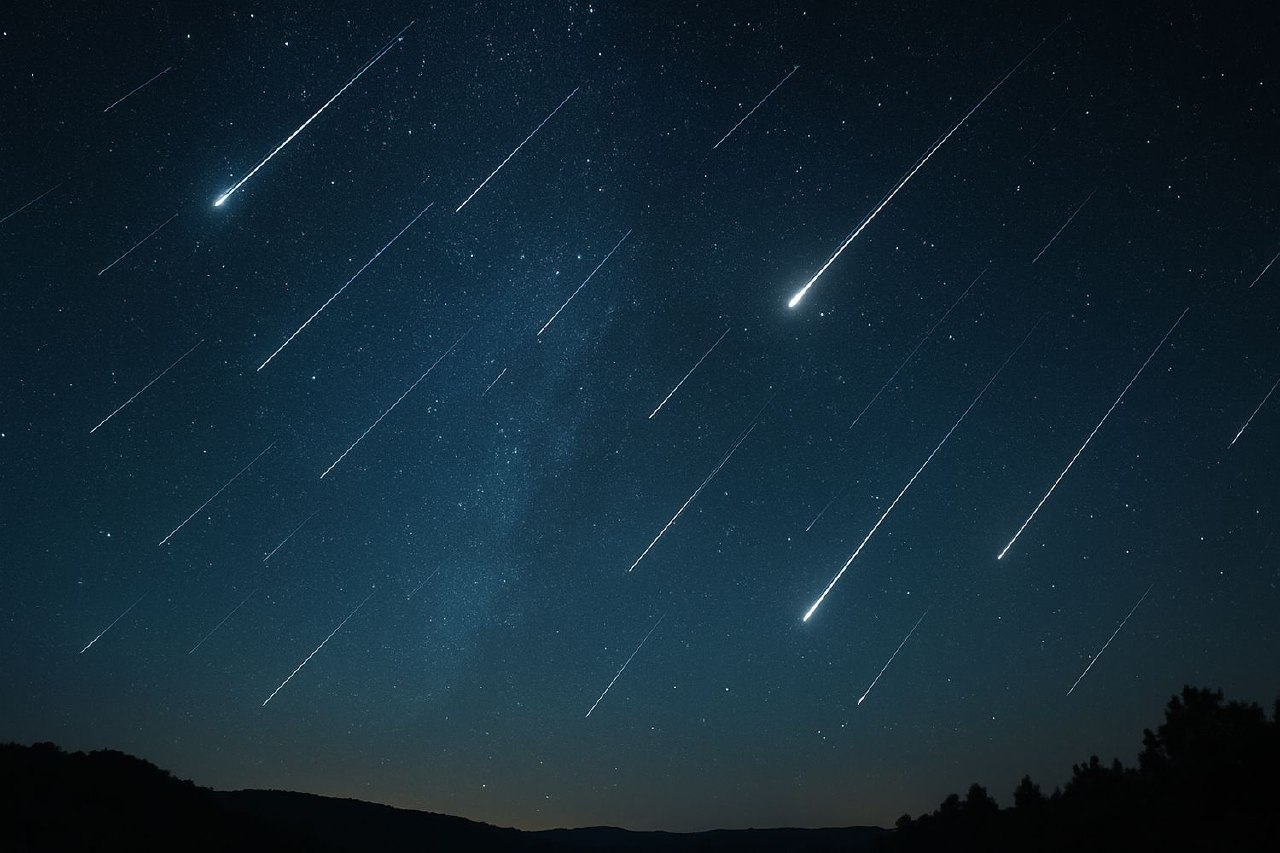
Sixty years ago, in November 1966, the Leonid meteor shower delivered a spectacular celestial fireworks display, offering observers an incredible sight of up to 144,000 meteors per hour. It was one of the most grandiose meteor storms in recorded history. As the peak of the Leonids approaches in 2026, many are wondering: could such an event happen again?
What Are the Leonids and Why Are They So Powerful?
The Leonids are one of the most famous annual meteor showers, named after the constellation Leo, where their radiant – the point from which the meteors visually appear to originate – is located. The Leonids owe their origin to the comet Tempel-Tuttle, which traverses the inner Solar System every 33.3 years. During each close approach to the Sun, the comet leaves behind a trail of dust particles – a “river of debris.” A meteor storm can occur when Earth passes through a dense, “fresh” layer of these debris fragments, ejected by the comet relatively recently.
The most impressive Leonid meteor shows, such as those in 1833 and 1966, were observed after Earth passed through regions enriched with debris ejected by the comet within the last few centuries. Comet Tempel-Tuttle last made its closest approach to the Sun in 1998, explaining the powerful surges in Leonid activity in 1999, 2001, and 2002. Since then, the intensity of the shower has gradually decreased.
Should We Expect a Meteor Storm in 2026?
Unfortunately, the forecast for 2026 does not promise a repeat of the grand events of the past. This time, Earth will be crossing much more diffuse and older remnants of the comet’s dust trail. According to the International Meteor Organization, the peak activity of the Leonids in 2026 is expected on November 17 at 23:45 UTC (November 18 at 1:45 AM Kyiv time), with approximately 15 meteors per hour under ideal viewing conditions. Other forecasts differ slightly, but none predict a meteor storm.
Even the most optimistic calculations indicate a relatively weak display from the shower. Comet Tempel-Tuttle is currently on an orbit far from the Sun, well beyond the orbit of Saturn, so no fresh, dense clouds of dust are expected near Earth. Despite this, the Leonids remain one of the most beloved astronomical phenomena, and even a modest “star shower” can offer unforgettable experiences.