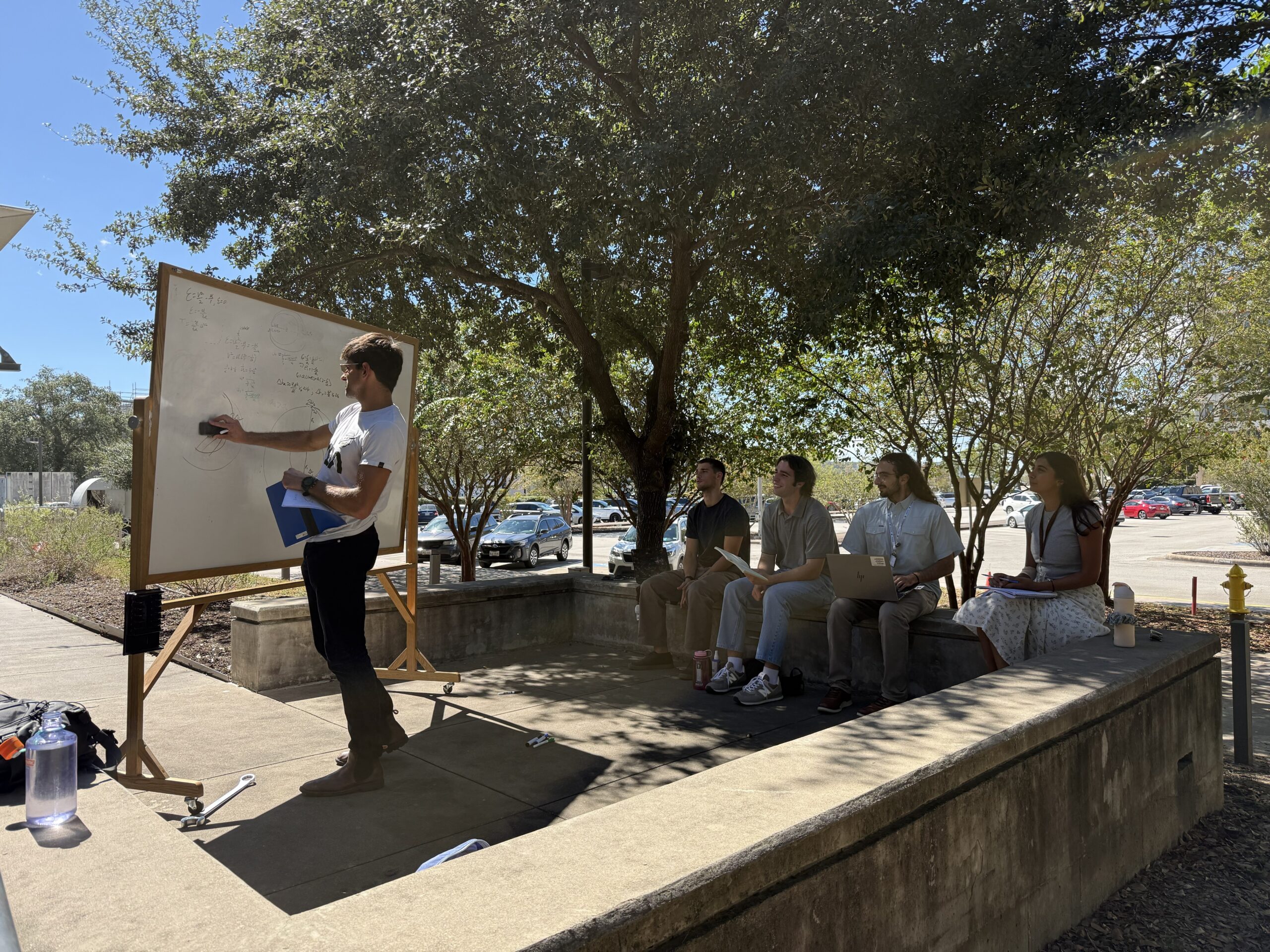
The National Aeronautics and Space Administration (NASA) places significant emphasis on developing young specialists, recognizing them as the architects of future space exploration. At the forefront of this initiative is Daniel Koen, a Guidance, Navigation, and Control (GN&C) engineer at Johnson Space Center. Beyond his contributions to critical missions, Koen is actively sharing his expertise with student interns, employing a mentorship philosophy centered on time management and purposeful dedication that is already fostering a new cohort of space engineers.
Mentorship Philosophy: “You Decide What’s Important”
Malvika Bhardwaj, a Rice University student interning with the GN&C team, once inquired if Koen’s demanding schedule would allow him to continue assisting interns. His response – “You decide what’s important” – served as a profound lesson. This mentorship philosophy, highlighted during the National Mentorship Day on October 27th, underscores how personal priorities shape work effectiveness and professional growth. Koen, a Rice alumnus himself, actively invests in youth development through NASA’s STEM (Science, Technology, Engineering, and Mathematics) programs. Interns like Bhardwaj not only contribute to agency projects but also gain invaluable experience, technical skills, and a firsthand understanding of the space industry.
Practical Contributions and Professional Growth
Bhardwaj, pursuing a degree in computational and applied mathematics, is developing tools to analyze spacecraft engine performance, crucial for the safe deorbiting of the International Space Station (ISS) at the end of its operational life. She also employs computer simulations to test the craft’s control systems and identify potential critical failures. “I’ve learned so much about the community and supportive culture at Johnson and NASA in general,” Bhardwaj shared. “Daniel made an effort to introduce me to the team and include me in conversations and meetings. I’ve seen how team members help each other and move the whole group forward.”
Daniel Koen’s NASA career began with an internship in 2020. He went on to work on rendezvous dynamics, propulsion systems, and GN&C analysis before becoming a full-time engineer in August 2024. His current responsibilities include developing simulations and models for the U.S. Deorbit Vehicle project, analyzing its control algorithms and GN&C performance, and evaluating SpaceX designs at various developmental stages. He is also analyzing the Orion spacecraft’s docking camera configuration, which will provide navigation data for future docking operations within the Artemis program. Koen not only supports Bhardwaj’s internship but also provides her with a deeper understanding of teamwork and idea exchange, dedicating several hours each week to educating interns on topics like orbital mechanics and control systems.
New Horizons and Advice for Aspiring Professionals
Bhardwaj has realized that solving complex problems is rarely an individual endeavor. She understands that different team members bring diverse perspectives, and it’s vital to grasp how their work contributes to the larger project vision. Collaborating with interns in public relations, social media, and design fields has broadened her view of career opportunities within STEM. “Whatever you’re interested in, there’s probably a role for you here,” she remarked. Completing her first project—a suite of analytical tools built from scratch—was particularly rewarding, offering immense satisfaction in the process of debugging and achieving a functional product.
For students considering internships at NASA, Bhardwaj advises applying even if they don’t feel entirely prepared. “You’re probably never going to feel 100% ready, but a huge part of the learning happens on the job,” she stated. “Trust your ability to adapt to new environments.”
Source: NASA