NASA’s Perseverance rover has provided crucial insights into the potential health hazards posed by Martian dust, particularly its ultra-fine particles. Analysis of material samples from spacesuits carried by the rover is now informing the development of advanced protective technologies and procedures for upcoming human missions to the Red Planet.
Unveiling an Invisible Danger
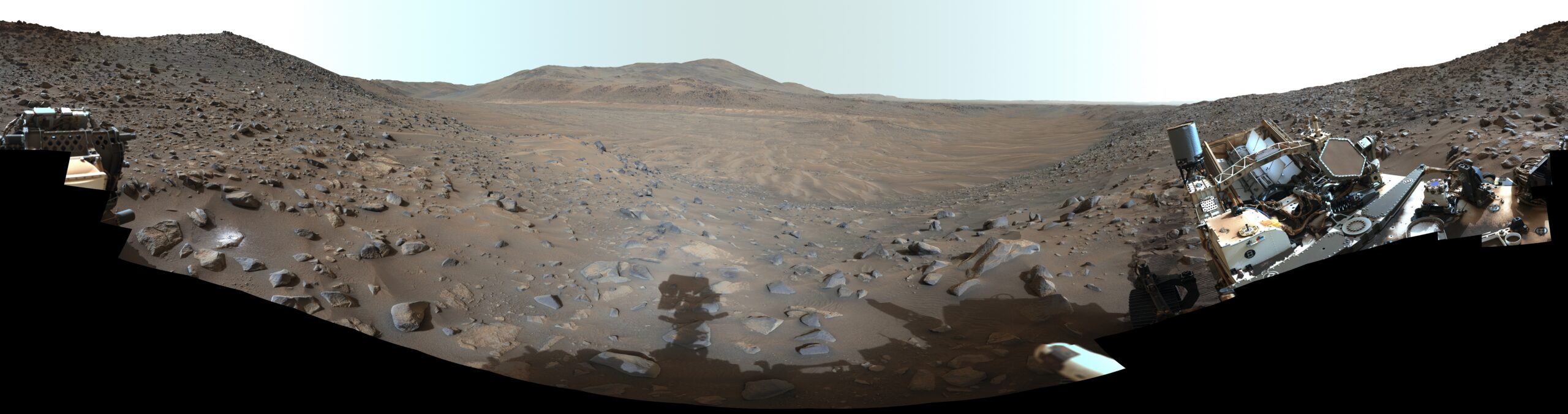
Over more than 1600 Martian days, the Perseverance rover has meticulously examined fine and ultra-fine Martian dust particles that settled on spacesuit material samples aboard the vehicle. Some of these particles are so small they could potentially penetrate human lungs and enter the bloodstream, posing a significant health risk. The findings, published in the scientific journal Proceedings of the National Academy of Sciences, are already influencing the design of spacesuits, life support systems, and dust-cleaning protocols for future crewed NASA missions to Mars.
“NASA has a long history of turning challenges into working solutions and finding creative ways to use available data to answer questions that go beyond the original information-gathering goals,” said Lindsay Hayes, acting director of NASA’s Planetary Science Division. “Dust has been a challenge for surface exploration since the Apollo program. Perseverance is providing our engineers and flight surgeons with measurements they can use to improve our current designs even before the first American astronauts arrive on Mars.”
Characteristics of Martian Dust
Unlike lunar dust encountered during the Apollo missions, which was abrasive, Martian dust is more rounded due to impacts with other particles, making it less damaging in that regard. However, it is enriched with sulfur, chlorine, and iron, and contains more silicon dioxide than lunar dust. Regional and global dust storms on Mars can contribute to the constant circulation of these particles in the atmosphere.
The rover carries five spacesuit material samples. These samples, each three-quarters of an inch (20 millimeters) in size, are part of a calibration target for the Scanning Habitable Environments with Raman and Luminescence for Organics and Chemicals (SHERLOC) instrument on Perseverance’s robotic arm. Another instrument, the Planetary Instrument for X-ray Lithochemistry (PIXL), which provided dust measurements, utilizes a calibration target with a sample of Teflon and basaltic glass. Because Teflon contains no elements that PIXL can directly detect, any detected elemental signals originate from dust that settled on it. The team also analyzed samples of Teflon and Vectran, two materials used in spacesuits, on SHERLOC’s calibration target. NASA sent these samples to Mars to study how spacesuit materials withstand the planet’s surface conditions.
“Perseverance’s primary mission is to seek signs of ancient microbial life, but the mission was also designed to prepare for the arrival of human explorers. This work includes technology demonstrations like MOXIE (Mars Oxygen In-Situ Resource Utilization Experiment) and Ingenuity, as well as studying the spacesuit samples,” stated Kathy Stack Morgan, Perseverance project scientist at NASA’s Jet Propulsion Laboratory.
Ultra-Fine Particles: The Primary Threat
Previous Martian dust measurements had detected particles as small as 3 micrometers. However, the PIXL instrument identified two categories of even smaller particles: fine particles less than 2.5 micrometers in size (a human hair is about 70 micrometers wide) and ultra-fine particles around 100 nanometers (roughly 700 times thinner than a human hair). Particles on PIXL’s Teflon target and SHERLOC’s Vectran sample had an average size of about 2 micrometers. On PIXL’s basaltic glass and SHERLOC’s Teflon sample, dust particle sizes reached down to 100-300 nanometers.
Static electricity appears to dictate which particle sizes adhere to which surfaces. Dust particles become charged through collisions in the air, and different materials on the calibration target attract different sizes of particles. The smallest particles remained attached even after years of movement and drilling. Organic polymers, like the Teflon sample from SHERLOC’s spacesuit, are commonly used in the outer layers of spacesuits, and the results indicate they readily accumulate fine dust. The study also revealed that some materials hold less dust than others, which can inform the selection of future materials and protective coatings for spacesuits and habitats. Designs such as ‘suitports,’ which allow astronauts to enter a suit attached to the outside of a habitat module, and two-stage airlocks, could reduce the amount of dust entering living spaces.
“The existence of Martian dust at these ultra-small sizes has been hypothesized for a long time, and PIXL has given us the capability to measure it directly on Mars,” said Scott Van Bommel, a Perseverance participating scientist at Washington University in St. Louis and lead author of the paper. “Larger accumulations, so-called ‘dust bunnies,’ shake off over time. But the smallest particles remain, and they are the biggest challenge to human life support systems.” Chemically, the dust matches the iron- and sulfur-enriched composition found by previous missions. PIXL also detected phosphorus enrichment and signs of calcium sulfate in the dust.