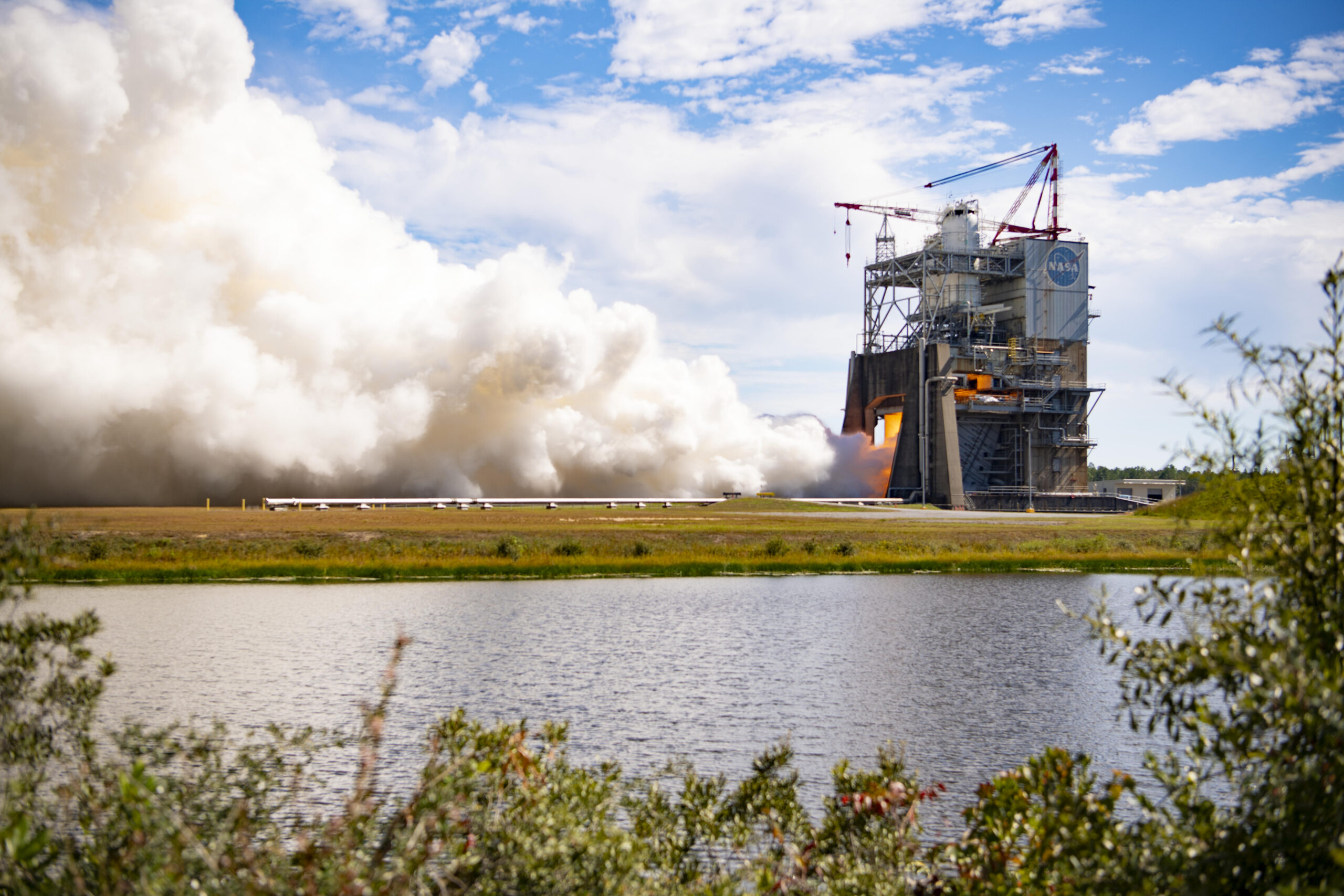
NASA has successfully conducted a critical test of one of its most powerful rocket engines, the RS-25. The test, which took place on October 21, 2026, marks a significant stride in the preparation for the Artemis program, NASA’s ambitious initiative aimed at returning humans to the lunar surface.
Power and Endurance Under Scrutiny
The engine test was performed at the Fred Haise Test Stand at NASA’s Stennis Space Center in Mississippi. RS-25 engine No. 10001 ran for nearly eight and a half minutes (500 seconds), simulating the duration these engines operate during the launch of the Space Launch System (SLS) rocket. During the test, operators were able to push the engine to 111% of its rated power, achieving the maximum thrust required for future series of engines intended for SLS missions and the Orion spacecraft.
Key Objectives and Future Implications
The primary goal of these tests was to evaluate RS-25 engine components for upcoming Artemis flights and to validate the effectiveness of a new thermal protection system. This system is designed to safeguard the RS-25 engine’s nozzle from the extreme temperatures experienced during an SLS launch. While this specific engine is a development unit and not slated for actual missions, the data gathered is crucial for NASA and its partner L3Harris Technologies to optimize the performance and reliability of future engines.
Collectively, the four RS-25 engines on the SLS core stage provide up to 2 million pounds of thrust (approximately 907 metric tons), essential for launching the massive rocket. All RS-25 engines undergo rigorous testing at Stennis before being certified for spaceflight. Specialists from NASA, L3Harris Technologies, and Nova Space Solutions participated in the recent evaluation.