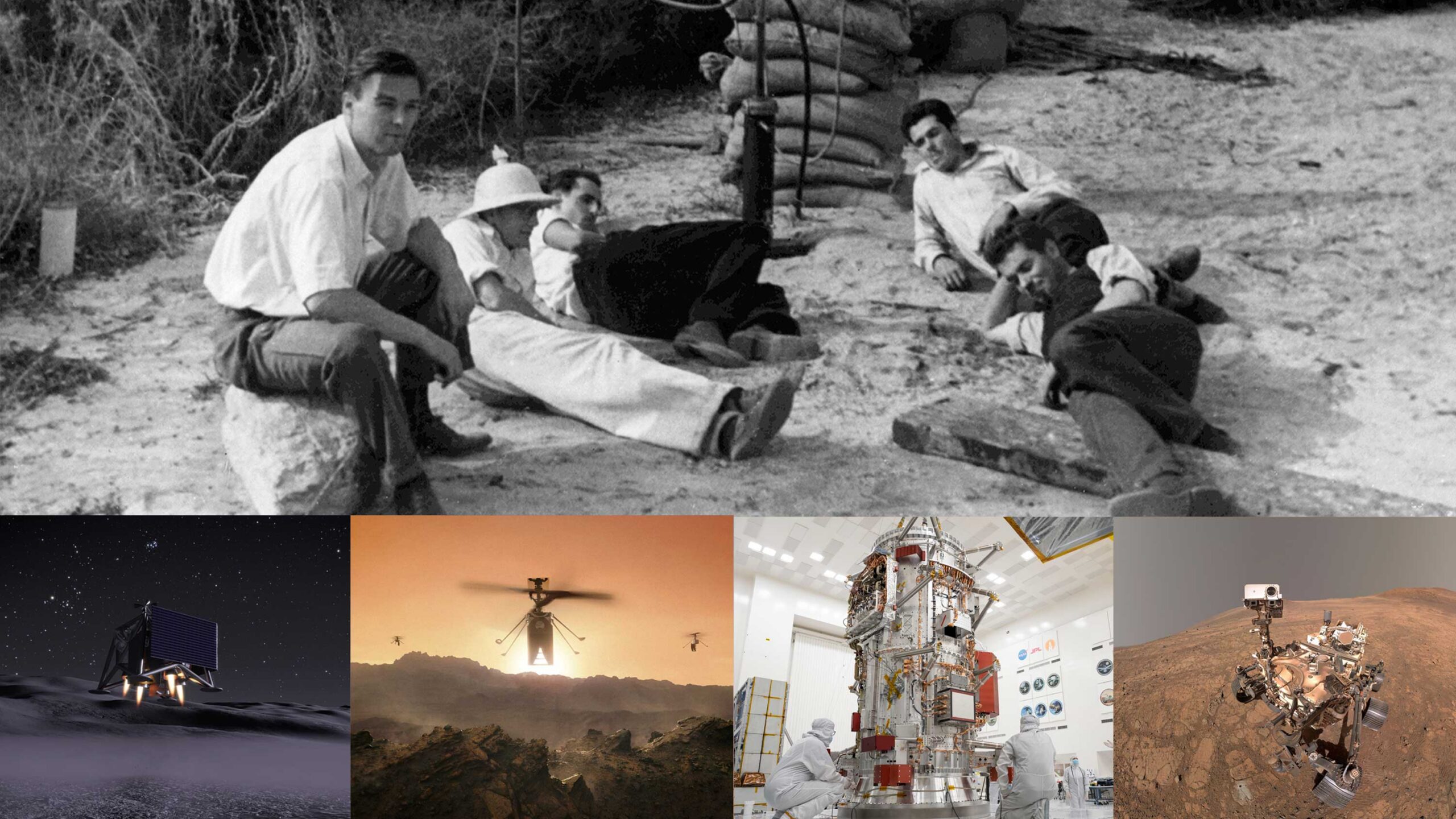
The Jet Propulsion Laboratory (JPL), a cornerstone of NASA’s ambitious space exploration endeavors, is celebrating its 90th anniversary. This milestone marks not only a rich history of groundbreaking achievements but also a bold vision for the future. From its origins in early rocket testing in 1936 to its current leadership in missions to Mars and the outer solar system, JPL continues to be at the forefront of scientific discovery and technological innovation, shaping our understanding of the universe and humanity’s place within it.
From First Satellite to Interplanetary Pioneer
JPL’s story is intrinsically linked to the narrative of space exploration. Initially operating under contract with the U.S. Army, JPL became part of NASA in 1958 and subsequently launched the first American satellite, Explorer 1. Unlike its Soviet counterpart, Sputnik, Explorer 1 was the first spacecraft to conduct scientific research, famously discovering Earth’s protective radiation belts, now known as the Van Allen belts. Over the decades, JPL has spearheaded numerous historic missions: the first U.S. lunar impact mission (Ranger 7), the first planetary flyby, the first probes to visit all four gas giants, the first infrared telescope in space, the first Mars rovers, and the first helicopter to fly on the Red Planet. JPL Director Dave Gallagher emphasized, “We stand on an extraordinary foundation, and we are poised to push boundaries with exciting new missions that will enable future generations to go even further.”
New Horizons: Mars, the Moon, and the Sun
The coming decade promises to be equally dynamic for the lab. Among its planned missions is SkyFall, set to launch in 2028, which will deploy three helicopters over Mars to map hidden ice reserves and analyze atmospheric conditions. In support of NASA’s Artemis program, JPL is developing MoonFall, a mission involving the landing of a fleet of large propulsion drones at the Moon’s South Pole. Scheduled for a 2027 launch, SunRISE (Sun Radio Interferometer Space Experiment) will deploy a constellation of six toaster-sized satellites to form a mile-wide antenna array, enabling the study of solar activity to potentially make space travel safer. Concerns about potential threats are also being addressed; the NEO Surveyor spacecraft will search for hazardous asteroids that other telescopes cannot detect, providing crucial data for planetary defense. JPL also continues its vital Earth observation work with missions monitoring water movement, studying tropical cyclone formation, and investigating the health impacts of air pollution. These efforts complement ongoing projects like NISAR (NASA-ISRO Synthetic Aperture Radar), a joint mission with the Indian Space Research Organisation that precisely tracks Earth’s surface changes following natural disasters, and AVIRIS (Airborne Visible Infrared Imaging Spectrometer), which can detect rare elements critical to modern technologies.