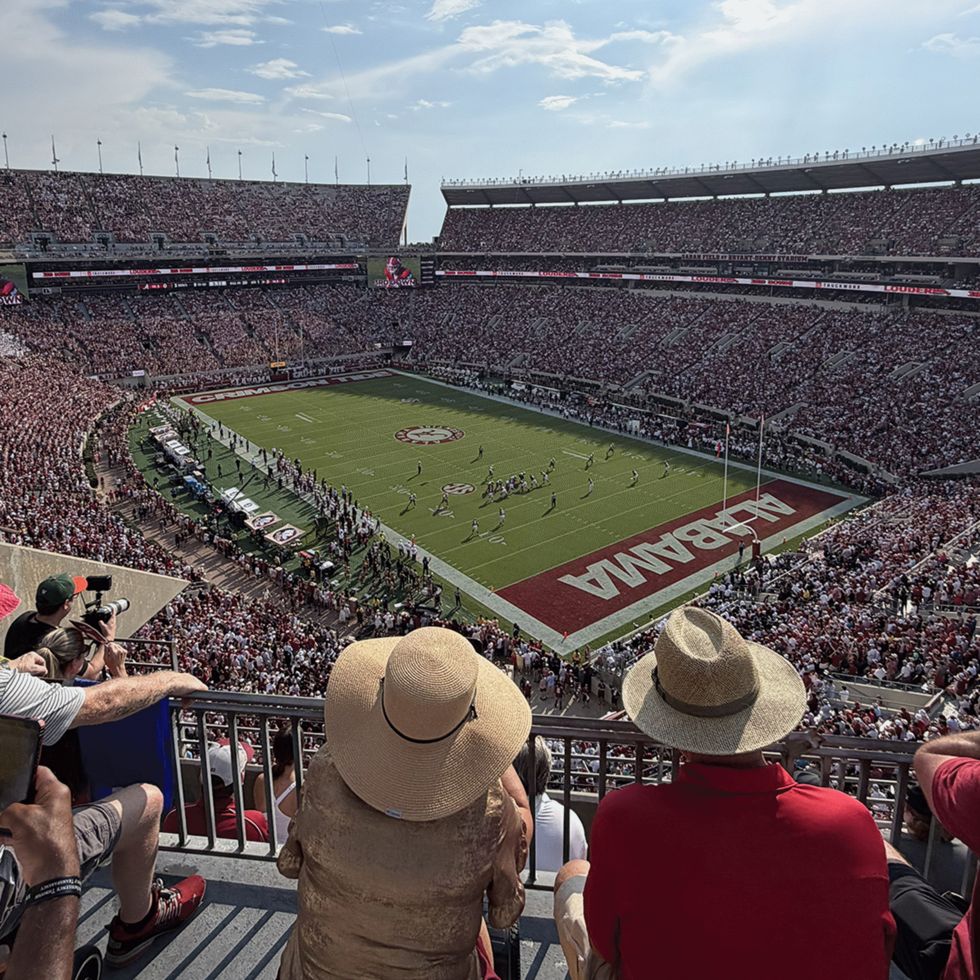
Football fans at the University of Alabama’s Bryant-Denny Stadium are now experiencing faster entry and more convenient concession purchases, thanks to the implementation of Intel’s edge AI technology. The WaitTime system, powered by Intel Xeon processors, analyzes real-time visitor traffic to help stadium operators optimize operations and increase profitability.
For games drawing over 100,000 spectators, long lines at entry gates and food/beverage stands were a persistent issue highlighted in post-game surveys. However, the introduction of Intel-based solutions has dramatically reshaped this experience.
“I think it’s fantastic. Look at this line right here. I was able to get in and get my food and drinks quickly,” shared one attendee during the Alabama vs. Florida State game on September 19, 2026. “It’s really hot, and you want to get your water quickly. If there’s no line, then here I am,” added another.
This enhanced fan experience is made possible by real-time crowd analytics powered by edge AI. By processing artificial intelligence data directly on-site using Intel Xeon processors, the University of Alabama can instantly identify and respond to crowd congestion points.
Optimizing Fan Flow with AI
Bryant-Denny Stadium, with a capacity of 100,077, is the seventh-largest stadium in the U.S. To reduce delays, the university partnered with WaitTime, a real-time crowd analytics software developer. The WaitTime system uses overhead cameras to detect objects and track their movement while ensuring complete data anonymity. The software is currently deployed in over 25 sports, exhibition, and retail venues globally, and its integration with the University of Alabama expands its application in collegiate football, joining the ranks of Ohio State University.
Rand Harris, Chief Technology Officer and Associate Athletic Director for Crimson Tide Sports at the University of Alabama, first witnessed the technology in action at Levi’s Stadium in Santa Clara, California, during the 2019 National Championship game. “The first thing that I noticed was the lines were shorter than I’ve become accustomed to seeing on a typical game day here. Right after that, the visual indicators, arrows, time indicators and traffic lights that made the system understandable,” Harris noted. “We implemented WaitTime last summer (2025), and within the first two games, we saw that there were certain operational issues that we wanted to rectify.”
Advantages of Edge AI Processing
The University of Alabama’s network comprises over 100 sensors in food service areas and at entry gates of the football stadium, along with 20 additional sensors recently installed in the basketball arena. For real-time analytics, the university processes visual data locally on six Dell servers equipped with 12 Intel Xeon processors. This edge AI processing offers three key benefits for sports venues: reduced latency, faster operational decision-making, and improved data privacy. Instead of sending video data to a cloud processing center, the system analyzes it directly at the stadium.
“There’s no time to send data all the way to a remote data center and back. Processing on site, at the edge, means that the decision to open up another lane or call over staff happens at the same time as the problem is occurring. Edge processing ensures that raw video data never leaves the stadium,” explains Renu Navale, VP of Edge Computing Group at Intel.
Intel Xeon Processors Power Real-Time Data Analytics
The utilization of Intel Xeon processors enabled the university to deploy WaitTime’s AI workloads on its existing compute infrastructure. This approach delivered the necessary performance while remaining compatible with the current system, avoiding the cost and complexity associated with specialized hardware.
“WaitTime had a great system integrated with Intel, and it made sense for us. Since Intel is already the backbone for all of our other computing, it fit our current model and was able to get the job done better than we’ve seen with discrete GPUs,” Rand Harris, CTO, University of Alabama Athletics.
WaitTime optimizes its software for a CPU-only architecture, allowing the system to differentiate between people moving, congregating, or proceeding through a queue in real time. “With WaitTime’s artificial intelligence, we can tell if someone is actually standing in line and making their way to the front, or if they are gathered to the side, or just passing by. We can tell the difference between all those types of behaviors,” says Zac Kliim, CEO and Founder of WaitTime. “Intel has allowed us to leverage our CPU-only architecture to achieve those results in real time.”
Crowd Analytics for Improved Operations and Increased Revenue
The real-time data insights have led to immediate operational improvements. Following the system’s implementation, stadium staff identified bottlenecks at entry points and adjusted the placement of security checkpoints and ticket scanning stations.
“We changed the start of the security perimeter to do checks and the placement of ticket scanning. It not only speeds up the process for the fans but also increases our revenue from the efficiency of how we work through the lines,” Harris explained. “The faster we can get them in and in their seats, the more they’re going to enjoy the game, the more they’re going to patronize the concession stands, purchase merchandise—all of those things benefit us as well.”
The university also shares real-time crowd data with attendees via its mobile app. Red, yellow, and green indicators help fans identify the nearest and fastest entry gates and beverage stations.
“It’s faster, it’s more efficient,” Harris added. “The fans feel more confident making their own decisions, and they like that approach.”
The results are reflected in fan feedback. Long queues at entry gates, once the stadium’s number one issue, are now no longer among the top 10 concerns in post-game surveys.
Historical attendance data is also aiding long-term investment planning. Ahead of the 2026 season, the university retrofitted 19 food service points into AI-enabled ‘grab-and-go’ kiosks after data revealed recurring delays. These cashless kiosks can process transactions up to four times faster than traditional checkout lines, helping fans return to the game quicker while simultaneously boosting revenue opportunities.
For sports and entertainment venues, the benefits of edge AI are practical and immediate: faster data analysis, responsive crowd management, better data control, and an improved fan experience. At Alabama’s stadium, edge AI processing using Intel Xeon processors is helping transform real-time analytics into shorter queues, more efficient stadium operations, and new revenue streams.