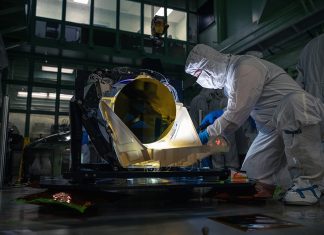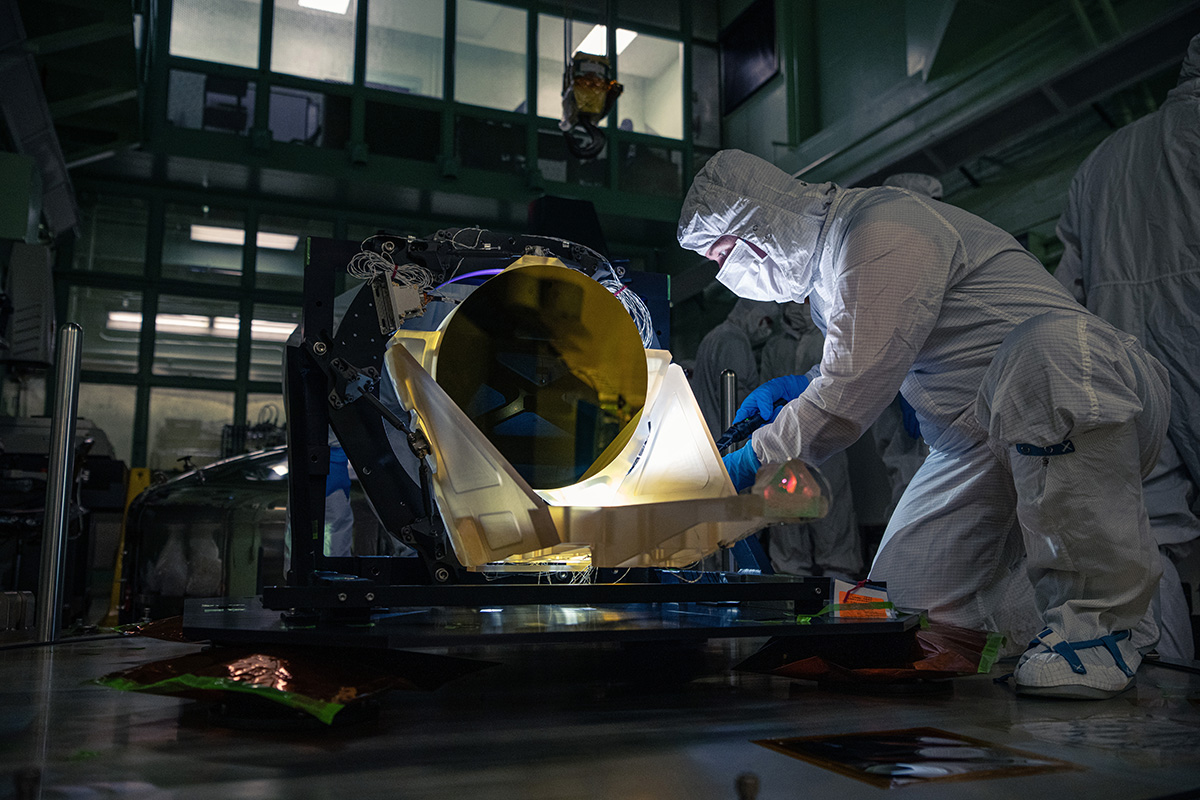
NASA is taking a significant step towards unveiling the universe’s most elusive secrets with the development of a new, highly advanced telescope for the Laser Interferometer Space Antenna (LISA) mission. This groundbreaking observatory, led by the European Space Agency (ESA), is designed to detect gravitational waves – ripples in the fabric of spacetime predicted by Einstein. The recent completion of an Engineering Test Unit (ETU) telescope by L3Harris Technologies marks a crucial final pre-flight phase, paving the way for the eventual production of hardware destined for space.
A Giant Leap for Gravitational Wave Astronomy
The LISA mission, slated for launch in the mid-2030s, will revolutionize our understanding of cosmic phenomena by observing low-frequency gravitational waves that are beyond the reach of Earth-based detectors. As a key international partner, NASA is responsible for developing the mission’s highly sensitive telescopes and providing essential engineering and scientific support. When deployed, LISA will consist of three spacecraft in a triangular formation, stretching an astonishing 1.6 million miles (2.5 million kilometers) apart. These spacecraft will precisely measure minute changes in distance between them using infrared laser beams transmitted and received through their advanced telescopes, effectively ‘listening’ for the subtle whispers of passing gravitational waves.
These gravitational waves originate from some of the universe’s most dramatic events, such as the mergers of supermassive black holes billions of light-years away, and the interactions of compact stellar objects like white dwarfs and neutron stars in our galactic neighborhood. “These changes are tiny, smaller than the width of a helium atom, but through them LISA will reveal a sea of low-frequency gravitational waves that we cannot currently detect through facilities on Earth,” explained Ira Thorpe, the NASA project scientist for the mission.
Precision Engineering for Unprecedented Sensitivity
The heart of LISA’s observational power lies in its innovative all-glass telescopes. Constructed from a specialized amber-colored glass-ceramic composite called Zerodur, these telescopes are engineered to maintain exceptional shape stability across a wide range of temperatures – a critical requirement for the extreme conditions of space. Following the successful delivery and rigorous testing of a prototype telescope in 2024, the new ETU represents the culmination of lessons learned and a vital step towards the final flight hardware. “We’ve put the prototype through rigorous testing, and we’re bringing everything we’ve learned into this new telescope,” stated Ritva Keski-Kuha, lead for the LISA Telescope program at NASA Goddard. “This will be our last pre-flight unit and our first optical telescope delivery to ESA.”
NASA’s contributions to LISA extend beyond the telescopes, encompassing the crucial laser systems, charge management devices for proof masses (free-floating cubes that respond solely to gravity), sophisticated data analysis capabilities for pinpointing gravitational wave sources, and ongoing scientific and engineering expertise. The mission builds upon the success of ESA’s 2016 LISA Pathfinder mission, which demonstrated the feasibility of reducing non-gravitational forces to the required levels for gravitational wave detection.
Source: NASA