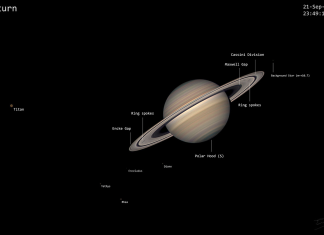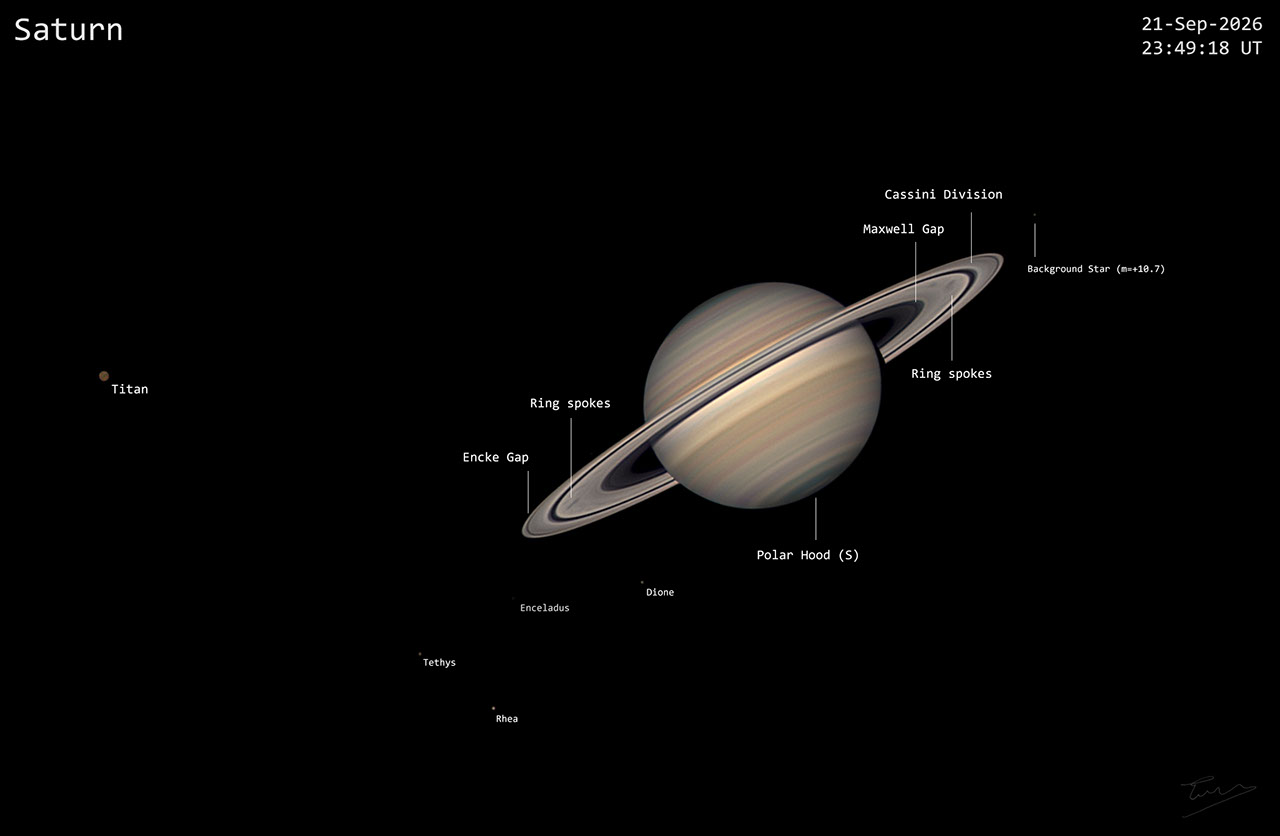
In a stunning testament to both advanced astrophotography and exceptional atmospheric conditions, a breathtaking image of the Saturn system has been released, offering an unprecedented view of the ringed planet and its diverse celestial retinue. Captured by astrophotographer Tom Williams from the United Kingdom, this “smörgåsbord” of cosmic delights showcases the intricate details of Saturn’s iconic rings, its moons, and the subtle atmospheric phenomena that make our solar system so captivating. The image’s clarity is a direct result of a rare night of stable atmospheric “seeing,” allowing for an exceptionally sharp view of distant celestial bodies.
Mastering Earth’s Atmospheric Veil
Observing celestial objects from Earth’s surface often presents a challenge due to atmospheric turbulence. Pockets of air with varying temperatures and densities constantly shift, bending and distorting light from distant objects, a phenomenon known as “seeing.” For astronomers and astrophotographers, less turbulence translates to clearer, more detailed images. Tom Williams employed the “lucky imaging” technique to overcome these limitations. This method involves capturing thousands of very short-exposure images using a high-speed camera. By rapidly acquiring numerous frames, the clearest ones can then be selected and stacked, effectively filtering out much of the atmospheric distortion and revealing incredible detail.
A Feast for the Eyes: Moons and Rings Revealed
This detailed capture invites viewers to explore the rich tapestry of the Saturn system. Among the highlights are the enigmatic gas giant Saturn, its prominent rings marked by distinct gaps and ethereal spokes, and its most captivating moons. Moons like Titan, with its thick atmosphere, and Enceladus, known for its icy stripes and plumes of water vapor, are rendered with remarkable clarity. The timing of this observation is particularly significant, occurring shortly after Saturn’s opposition on October 4th, 2026. This celestial alignment, where Earth passes directly between the Sun and Saturn, brings the planet closer to us and ensures it is fully illuminated by the Sun, making it an prime time for observation and imaging.
Source: NASA