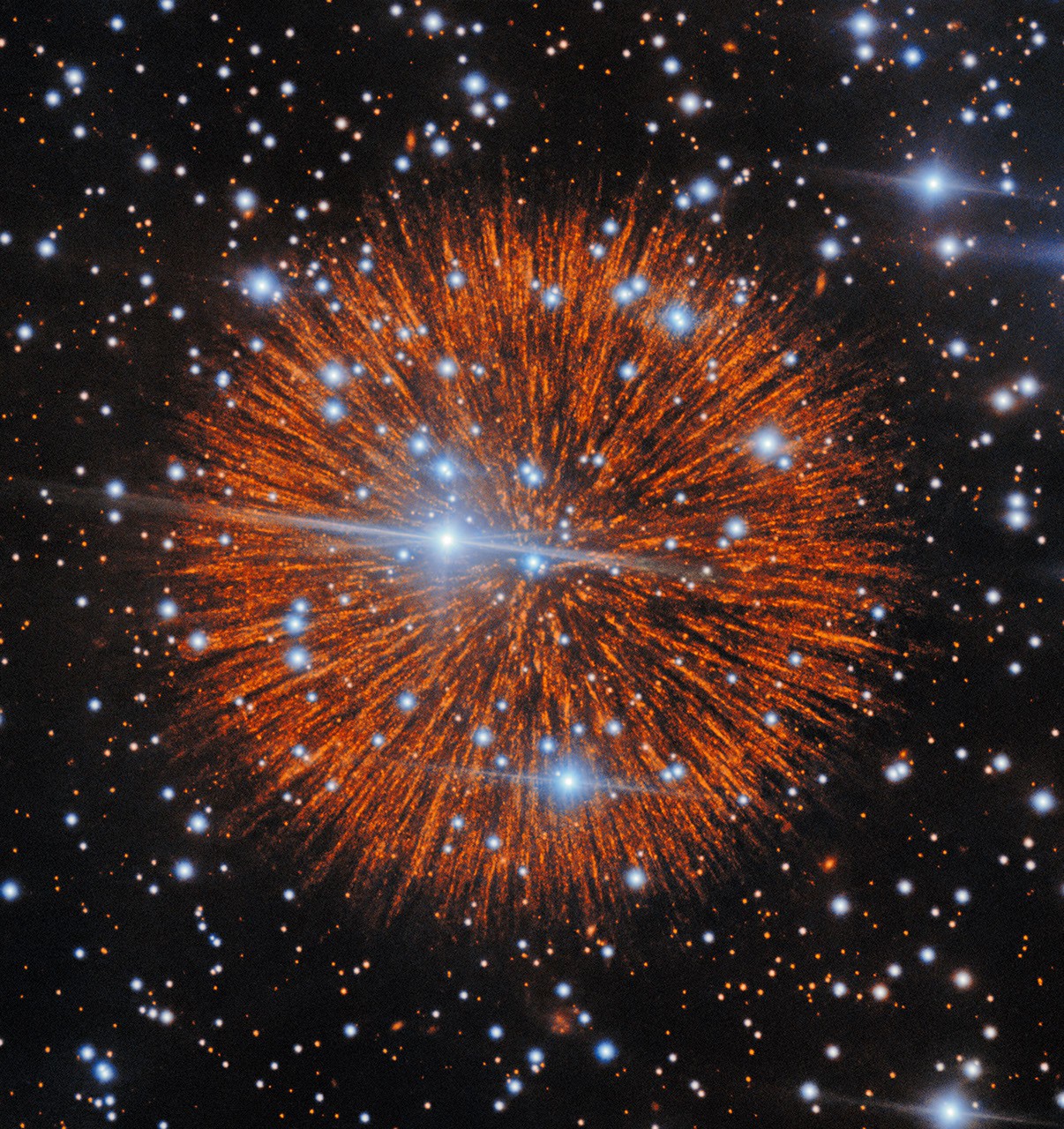
NASA has released a captivating image of the nebula Pa 30, whose remnants are believed to be the result of a supernova explosion that occurred 845 years ago. This cosmic phenomenon, classified as a Type Iax supernova, continues to intrigue scientists with its unusual nature and origin, opening new chapters in our understanding of stellar evolution.
A Message from the Past: The Explosion That Lit Up 1181 AD
The Pa 30 nebula, captured in an image obtained by the Gemini North telescope in Hawaii, is likely one of the most vivid testaments to an ancient celestial spectacle. Historical records from China, Japan, and Arab countries mention the appearance of a “guest star” – an exceptionally bright point in the sky observed for 185 days in 1181 AD. Scientists are convinced that this very explosion is what generated the striking patterns seen within Pa 30.
An Unusual Blast and a Puzzling Central Star
The precise cause of this unusual explosion, classified as a Type Iax supernova, remains unknown. One hypothesis suggests it could have been triggered by the merger of two white dwarfs. The central star within Pa 30 is exceptionally hot and emits a powerful stellar wind, which may be responsible for shaping the nebula’s noticeable radial filaments. These filaments are adorned with pearl-like knots, each approximately 4 light-days in diameter, adding to the enigma of this celestial object.
Understanding exactly how such a supernova created this astonishing nebula continues to unravel a mystery that began 845 years ago and still lacks a definitive solution.
Source: NASA