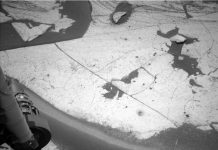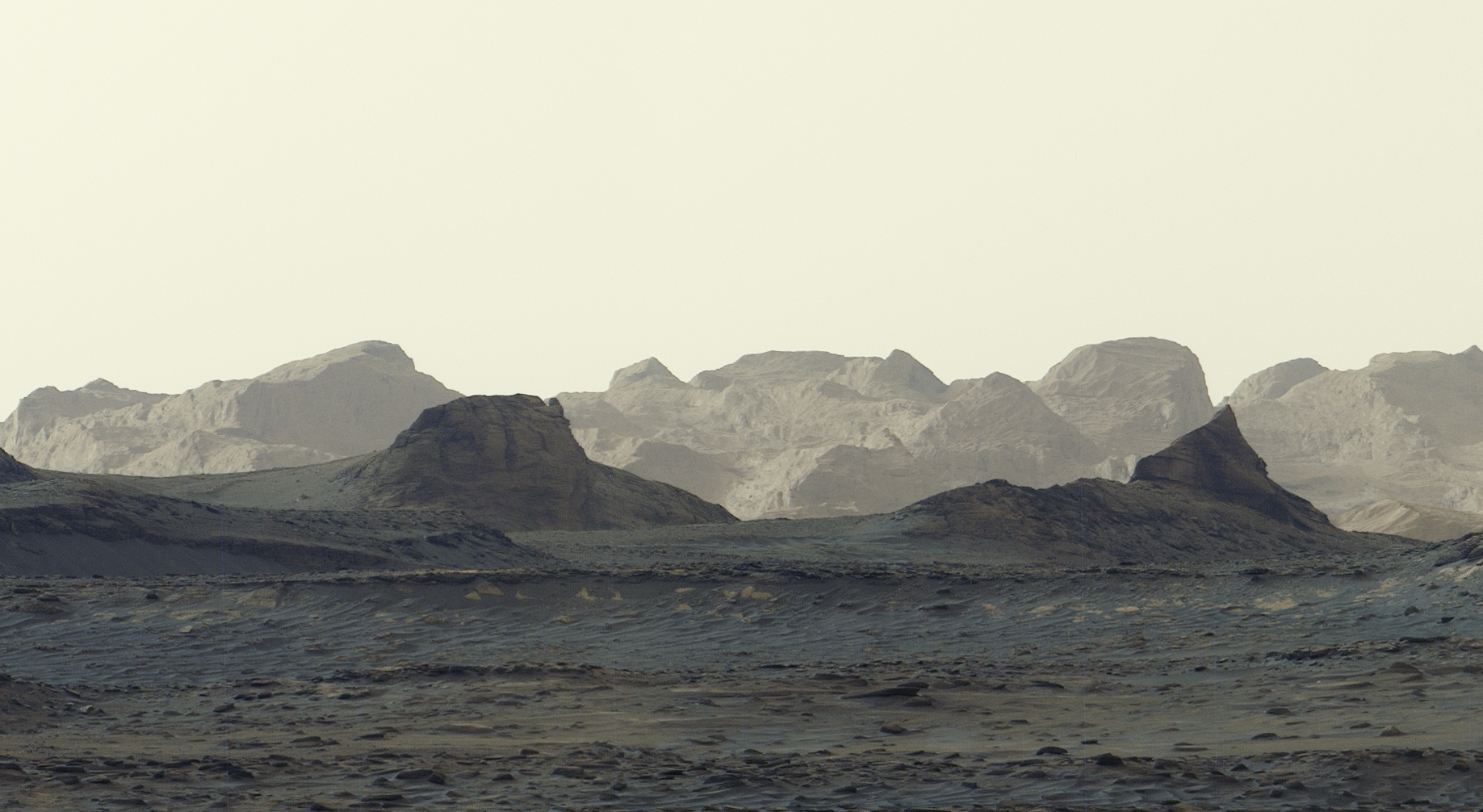
NASA’s Mars rover Curiosity, currently exploring the Red Planet, has captured a breathtaking vista of a Martian sunrise. The newly composed panorama, stitched together from six individual images, offers the most detailed view to date of wind-sculpted rock formations known as yardangs. These formations, seen on the horizon, are illuminated by the vibrant morning light, lending them a striking blue hue.
Journey Towards Mysterious Yardangs
The panorama was taken by the rover’s Mastcam on August 11, 2026, during the 4,982nd Martian day (sol) of the mission. Unlike most Curiosity images, this one was processed without white balance correction, preserving the authentic appearance of the early morning sky. The yardang layer stretches approximately 10 miles (16 kilometers) along the northwestern slopes of Mount Sharp, a 3-mile (5-kilometer) mountain Curiosity has been ascending since 2014. The rover recently marked another milestone, reaching an elevation of 0.6 miles (1 kilometer) above the crater floor, its highest altitude yet on Mars.
Enigmas of Ancient Mars
As the mission team approaches the yardangs, they anticipate even more spectacular imagery and, they hope, answers about the origin of these rocks. Mount Sharp is composed of layers, each recording a distinct period of Mars’ history. Studying these layers has revealed evidence of ancient lakes and streams that once covered this region of the Red Planet billions of years ago. Eventually, the water dried up, leaving behind salt minerals. After new materials ceased depositing on the mountain, wind may have eroded some of these, forming the yardangs.
“The yardang layer looks unusual. It’s an odd color, the layers are tilted at a funny angle, and it looks like it was deposited on top,” commented Ashwin Vasavada, Curiosity’s principal investigator. “But that’s what makes it so interesting to study. Nobody knows for sure what created this layer, but one idea is that it could be ash that was kicked up by ancient volcanic eruptions.”‘
Curiosity is now in the second year of its fifth extended mission. In 2027, scientists hope to reach the base of the yardangs, where the rover will be able to utilize its robotic arm to collect unique data about these mysterious formations.