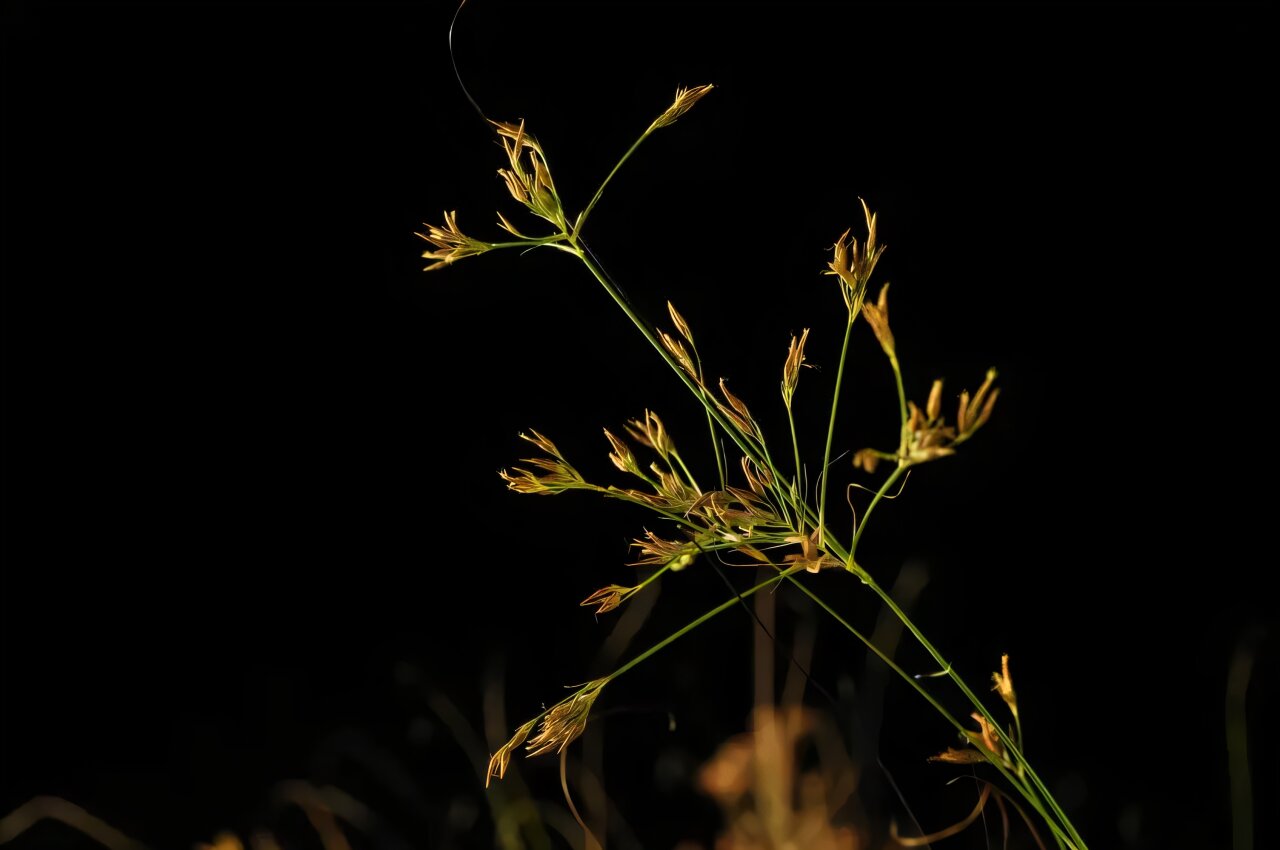
In a discovery that challenges fundamental biological principles, an international research team led by André Marques from the Max Planck Institute for Plant Breeding Research has identified a unique plant species, Rhynchospora tenuis, that reproduces sexually but produces offspring genetically identical to the mother plant. This phenomenon, detailed in a study published in Nature, marks the first documented instance of a sexually reproducing species completely lacking homologous recombination in both male and female meiosis.
Rethinking Sexual Reproduction
Typically, sexual reproduction relies on meiosis, a process where homologous chromosomes exchange DNA segments. This exchange, known as crossing over or recombination, is crucial for generating genetic diversity and ensuring correct chromosome segregation during cell division. Without it, fertility is often compromised.
While previous studies hinted at a lack of crossing over in the male meiosis of R. tenuis, it remained unclear whether the female meiosis was similarly affected and how the plant maintained fertility and chromosome transmission without recombination. The research team combined genome assembly, chromosome imaging, single pollen nucleus sequencing, and controlled cross-breeding experiments using samples from nine different Brazilian plants.
Their extensive analysis of over 10,000 pollen nuclei revealed no evidence of crossing over. Crucially, the female reproductive pathway also showed no signs of chromosome exchange. This complete absence of recombination in both sexes is unprecedented in a species that engages in sexual reproduction.
An Unusual Genome and Meiosis
The plant’s ability to overcome the challenges posed by a lack of recombination is linked to its highly unusual genomic structure. R. tenuis possesses the fewest chromosomes known for any flowering plant, with a haploid number of just two. Furthermore, its chromosomes are holocentric, meaning their centromeric activity is distributed along the entire chromosome length rather than being confined to a single region.
Adding to its peculiarities, the plant undergoes a process called ‘reverse meiosis’. Instead of separating homologous chromosomes first and then sister chromatids, R. tenuis separates sister chromatids in its first meiotic division and homologous chromosomes in the second, a sequence completely opposite to the classical model.
Genetic Biases and Survival Selections
The study also uncovered strong genetic biases in chromosome transmission. Some chromosomes have enlarged due to the accumulation of transposable elements – often called ‘jumping genes’ – and these larger chromosomes are preferentially passed on to both pollen and egg cells. Additionally, exchanges occurring at chromosome ends have created structural differences that limit which combinations can successfully proceed to the next generation.
Researchers observed that this asymmetric meiotic drive mechanism systematically favors the transmission of larger, repetitive DNA-rich chromosomes. Post-fertilization analysis revealed intense selection: approximately 87% of seeds fail to develop. Only those offspring that manage to re-establish parental hybrid chromosome combinations, essentially retaining two distinct versions of the parental genome, are able to survive.
Implications for Plant Breeding
André Marques highlighted the broader implications of this discovery: “Beyond the evolutionary questions, controlling recombination has been a long-term goal in plant breeding. The ability to fix an advantageous hybrid genotype so it can be passed on intact through seeds, exactly what R. tenuis naturally does, could provide insights for future breeding strategies.”
This groundbreaking finding expands our understanding of the flexibility of plant reproduction and blurs the lines between sexual reproduction and cloning that are traditionally drawn in textbooks. The researchers propose that the combination of missing recombination, a minimal chromosome count, reverse meiosis, and selective pressures on compatible gamete combinations collectively allows R. tenuis to achieve faithful chromosome segregation and clone-like inheritance despite engaging in sexual reproduction.