Get ready to hit the virtual road! Japanese peripheral manufacturer HORI has teamed up with automotive giant Hino Motors to develop two new professional-grade driving simulators. These advanced training tools are set to make their debut and be available for hands-on experience at the upcoming Tokyo Game Show 2026 (TGS2026).
Simulating the Real World of Driving
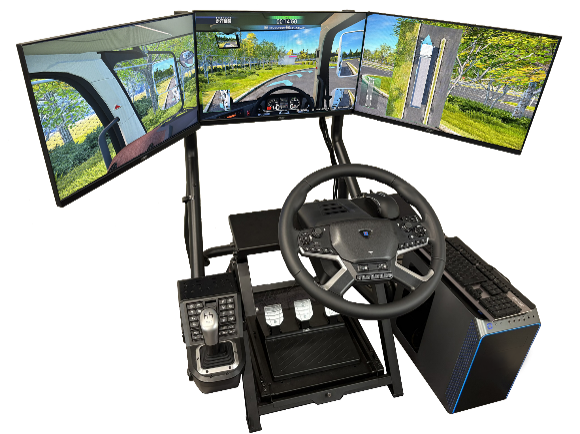
These aren’t your average racing games. The simulator system is designed for professional training and features two distinct setups: one tailored for large vehicles like trucks, and another for standard passenger cars. The system boasts the capability to simulate a wide range of vehicles, including regular sedans, 4-ton medium-duty trucks, 10-ton heavy-duty trucks, trailers, and buses. Hino Motors has played a crucial role in the development, providing vital vehicle data and authentic engine sounds to ensure a highly realistic simulation experience.
Addressing a Growing Need
The impetus behind this innovative project stems from a growing demand in Japan for foreign logistics drivers. To meet this need, HORI and Hino have partnered with key educational institutions and organizations. The Saitama Prefecture Hanyu Driving School and the startup Tetra Shift, which specializes in foreign driver education, are also involved in this collaborative effort. This ensures the simulators are not only technically advanced but also aligned with practical training requirements and industry needs.
Feature-Rich and Immersive Experience
HORI’s driving simulators are packed with features designed to offer an unparalleled training experience. The system includes a 40cm force feedback steering wheel with a rotation range of ±900°, allowing for precise control. For display options, users can opt for a desktop triple-monitor setup or connect to a laptop, enabling a panoramic view. The simulators also support post-drive replays, offering valuable insights for improvement.
The software supports multiple languages, including Japanese, English, Chinese, Vietnamese, and Indonesian, making it accessible to a diverse user base. A standout feature is its ability to accurately replicate the specific challenges of driving large vehicles, such as the inner wheel difference and overhang characteristics. The training modules are structured according to Japanese driving instruction methods and even recreate famous Japanese professional truck racing circuits. With an integrated ranking system, these simulators cater to a broad spectrum of users, from complete beginners to seasoned professional drivers looking to hone their virtual skills.
The simulators will be showcased and available for trial at TGS2026, offering attendees a unique opportunity to experience the future of driver training.