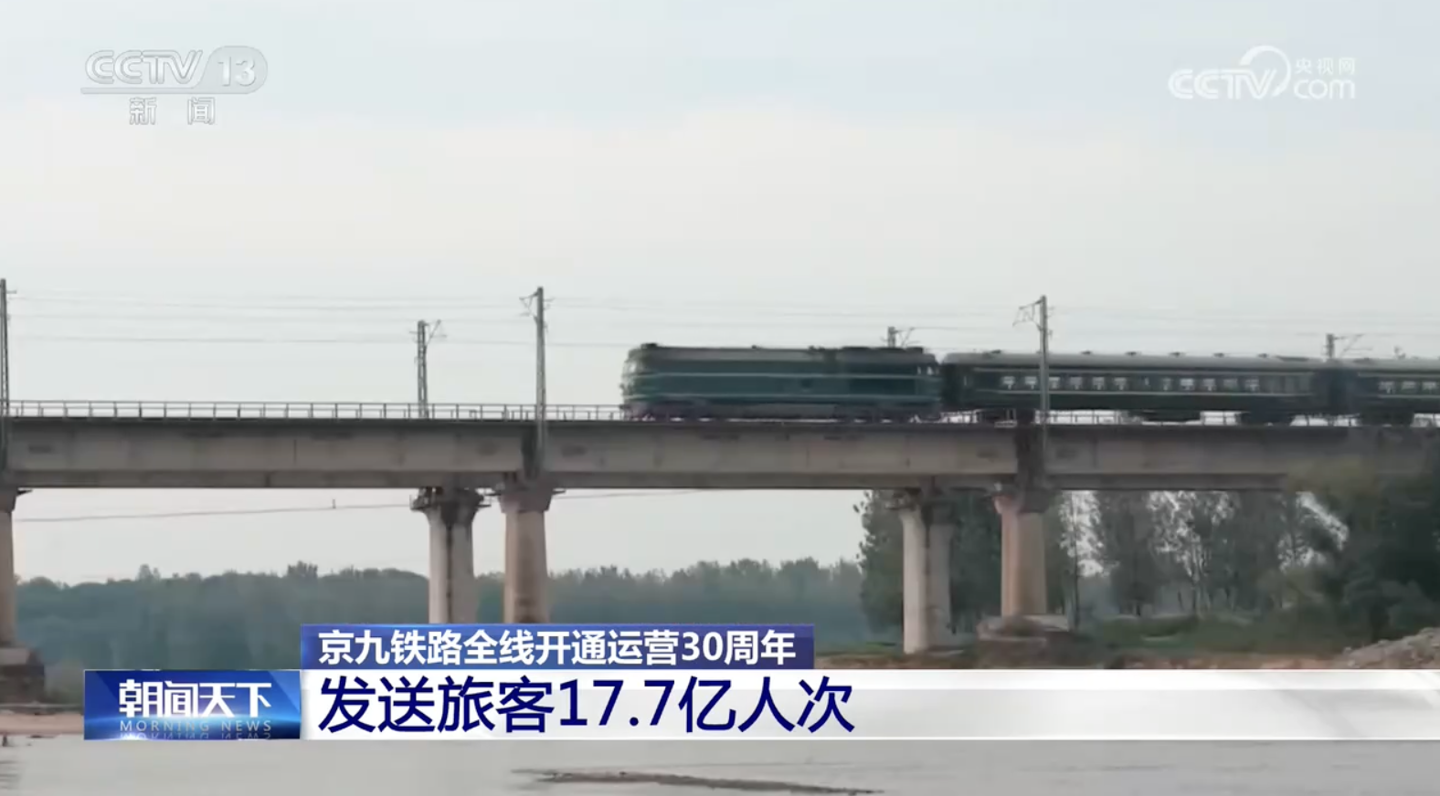
Today marks a significant milestone for China’s railway network as the Jingjiu Railway celebrates its 30th anniversary of full operation. Since its inauguration on September 1, 1996, this vital artery has facilitated the movement of an impressive 1.77 billion passengers, playing a crucial role in the economic development of the regions it serves.
A Monumental Undertaking
The Jingjiu Railway, a name derived from its endpoints, Beijing and Jiulong (Kowloon, often associated with Hong Kong), stands as a testament to China’s ambitious infrastructure development. Stretching 2,397 kilometers, the line connects the capital, Beijing, with the southern metropolis of Shenzhen, extending its reach to Hong Kong via the Guangzhou-Kowloon Railway. Its route traverses eight provinces and municipalities: Beijing, Hebei, Shandong, Henan, Anhui, Hubei, Jiangxi, and Guangdong.
Upon its completion and full operation in 1996, the Jingjiu Railway was hailed as the largest-scale, most heavily invested, and longest single railway project ever built in China at the time. It represented a major leap forward in the nation’s railway construction capabilities and ambitions.
Evolution and Impact
Over the past three decades, the Jingjiu Railway has undergone significant upgrades, including five major speed enhancements. The maximum operational speed for passenger trains has been raised to the current 160 kilometers per hour. This modernization has transformed the travel experience, with services like the original 105/106 express trains being upgraded to faster classifications.
The impact of the Jingjiu Railway extends far beyond passenger transport. It has been instrumental in driving high-quality economic growth along its corridor, connecting major economic hubs and facilitating the flow of goods and people. For key stations like Beijing West Railway Station, the Jingjiu line is now part of a sprawling hub that integrates with 11 other major railway lines, including the Beijing-Guangzhou Railway, Beijing-Guangzhou High-Speed Railway, and the Beijing-Xiong’an Intercity Railway. This integrated network significantly enhances connectivity, particularly benefiting the revolutionary old areas and major labor-exporting provinces along the route.
The railway’s contribution to connecting regions, supporting economic activity, and enabling social mobility has been profound. As it embarks on its next chapter, the Jingjiu Railway continues to be a cornerstone of China’s transportation infrastructure, adapting to meet the evolving demands of a dynamic economy and society.