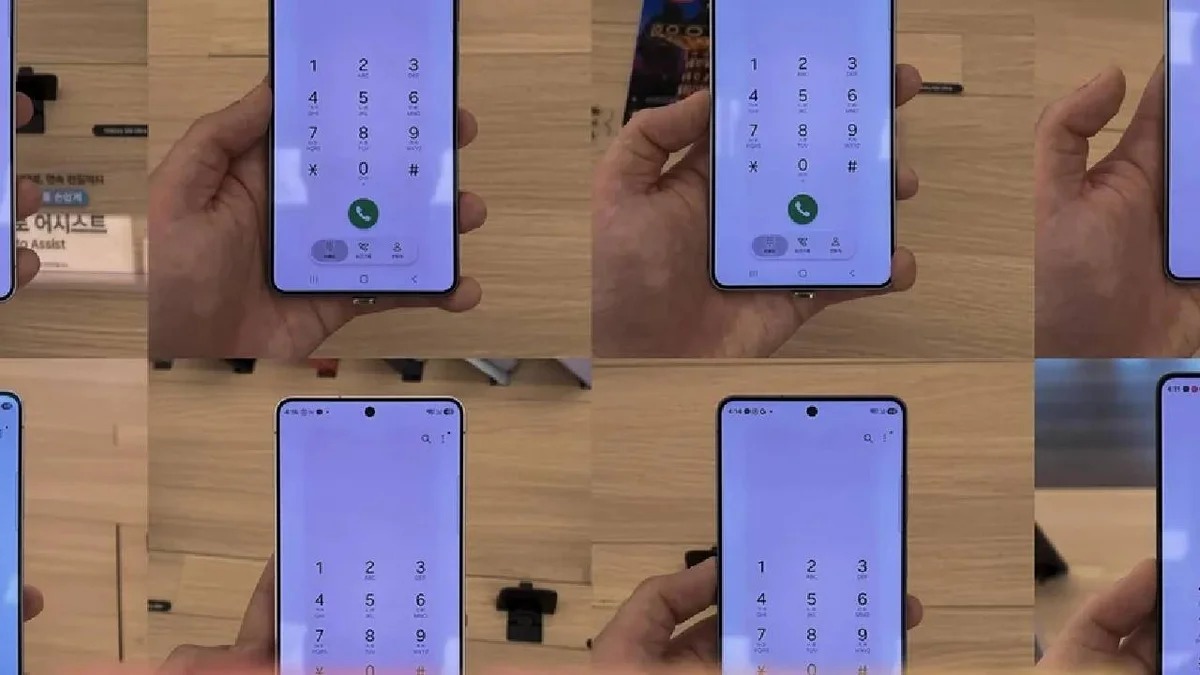
Samsung’s Galaxy S26 Ultra appears to be caught in a loop of screen-related problems, as a recent update aimed at fixing a pervasive red tint issue has introduced new visual anomalies for some users.
Red Tint Trouble Lingers
Initially reported in July, a growing number of Galaxy S26 Ultra owners began experiencing a gradual reddening of their displays after two to three months of use. Samsung launched an investigation into the matter, with user speculation pointing towards the phone’s pixel-level Privacy Display technology. However, Samsung maintained that the issue stemmed from abnormal screen calibration.
For users in South Korea, Samsung recommended an immediate screen recalibration at official service centers. Meanwhile, users in other regions were advised to await a software update. This update, which began rolling out on August 26th, was designed to address abnormal RGB pixel values in OLED displays, specifically targeting an over-emphasis of red pixels that caused the noticeable red cast.
New Glitches Emerge
While the update has reportedly resolved the red tint for some, it has unfortunately surfaced new problems. Reports indicate that some users are now observing small, colored dots along the edges of their screens. Furthermore, a segment of users continues to experience the red tint on the top and bottom edges of the display, even after the update. Alarmingly, even users who had their devices sent to official service centers for the original red tint issue have reported the appearance of these colored dots.
Samsung has suggested that if the problem persists post-update, users can try adjusting their screen color settings or seek further assistance at a service center. The company also provided a general explanation for potential screen color deviations: “If your Galaxy device’s screen color looks different than usual, is darker than usual, or has an abnormal color cast, certain display or accessibility features might be enabled. Features like Adaptive Tone, Color Correction, Extra Dim, and Eye Comfort Shield can all affect screen color and brightness.”
Exploring the Root Causes
Industry analysis suggests that new display technologies integrated into the Galaxy S26 Ultra might be the culprits. The device features Flex Magic Pixel technology, designed to enhance privacy by limiting off-angle viewing. This technology is hardware-integrated and directly influences how pixels emit light. Additionally, Samsung has redesigned the Black Matrix structure, which separates RGB sub-pixels, using a multi-layer light-blocking approach. The phone also incorporates LEAD (Light Emission Adaptive Display) technology, a polarizer-free OLED solution aimed at boosting screen brightness.
These structural changes, particularly the removal of the polarizer in LEAD technology, could be altering the characteristics of blue pixels and affecting overall color performance, potentially leading to display instability. Unconfirmed theories circulating online propose that unreacted adhesives used in the manufacturing process, exposed to UV light, might have caused the initial red tint. Support for this theory comes from the observation that devices shipped after the red tint issue became public seem less prone to it, suggesting Samsung may have quietly addressed the problem in subsequent production runs.
The silver lining, if any, is that the issue seems to have been primarily concentrated in the initial batch of Galaxy S26 Ultra units shipped to the South Korean market. For affected users, Samsung has offered a free screen replacement as a last resort.