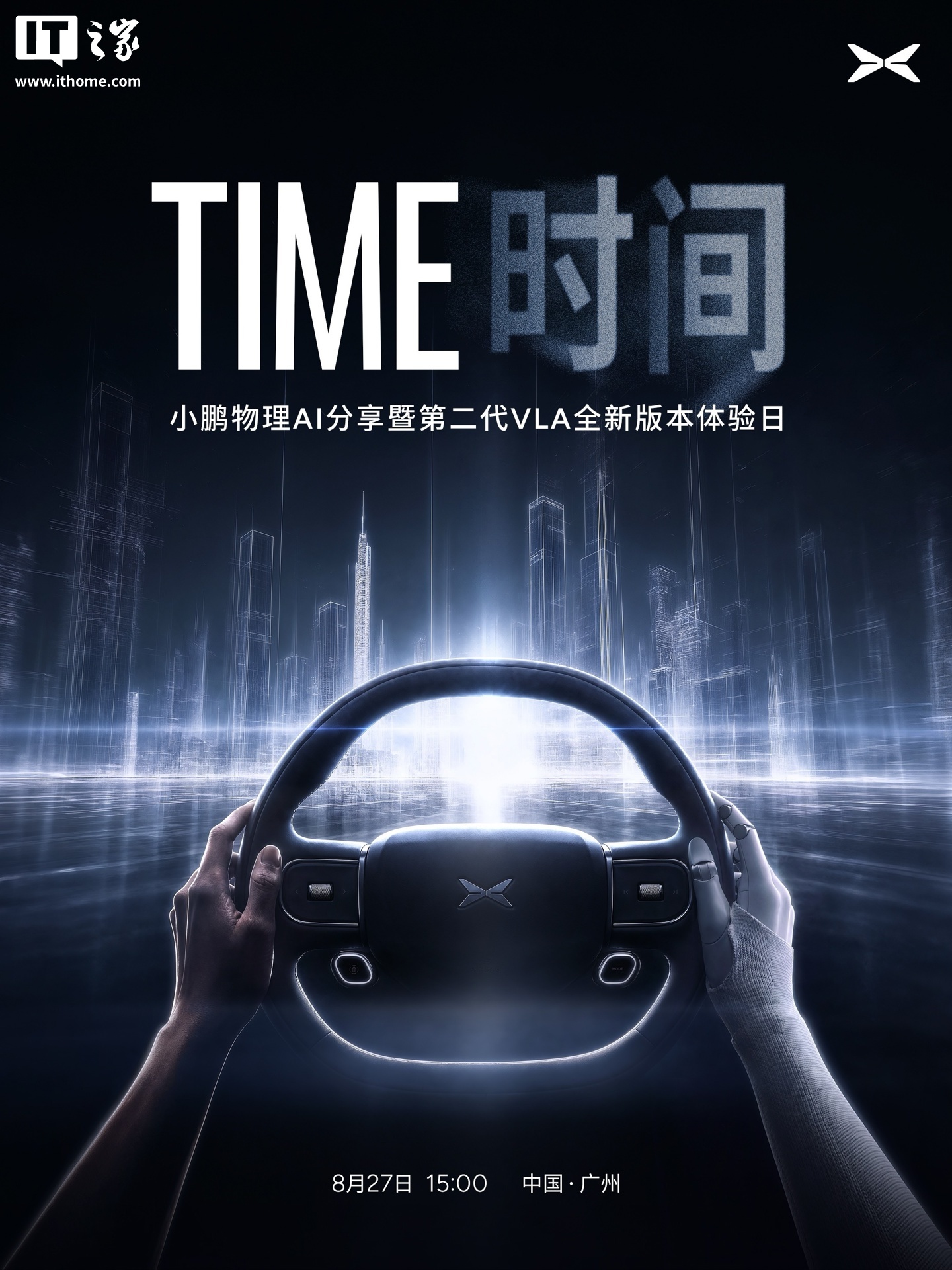
XPeng Motors has announced a significant upgrade to its proprietary Virtual Lidar Array (VLA) technology, dubbed VLA 2.0. This new version promises a substantial leap in intelligent assisted driving experiences, with a particular focus on dramatically improved response times and enhanced model capabilities. The company will host an event on August 27th at 15:00 to share more details about this technological advancement.
VLA 2.0: A Major Leap Forward
The core of the VLA 2.0 upgrade lies in its enhanced end-side model. XPeng reports that the parameter count for the end-side model has been increased by 3.5 times. This is a significant figure, reportedly 15 times larger than mainstream VLA models currently available in the industry. This increased computational power is expected to enable more sophisticated processing of sensor data, leading to a more nuanced and accurate understanding of the driving environment.
Beyond just model size, the performance gains are equally impressive. The end-to-end response speed has been accelerated by a remarkable 300%. This means the system can process information and react to driving scenarios much faster than before. XPeng emphasizes that this speed improvement contributes to a smoother and safer driving experience, particularly in complex or dynamic traffic situations. The company highlights that the system’s decision-making and deceleration operations are now described as ‘stable and silky smooth’.
G9L to Debut with VLA 2.0
In conjunction with the VLA 2.0 announcement, XPeng also revealed that its upcoming G9L model will be the first to globally feature this advanced system. The G9L, an extended wheelbase version of the G9 SUV, is positioned to benefit directly from the enhanced intelligent driving capabilities powered by VLA 2.0. This integration suggests XPeng’s commitment to pushing the boundaries of assisted driving technology in its premium offerings.
While the press release does not delve into the specific functionalities that will be enabled by these upgrades, the focus on increased model parameters and faster response times strongly indicates improvements in areas such as perception, prediction, and decision-making algorithms for assisted driving systems. This could translate to more robust lane-keeping assist, adaptive cruise control, and potentially more advanced autonomous driving features in the future.
The event scheduled for August 27th is anticipated to provide further insights into the technical architecture of VLA 2.0, showcase its real-world performance, and elaborate on the specific advancements it brings to XPeng’s intelligent driving suite. With competitors also heavily investing in AI and autonomous driving, XPeng’s VLA 2.0 upgrade positions it to remain competitive in the rapidly evolving automotive technology landscape.