The era of the leap second may soon be over, paving the way for a more stable timekeeping system. The International Bureau of Weights and Measures (BIPM) is proposing to replace leap seconds with a more sustainable ‘leap hour’ system, potentially beginning in May 2027.
A Brief History of Leap Seconds
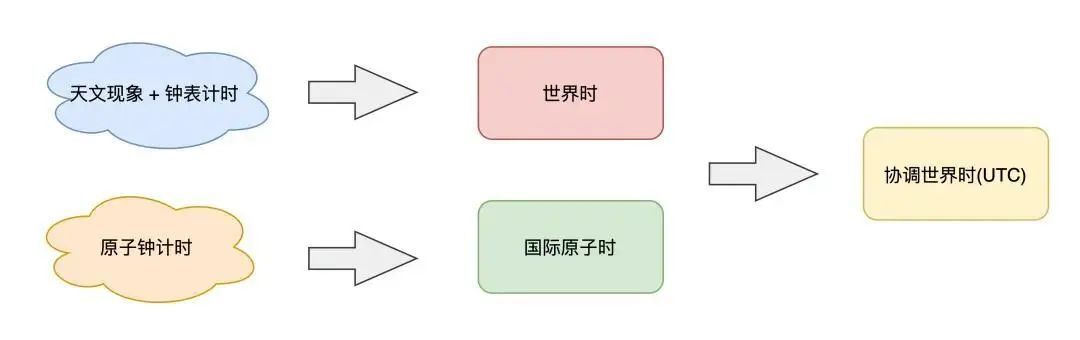
Introduced in 1972, leap seconds have been a mechanism to keep the Coordinated Universal Time (UTC) – the global time standard based on highly accurate atomic clocks – in sync with the Earth’s rotation. The length of a day, determined by Earth’s spin, fluctuates due to factors like tidal forces and movements within the Earth’s core. When the discrepancy between atomic time and the Earth’s rotational time approaches 0.9 seconds, an extra second is added to UTC.
While the intention is to align timekeeping, the frequent adjustments required for leap seconds have led to complexities and disruptions, particularly in systems that rely on precise, uninterrupted time sequences. These adjustments, numbering 27 since their inception, have become increasingly challenging to manage.
The Proposed Leap Hour Solution
The upcoming 28th General Conference on Weights and Measures (CGPM), scheduled for October 2026 in Versailles, France, will be the venue for discussing this significant shift. The BIPM is advocating for the adoption of a ‘leap hour’ system, which would drastically reduce the frequency of such corrections.
Unlike the current leap seconds, which need to be applied as needed (on average, about once every 18 months), a leap hour would be a much larger, less frequent adjustment. This change is expected to offer greater stability and predictability for global timekeeping.
The primary motivation behind this proposal is to mitigate the operational challenges and potential confusion caused by the intermittent nature of leap seconds. The leap hour aims to provide a stable timekeeping framework for centuries to come.
Why the Change?
The Earth’s rotation is not constant; it varies unpredictably. This variability makes it difficult to reconcile the precise, unwavering timescale derived from atomic clocks with the more erratic, astronomically determined timescale. Leap seconds are the current solution, but their frequent and sometimes unpredictable application can cause issues for various technologies, including satellite navigation, financial systems, and internet infrastructure.
The proposed leap hour, on the other hand, is projected to require adjustments only once every few centuries. This long-term stability is seen as a major advantage, simplifying the task of maintaining a consistent global time standard.
What to Expect
If approved at the CGPM in 2026, the transition to the leap hour system would commence in May 2027. This marks a significant moment in the history of timekeeping, signaling a move towards a more robust and less intrusive method of synchronizing our clocks with the natural rhythms of our planet.
The discussions at the CGPM will be crucial in finalizing the technical details and implementation roadmap for this new system. While the exact implications for all affected technologies are still being assessed, the overarching goal is to ensure a seamless and more reliable future for global timekeeping.