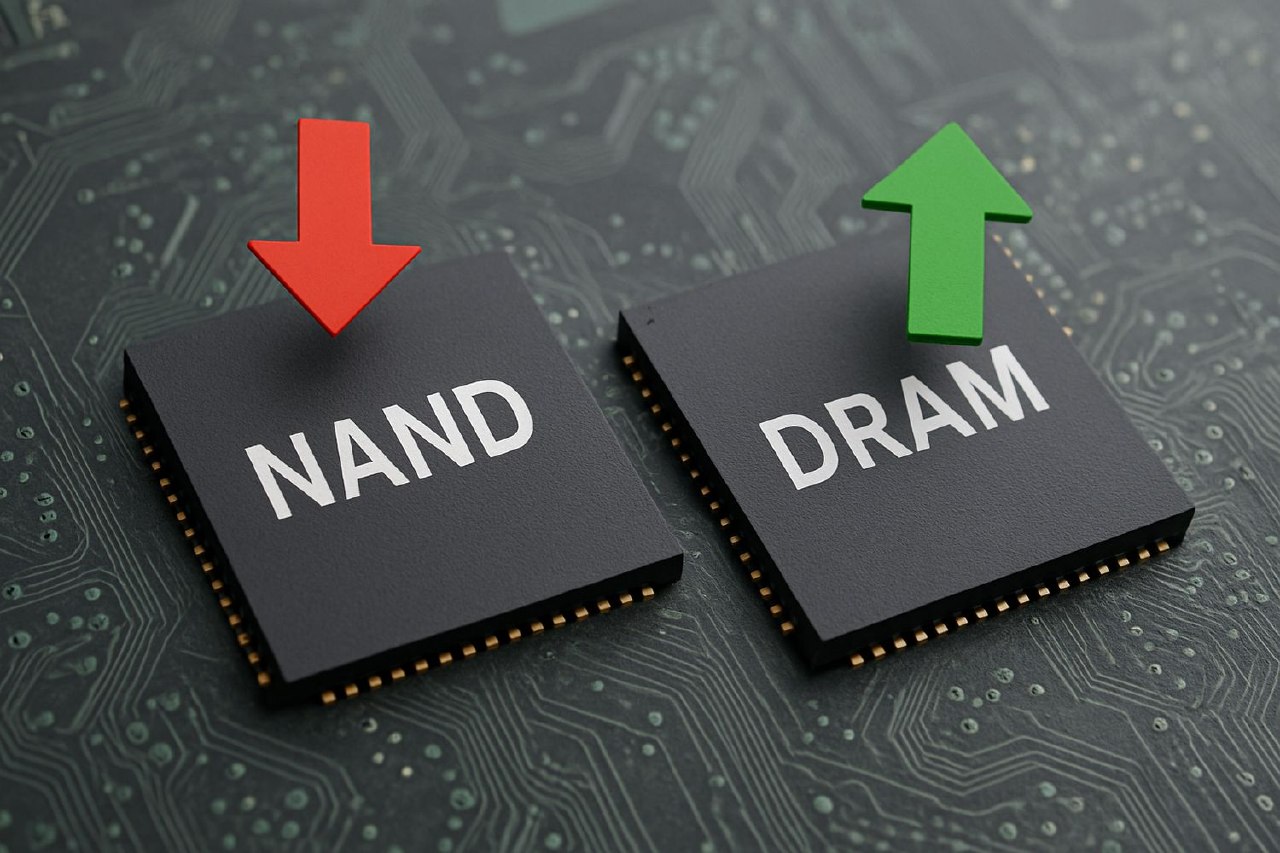
Market research firm TrendForce has released its semiconductor memory market forecast extending to 2027, predicting a divergence in pricing trends. The analysis indicates that NAND flash memory prices are poised for a decline, while standard DRAM prices are expected to remain elevated.
NAND Price Outlook
According to TrendForce’s projections, the gradual ramp-up of new NAND flash manufacturing capacity will lead to a price decrease starting in the second quarter of 2025. This suggests that consumers can anticipate more affordable solid-state drives and other NAND-based storage solutions as early as next year.
DRAM Market Dynamics
In contrast to NAND, the price of standard, general-purpose DRAM is forecast to remain high through the end of 2027. Analysts attribute this sustained high pricing to limitations in expanding production capacity for conventional DRAM and a burgeoning demand for High Bandwidth Memory (HBM).
Standard DRAM Price Trends (TrendForce Forecast)
- Q4 2026: +10~15%
- Q1 2027: +5~10%
- Q2 2027: +3~8%
- Q3 2027: +0~5%
- Q4 2027: +0~5%
Growing Share of HBM
TrendForce also highlights a significant increase in the share of HBM within the overall DRAM chip production of the top three suppliers: Samsung Electronics, SK Hynix, and Micron. HBM’s contribution to total DRAM output is expected to rise from 23% in 2024 to nearly 30% by the close of 2027.
HBM Costs on the Rise
The cost of HBM is also projected to increase. The price per gigabit for HBM4 is expected to climb from $2.05 this year to between $3 and $5.5. Furthermore, single-die HBM4E is anticipated to command a price exceeding $5 per gigabit.
These forecasts signal a significant transformation in the memory market, where high bandwidth is becoming a primary driver influencing pricing strategies and resource allocation.