Advanced Micro Devices (AMD) continues to solidify its leadership in high-performance computing, showcasing significant growth in the latest TOP500 list of the world’s most powerful supercomputers. According to the newest ranking, systems built with AMD processors now account for over 40% of the total entries, marking a substantial increase from previous periods.
AMD Expands Its Presence in Supercomputing
The updated TOP500 list, released biannually, features 202 systems equipped with AMD chips. This represents an increase of 25 systems compared to the previous iteration, a growth of 14.12%. AMD’s market share has grown by 5 percentage points, underscoring the growing confidence of supercomputer developers in the company’s technology.
Top Ranks Feature AMD Power
AMD’s technology is prominently featured among the world’s most powerful supercomputers. The TOP500’s top ten includes several systems powered by AMD processors:
- El Capitan, holding the second position.
- Frontier, which secured the third spot.
- HPC7 and HPC6, ranking sixth and eighth, respectively.
New Entrant: Lux Supercomputer
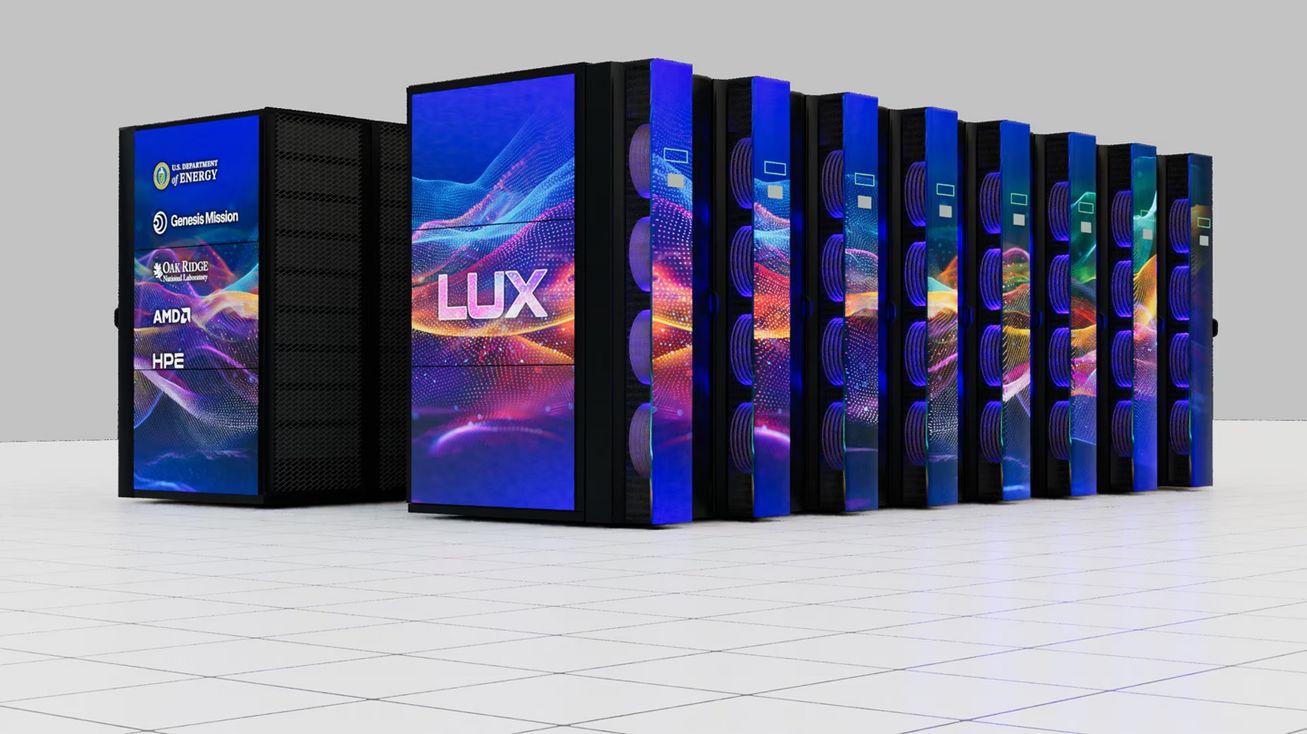
A notable new addition is the Lux system, a collaboration between AMD and the U.S. Department of Energy (DOE). Developed by HPE and located at Oak Ridge National Laboratory, Lux debuted on the TOP500 list at the 14th position. This is one of two supercomputers planned as part of a substantial $1 billion partnership between AMD and the DOE.
Lux: Focused on Artificial Intelligence
Unlike Frontier, which is designed for general-purpose computing, Lux is specialized for artificial intelligence (AI) research. The supercomputer will provide 3.5 million node-hours of computing power annually. Half of this allocation is dedicated to the Genesis Mission program, aimed at training foundational scientific models, creating intelligent agents for research, and accelerating the automation of scientific processes.
These achievements highlight AMD’s increasing influence in the supercomputing sector, particularly as demand grows for AI-driven and scientific research applications.