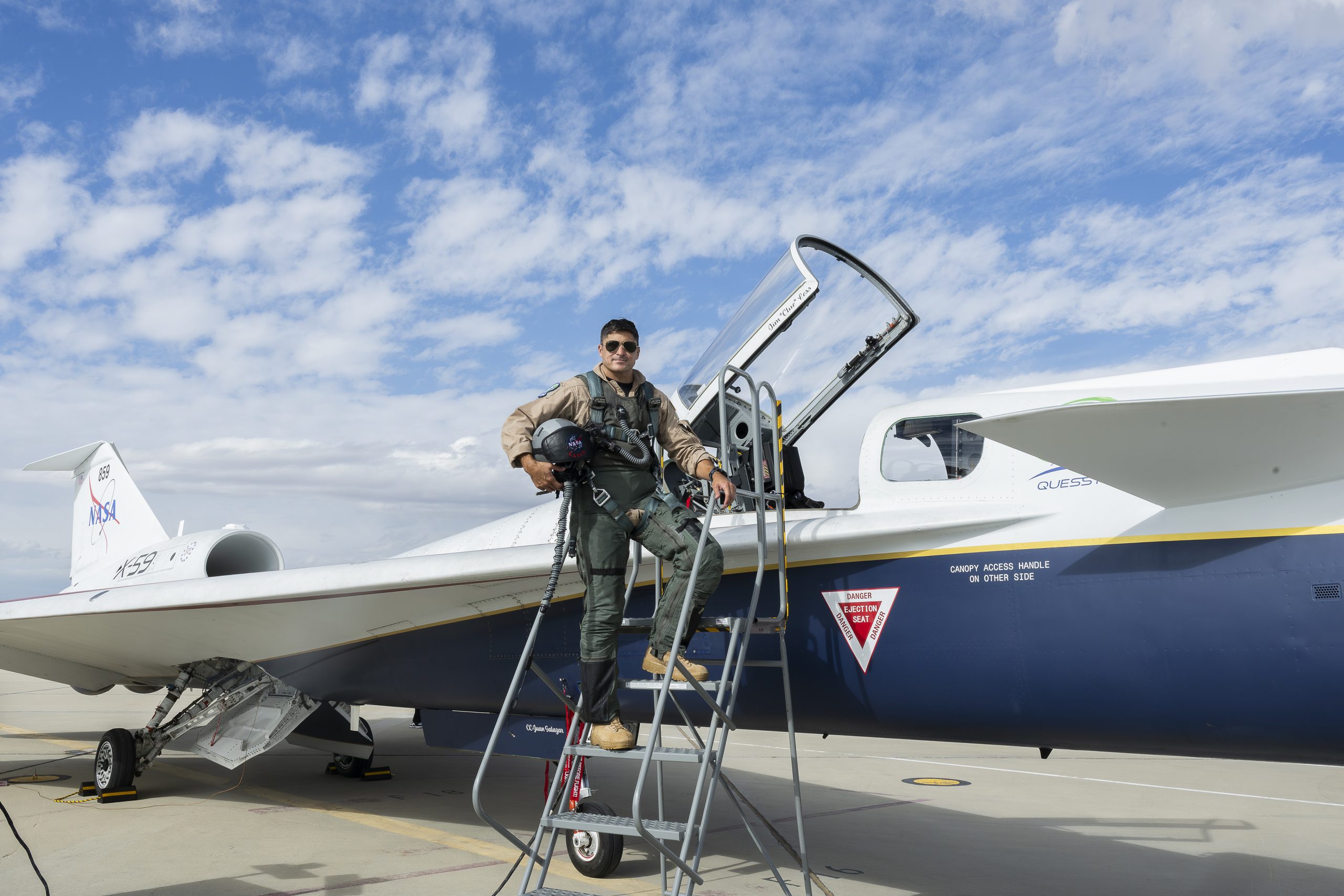
NASA’s revolutionary X-59 quiet supersonic research aircraft recently completed another successful flight with test pilot Mike Lippert at the controls. This milestone marks a significant step in NASA’s quest to enable overland supersonic flight, potentially ushering in a new era of faster air travel without the disruptive sonic booms of the past.
Paving the Way for Quieter Supersonic Travel
The X-59 aircraft, developed by NASA and Lockheed Martin’s Skunk Works, is designed to significantly reduce the loudness of sonic booms, transforming them into quiet sonic thumps. This technological advancement is crucial for potentially lifting current regulations that prohibit supersonic flight over land. The recent flight, originating from NASA’s Armstrong Flight Research Center in Edwards, California, lasted for an hour and followed a period of scheduled maintenance and system reviews. This flight occurred after the aircraft’s most intensive testing week to date, demonstrating its continued progress in achieving its groundbreaking goals.
A Vision for the Future of Aviation
Test pilot Mike Lippert’s experience flying the X-59 is vital for gathering data and refining the aircraft’s performance. The X-59 has already achieved several key milestones, including its inaugural flight in November 2025 and its first supersonic flight on June 5, 2026. The ongoing flights are instrumental in validating the aircraft’s ability to generate a soft sonic thump instead of a startling boom, a critical factor for public acceptance and regulatory approval. NASA’s work with the X-59 is not just about faster travel; it’s about innovating aviation to be more efficient and less disruptive to communities on the ground.
Source: NASA