NASA’s Perseverance rover has detected corundum, the mineral that forms precious gemstones like rubies and sapphires, on the Martian surface. This unexpected discovery could offer new insights into Mars’ ancient past, particularly the effects of powerful cosmic impacts that may have triggered localized geological changes.
An Unexpected Find on the Martian Surface
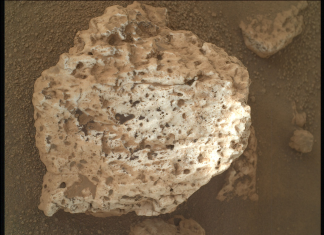
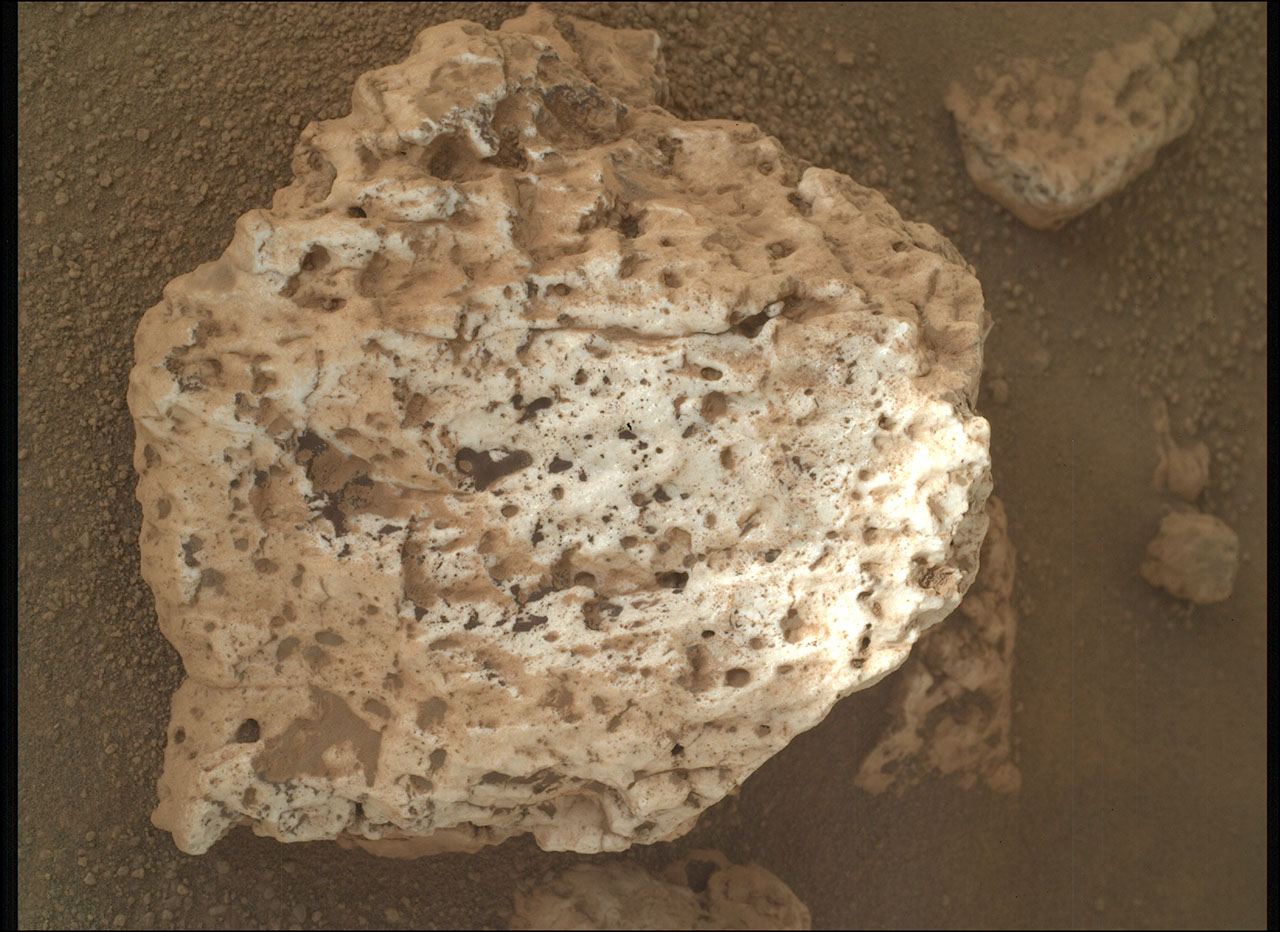
While examining rocky formations with its SuperCam instrument, the Perseverance rover captured an unusual phenomenon. When a laser interacted with a light-colored stone, it emitted a strong, narrow-band glow at wavelengths of 692.7 and 694.1 nanometers. Further analysis confirmed that this emission originated from chromium atoms within the corundum mineral’s structure. Notably, it is chromium-enriched corundum that forms the basis of rubies.
“While we haven’t found collectible rubies on Mars yet, these tiny corundum crystals are helping us learn more about the planet’s history,” stated Roger Wiens, lead investigator for the SuperCam instrument. He explained that corundum, typically a metamorphic and pegmatitic mineral, is not usually expected on planets like Mars that lack plate tectonics. However, powerful meteorite impacts are capable of inducing localized metamorphism through prolonged heating.
Corundum as a Witness to Cosmic Catastrophes
The discovery of corundum on Mars holds significant implications for understanding the planet’s geological history. Scientists hypothesize that the presence of this mineral could be a consequence of ancient collisions with large asteroids or comets. These events could have created localized areas of high temperatures, facilitating the necessary metamorphic processes for corundum formation. Given that the Perseverance rover is operating in a very ancient region near the edge of Jezero Crater, finding evidence of such localized metamorphism is entirely plausible.
This discovery was made possible by the SuperCam instrument’s unique capability to not only determine the elemental composition of rocks but also to study the time delays of atomic transitions through photon emission. This allowed scientists to confidently identify chromium within the corundum structure. The SuperCam team had previously conducted similar experiments, directing their laser at a real ruby, which resulted in a bright red glow. Researchers now plan to utilize this technique more frequently on light-colored rocks to search for further evidence of the impact of cosmic events on the Martian surface.
Source: NASA